Madison Air Solutions Reports Q2 2026 Results: Key Insights for Investors
Madison Air Solutions Corporation (NYSE: MAIR) has released its financial results for the quarter ended June 30, 2026, offering significant insights into its operational performance, capital structure, and forward-looking prospects. The following analysis highlights essential details for shareholders and market participants.
Key Highlights from the Q2 2026 Report
- Revenue Growth: For the three months ended June 30, 2026, Madison Air Solutions reported revenues of \$497.2 million, compared to \$933.2 million for the same period in 2025. For the six months ended June 30, 2026, revenues were \$1.18 billion, up from \$933.2 million in the prior year period.
- Profitability: The company posted net income of \$70.5 million in Q2 2026 versus \$30.8 million in Q2 2025, with six-month net income at \$113.5 million compared to \$77.0 million in the previous year. Net income attributable to Madison Air Solutions (excluding noncontrolling interests) for Q2 2026 was \$69.2 million, and \$60.0 million for Q2 2025.
- Margins: Gross profit margin for Q2 2026 stood at 38.0%, consistent with Q2 2025. Adjusted gross profit margin was 38.6% for Q2 2026, compared to 38.7% for Q2 2025, demonstrating continued operational efficiency.
- Adjusted EBITDA: For Q2 2026, Adjusted EBITDA was \$271.7 million, up from \$228.7 million in Q2 2025. The Adjusted EBITDA margin was 26.1%.
- EPS and Share Count: As of July 28, 2026, there were 177,342,753 shares of Class A common stock and 324,379,851 shares of Class B common stock outstanding.
- Capital Structure and Voting Power: The company’s dual-class structure gives Class B shareholders ten votes per share versus one vote per Class A share. As of June 30, 2026, “Holdings” retained approximately 64.7% of the economic interest but controlled about 95.2% of total voting power, effectively giving controlling power to the founder and original investors.
Important Shareholder Information and Potential Price-Sensitive Issues
- Material Weaknesses in Internal Control: The company acknowledges the risk of failing to develop or maintain effective internal controls over financial reporting. Any future issues or inability to remediate material weaknesses could impact investor confidence and share price.
- Significant Indebtedness: Management highlighted concerns over the company’s significant indebtedness and interest expense, which may impact future financing flexibility, profitability, and dividend potential.
- Market and Economic Risks: The report emphasizes the risk of market downturns, cyclicality in key end markets (commercial and residential HVAC), and macroeconomic factors such as housing market conditions and general business cycles.
- Competitive Pressures and AI Initiatives: Madison Air faces increasing competition and is relying on the successful implementation of its 80/20 operating model and “AI initiatives” to drive organic growth. The success or failure of these strategies could have a material impact on future financial performance.
- Public Company Costs: Management noted a significant increase in expenses related to becoming a public company, including Sarbanes-Oxley compliance, D&O insurance, and investor relations. These costs may negatively impact near-term profit margins compared to historical private company results.
- Acquisitions and Integration Risks: Execution risk from recent and future M&A activity was identified as a potential source of unexpected liabilities or failure to realize expected benefits, which could be price-sensitive if integration falters or synergies are not achieved.
- Founder Control: The founder’s control of voting power through Class B shares may affect corporate governance dynamics and could have long-term implications for minority shareholders.
Outlook and Forward-Looking Statements
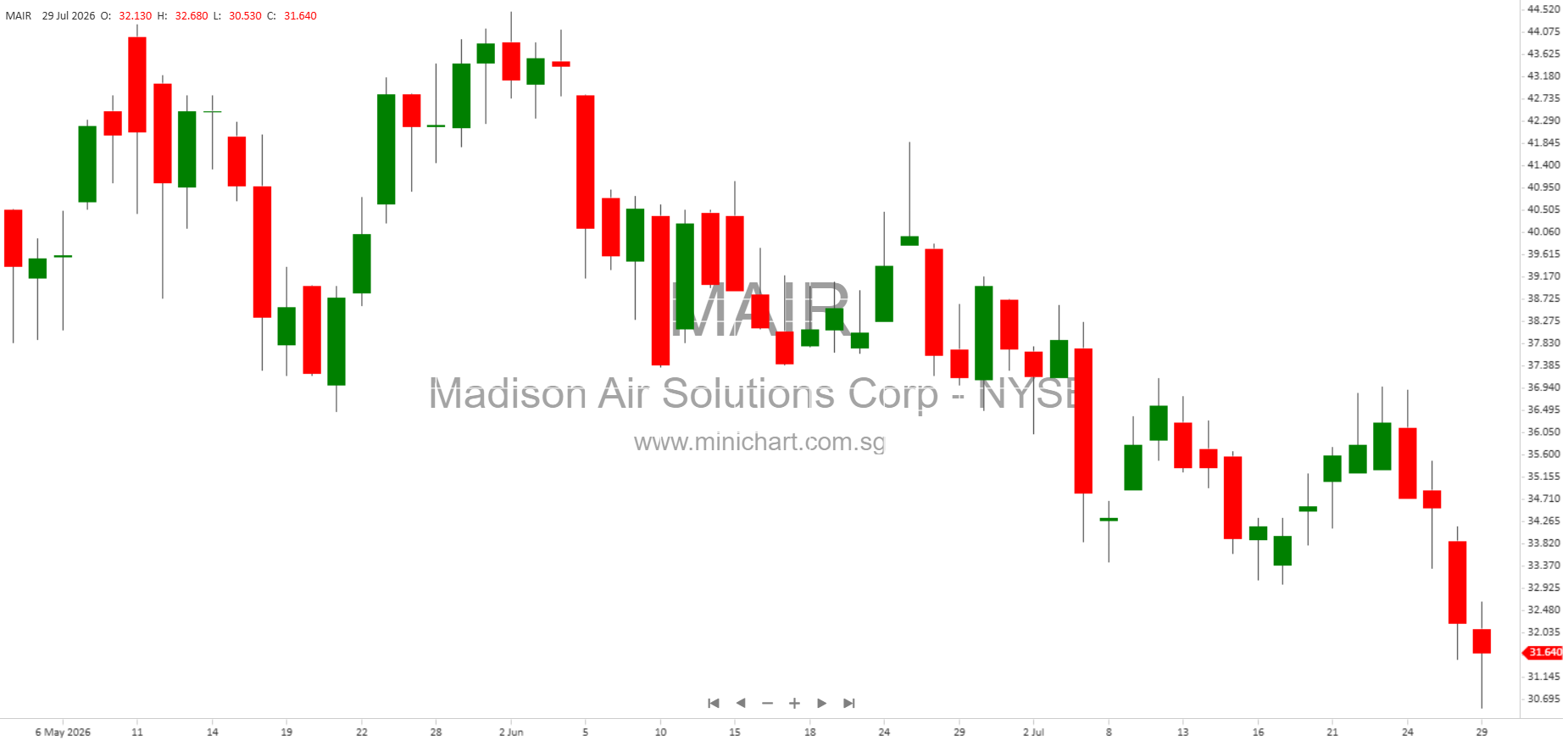
Management provided forward-looking statements regarding continued growth initiatives, margin expansion, and the integration of recent acquisitions. However, investors are cautioned that these projections are subject to numerous risks, including those identified above and detailed in the company’s “Risk Factors” section. The company’s ability to reduce debt, maintain margins, and deliver on AI-driven operational improvements will be critical to future share performance.
Key Performance Indicators (KPIs)
- Backlog and orders are closely monitored by management as indicators of future revenue and operational health.
- The company advises investors to use KPIs in conjunction with, not as a substitute for, GAAP financial information.
Conclusion
The Q2 2026 results for Madison Air Solutions Corporation reflect strong profitability, margin stability, and growth in Adjusted EBITDA. However, significant risks remain relating to leverage, internal controls, integration of acquisitions, and the costs of transitioning to public company status. The company’s dual-class voting structure consolidates control with existing holders, which may affect governance and long-term investor influence. These factors, especially any updates on internal controls, debt management, and AI initiatives, are likely to influence share price going forward.
Disclaimer: This article is for informational purposes only and does not constitute investment advice. Investors should review the full SEC filings and consult with their financial advisor before making investment decisions. All forward-looking statements are subject to risks and uncertainties, and actual results may differ materially from those expressed or implied herein.