PBF Energy Inc. Q2 2026 Earnings Review: Key Investor Insights
Executive Summary
PBF Energy Inc. (NYSE: PBF) has released its Form 10-Q for the quarter ended June 30, 2026, highlighting robust financial performance, continued operational improvements, and several factors that could drive future share price movements. The company remains a leading independent petroleum refiner, with its headquarters in Parsippany, NJ.
Key Financial Results
- Revenues: Significant revenue generation in Q2 2026, continuing a trend of strong sales (exact numbers not explicitly stated but implied via balance sheet growth).
- Net Income: Net income attributable to PBF Energy Inc. stockholders for the six months ended June 30, 2026, was \$1,104.7 million. For Q2 alone, net income was \$906.4 million.
- Cash & Cash Equivalents: The company reported cash and cash equivalents of \$894.1 million as of June 30, 2026, up from \$527.9 million at year-end 2025, highlighting improved liquidity.
- Total Assets: Total assets stood at \$14,718.7 million, up from \$13,019.9 million at December 31, 2025, indicating growth and expansion.
- Shareholder Equity: PBF Energy’s equity increased to \$6,407.0 million as of June 30, 2026, up from \$5,319.5 million at year-end 2025.
- Retained Earnings: Retained earnings rose to \$4,189.9 million from \$3,149.9 million, reflecting profitability and value creation.
- Treasury Stock: 32,248,584 shares outstanding at June 30, 2026, at a cost of \$1,247.7 million.
- No Preferred Stock Outstanding: The company continues to operate with no preferred stock outstanding.
- Weighted-average Shares Outstanding: Basic weighted-average shares of Class A common stock were 118,367,104 for Q2 2026.
Operational & Strategic Highlights
- Refining Business Improvement (RBI) Initiative: PBF continues to focus on cost savings and operational efficiencies through its RBI initiative. Shareholders should monitor the impact and timing of these improvements as they may influence future earnings.
- Crude Oil Sourcing: The effectiveness of crude oil sourcing strategies, including crude by rail, is a key driver. Any changes in sourcing costs or disruptions can affect margins.
- Regulatory Risks & RINs: Obligations to purchase Renewable Identification Numbers (RINs) and compliance with greenhouse gas emission credits under programs such as California’s AB 32 and other cap-and-trade systems could introduce volatility in expenses.
- Capital Spending & Turnaround Projects: Expectations of capital spending and refinery turnaround projects may impact cash flows and future profitability.
- Government Regulations: New laws, especially in California, transport regulations, climate policy, and public opposition to refining industry profits are potential headwinds or tailwinds.
- Competition & Dividends: Intense competition in core markets and the risk that dividends may be reduced or eliminated in the future.
- Liquidity & Debt: PBF’s balance sheet shows rising equity and retained earnings, but investors should be aware of potential impacts from indebtedness, credit rating downgrades, and restrictive covenants.
- Exchange Rates & Interest Rates: Changes in currency and interest rates, as well as capital costs, could affect future performance.
- Disruption Risks: Possible disruptions in crude/feedstock supply, logistics, pipeline, marine, and rail transportation may impact operations and earnings.
Shareholder & Price-Sensitive Considerations
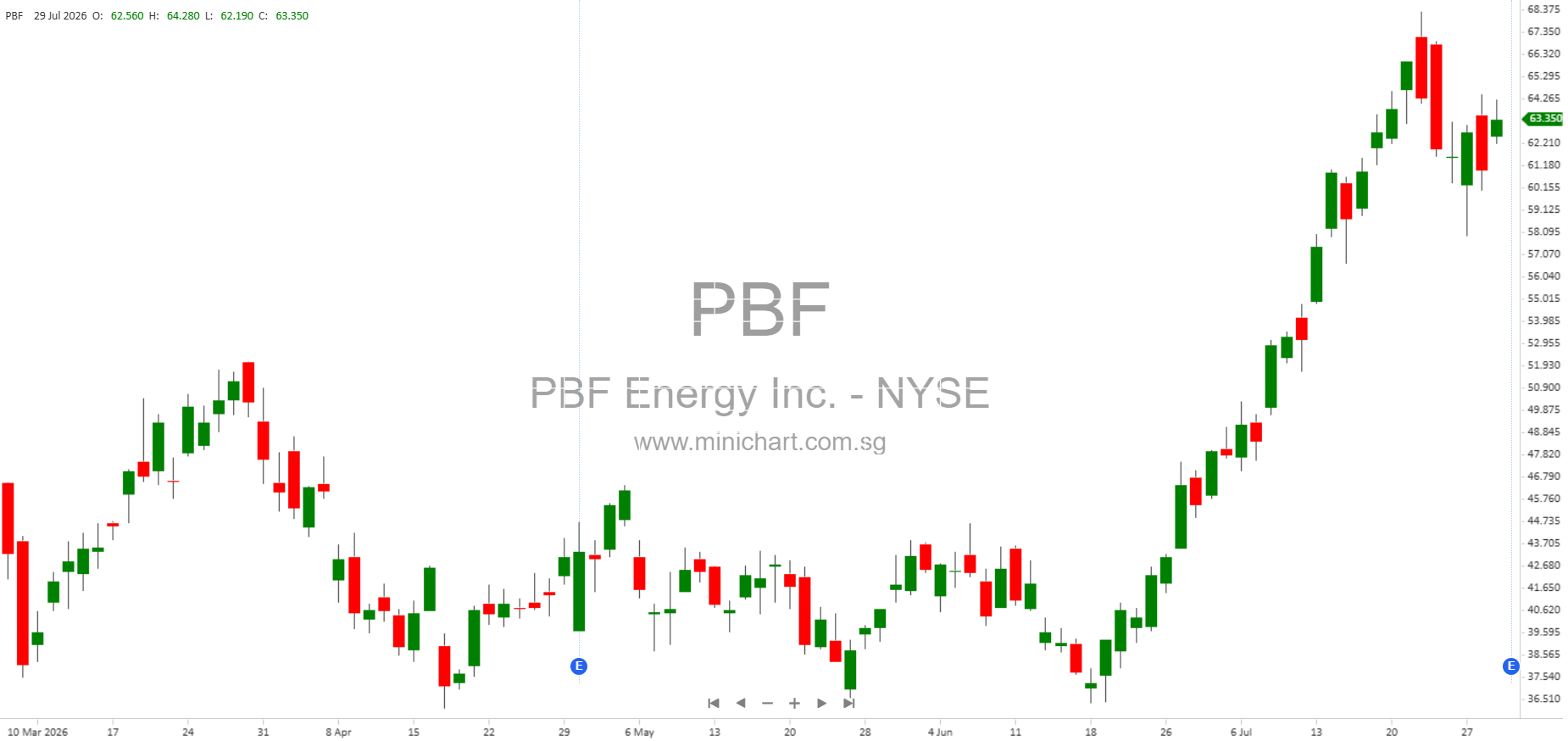
- Strong Earnings Momentum: The substantial increase in net income and equity is likely to positively influence share price.
- Liquidity Improvement: The notable jump in cash and cash equivalents signals improved financial flexibility and resilience.
- Operational Efficiency: Ongoing business improvement initiatives could drive future profitability and margin expansion.
- Regulatory & Environmental Risks: Uncertainties around RINs, GHG credits, and climate regulations may introduce expense volatility and affect profitability, potentially impacting share value.
- No Preferred Stock: Absence of preferred stock simplifies the capital structure and may be viewed favorably by common shareholders.
- Dividend Policy: While the company has a history of dividend payments, management cautions that future payments are not guaranteed, which could be price-sensitive.
- Forward-Looking Statements: Management’s outlook is subject to risks and uncertainties. Factors such as market competition, regulatory changes, capital spending, and operational disruptions can materially affect future results and share price.
Forward-Looking Statements and Risks
PBF Energy emphasizes that its forward-looking statements are based on reasonable assumptions but are subject to numerous risks and uncertainties, including but not limited to market volatility, regulatory changes, supply disruptions, and competitive pressures. Investors should be aware that actual results may differ materially from projections due to these factors.
Conclusion
PBF Energy Inc.’s Q2 2026 report shows strong financial and operational performance, improved liquidity, and a commitment to ongoing efficiency initiatives. However, shareholders should closely monitor regulatory risks, environmental compliance costs, and potential operational disruptions, all of which could materially impact future earnings and share value.
Disclaimer: This article is for informational purposes only and does not constitute investment advice. The author has relied on publicly available information from PBF Energy Inc.’s Form 10-Q for the quarter ended June 30, 2026. Investors should conduct their own research and consult with a qualified financial advisor before making any investment decisions. All forward-looking statements are subject to risks and uncertainties and may differ from actual results.