Key Financial Highlights
- Revenue Growth: Total revenue for Q2 2026 was \$332.9 million, up 9.9% year-over-year. Freight revenue rose 6.6% to \$294.7 million. For the first six months, total revenue was \$640.0 million, up 11.9% [[45]].
- Operating Income: Q2 2026 operating income was \$8.8 million, down from \$11.6 million in Q2 2025. Adjusted operating income was \$12.2 million versus \$15.0 million last year [[86],[90]].
- Operating Ratio: Q2 2026 operating ratio increased to 97.3% from 96.2% last year, reflecting margin compression. Adjusted operating ratio was 95.9% compared to 94.6% [[91]].
- Net Income: Q2 2026 net income was \$8.5 million (\$0.32 per diluted share), compared to \$9.8 million (\$0.36 per diluted share) last year. Adjusted net income was \$11.2 million (\$0.42 per diluted share), versus \$12.4 million (\$0.45 per diluted share) last year [[93],[103]].
- Balance Sheet: Total assets at June 30, 2026 were \$1.01 billion, down from \$1.05 billion at year-end 2025. Net indebtedness decreased to \$289.7 million from \$296.3 million, with a net indebtedness to capitalization ratio of 41.2% [[75],[76]].
- Fleet Size: Fleet size declined 3.3% sequentially, expected to stabilize going into a stronger freight market [[1]].
- Equity Investment: Transport Enterprise Leasing (TEL) contributed \$5.3 million in pre-tax net income (\$0.16 per share), up from \$4.3 million (\$0.12 per share) last year, benefiting from higher equipment sale gains [[2]].
Segment Performance
- Combined Truckload: Margins failed to expand due to higher expenses in equipment/maintenance, insurance/claims, driver costs, and overhead. Maintenance and insurance claims were about \$0.08 per diluted share above expectations and historical averages. These elevated expenses are not expected to persist [[1]].
- Managed Freight: Segment grew freight revenue by 28.4% year-over-year, mainly from integration of acquired assets. However, segment operating ratio deteriorated due to capacity costs rising faster than revenue per load and loss of a surge contract benefit. Insurance and claims expense risk increased following the Supreme Court’s Montgomery decision [[34]].
- Warehousing: Revenue grew \$1.1 million, primarily due to a new customer. Margins remained flat as startup expenses and inefficiencies offset revenue gains. Focus is on returning to high single-digit margins via rate increases and cost reductions [[38]].
- Expedited and Dedicated Segments: Both segments saw revenue growth but operating ratios remained high, indicating continued margin pressure. Significant portions of these fleets are under contracts renewing in the next 12 months, many of which are less profitable [[16],[23],[26]].
Strategic and Operational Updates
- Long-Term Contracts: The company aims to have most asset-based business under long-term dedicated or committed contracts by the end of the current upcycle, consistent with a strategy to lower earnings volatility [[1]].
- Capital Expenditures: Net capital expenditures for the first half of 2026 were less than \$1 million, with proceeds from fleet downsizing and equipment sales offsetting investments. Expected net capital expenditures for the balance of 2026 are \$50–60 million [[39]].
- Cost Management: Focused efforts on reducing overhead and controllable costs as a percentage of revenue. Overhead has not decreased as quickly as fleet size. Insurance and claims expense remain volatile due to high retention levels, unpredictable “nuclear verdicts,” and potential liability expansion after Montgomery [[39]].
- Margin Outlook: Company expects modest sequential EPS growth in Q3 2026 as margin improvement is partially offset by absence of TEL equipment sale gains, lower income tax rate, and interest income that benefited Q2 [[39]].
- Fleet Mix and Contract Renewals: About 40% of Expedited and 25% of Dedicated fleet contracts renew in the next 12 months. Many are lower-margin contracts, and renegotiation offers opportunity for margin expansion [[39]].
- Market Environment: Early in the freight cycle, capacity costs are rising faster than contract rates, compressing margins. Sourcing quality carrier capacity below contractual pricing remains challenging, even as supply exits the market [[34]].
Risks and Forward-Looking Statements
- Insurance and claims expenses are expected to remain volatile, with regulatory changes, legal risks (including nuclear verdicts), and the Montgomery decision potentially impacting Managed Freight [[39]].
- Margin improvement depends on successful renegotiation of contracts, cost reductions, and the freight market’s strength.
- External risks include economic, regulatory, competitive, and operational factors, such as driver shortages, fuel price fluctuations, third-party provider risks, IT systems, and potential impairment of goodwill [[40-41]].
- Company faces risks from large customer concentration, capital allocation, equipment market volatility, and possible impacts from public health crises or global conflicts [[41]].
- Significant insider control (Chairman/CEO and spouse) may influence key decisions and limit other shareholders’ influence [[41]].
Price-Sensitive and Shareholder-Relevant Information
- Margin Pressures: Persistent margin compression, especially in Combined Truckload and Managed Freight segments, could negatively impact earnings and share value if not mitigated.
- Insurance and Claims Volatility: Elevated claims costs and legal risks could introduce earnings volatility and increase liabilities, particularly after the Montgomery decision.
- Contract Renewals: Upcoming renewal of a significant portion of low-margin contracts provides both risk and opportunity for margin expansion, which may materially affect future profitability.
- Capital Allocation: Planned capital expenditures (\$50-60 million) and reduced net indebtedness signal discipline, but execution risk remains.
- Outlook: Management expects gradual margin improvement and stabilized fleet size, but warns of ongoing cost pressures and the need for renegotiation of less profitable contracts.
- Strategic Transition: The company’s shift to more dedicated/committed contracts may reduce volatility and enhance long-term value if successfully executed.
Conference Call and Contacts
The company will host a conference call on July 30, 2026 at 10:00 a.m. Eastern time to discuss the quarter. Investors can access the call at 877-550-1505 (U.S./Canada) and 0800-524-4760 (International).
Contact: M. Paul Bunn, President ([email protected]), Tripp Grant, CFO ([email protected])
Conclusion
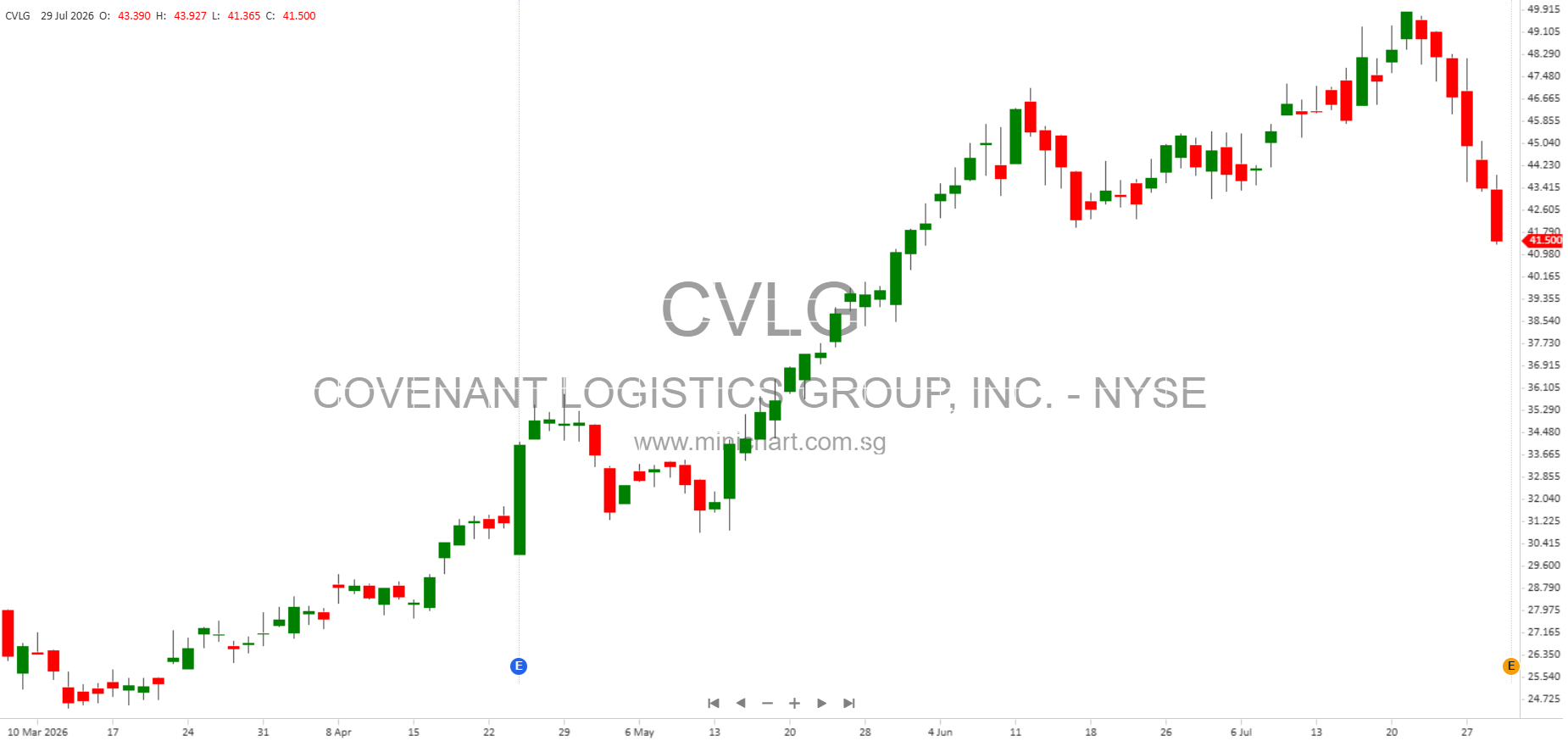
Covenant Logistics Group, Inc. delivered solid revenue growth and made progress in strategic contract transitions. However, margin pressures from rising costs, insurance and claims volatility, and contract renewal risks present significant challenges. The company’s efforts to expand dedicated and committed contracts and reduce overhead are positive, but investors should closely monitor the impact of market conditions, regulatory changes, and contract renegotiations on profitability and share value.
Disclaimer: This article is for informational purposes only and does not constitute investment advice. All financial data and statements are based on the company’s Q2 2026 financial report and may be subject to risks, uncertainties, and forward-looking statements. Investors should review official filings and consult professional advisors before making any investment decisions.