Altimmune Announces Strong Phase 2 Results for Pemvidutide in Alcohol Use Disorder – Key Milestone for Shareholders
Summary of Key Developments
- Positive topline data: Pemvidutide demonstrated statistically significant and clinically meaningful reductions in heavy drinking days (HDD), the trial’s primary endpoint.
- Important secondary endpoints met: Marked improvements in World Health Organization (WHO) risk drinking levels, percent of patients with zero heavy drinking days, and objective biomarker reductions (PEth).
- Favorable safety/tolerability: Most adverse events were mild to moderate; new titration scheme may improve GI tolerability.
- Regulatory progress: Altimmune will seek an End-of-Phase 2 (EOP2) meeting with the FDA to discuss Phase 3 development based on these results.
- Pipeline progress: Pemvidutide is also advancing in metabolic dysfunction-associated steatohepatitis (MASH) and alcohol-associated liver disease (ALD), with Fast Track and Breakthrough Therapy designations from FDA.
Detailed Trial Results and Implications
Trial Overview
The RECLAIM Phase 2 trial evaluated pemvidutide, a balanced glucagon/GLP-1 dual receptor agonist, in approximately 100 adults with moderate to severe alcohol use disorder (AUD) and BMI >25 kg/m2. Patients were randomized 1:1 to receive either 2.4 mg pemvidutide or placebo once weekly for 24 weeks.
The trial’s primary endpoint was change from baseline in the average number of heavy drinking days per week. Secondary endpoints included percent of patients achieving a two-level reduction in WHO Risk Drinking Levels (recognized by FDA as a registrational endpoint), percent with zero heavy drinking days, and change in phosphatidylethanol (PEth), an objective biomarker of alcohol intake.
Efficacy Data
| Endpoint | Placebo | Pemvidutide | Treatment Effect | P-value |
|---|---|---|---|---|
| Change from baseline in HDD/Week at Week 24 (Primary) | -2.75 | -4.20 | -1.45 | 0.0014 |
| 2-level Reduction in WHO-RDL | 34.8% (16/46) | 64.4% (29/45) | Odds Ratio 3.31 | 0.0049 |
| Zero HDD (Weeks 21-24) | 17.4% (8/46) | 42.2% (19/45) | Odds Ratio 3.84 | 0.0066 |
| Change in % Days with Abstinence | 20.5% | 38.9% | 18.4% | 0.0075 |
| Change in Serum PEth at Week 24 | +22.0 | -153.4 | -175.3 | <0.0001 |
| Placebo-adjusted weight loss at 24 weeks | — | 9.1% | — | <0.0001 |
- Statistically significant improvements across all key endpoints, including registrational secondary endpoints recognized by the FDA.
- Nearly two-thirds of pemvidutide-treated patients achieved a two-level reduction in WHO risk drinking levels—a clinically meaningful outcome for this population.
- Substantial reduction in PEth, an objective and reliable biomarker for alcohol consumption.
- Significant weight loss observed, adding potential metabolic benefit, especially relevant given high rates of liver and metabolic comorbidities in AUD patients.
Safety and Tolerability
| Adverse Event | Placebo (N=50) | Pemvidutide (N=50) |
|---|---|---|
| Serious AEs | 1 (2%) | 2 (4%) |
| Severe AEs | 3 (6%) | 6 (12%) |
| Nausea | 12 (24%) | 22 (44%) |
| Vomiting | 3 (6%) | 9 (18%) |
| Diarrhea | 5 (10%) | 10 (20%) |
| Constipation | 3 (6%) | 13 (26%) |
| Treatment discontinuations | 11 (22%) | 10 (20%) |
| Drug-related discontinuations | 0 (0%) | 5 (10%) |
Most adverse events were mild to moderate. The majority of GI-related side effects (nausea, constipation, vomiting) were consistent with the mechanism of action and may be further reduced with the newly implemented two-step titration protocol.
One case of hyponatremia in the pemvidutide arm was considered possibly drug-related. Overall, safety profile is viewed as manageable, especially in view of the high unmet need in this patient population.
Regulatory and Pipeline Implications
- Altimmune will seek an End-of-Phase 2 meeting with the FDA to discuss the path forward for Phase 3 registration trials in AUD.
- Results will be submitted for presentation at a medical conference and for publication in a peer-reviewed journal.
- Pemvidutide is the first dual glucagon-GLP-1 agonist to report Phase 2 data in AUD, further differentiating it from competitors.
- Pemvidutide has Fast Track designation for both AUD and MASH, and Breakthrough Therapy designation for MASH, which may accelerate regulatory timelines.
- The RESTORE trial in alcohol-associated liver disease (ALD) is ongoing, and the pivotal PERFORMA Phase 3 trial in MASH is expected to begin in Q3 2026.
Market Opportunity & Shareholder Impact
- AUD affects an estimated 28 million adults in the U.S., with only 2% currently using approved pharmacotherapies due to limited efficacy and comorbidity benefit.
- Pemvidutide’s dual action on both liver and metabolic pathways (via glucagon and GLP-1) positions it uniquely to address not only alcohol intake but also associated liver and metabolic diseases.
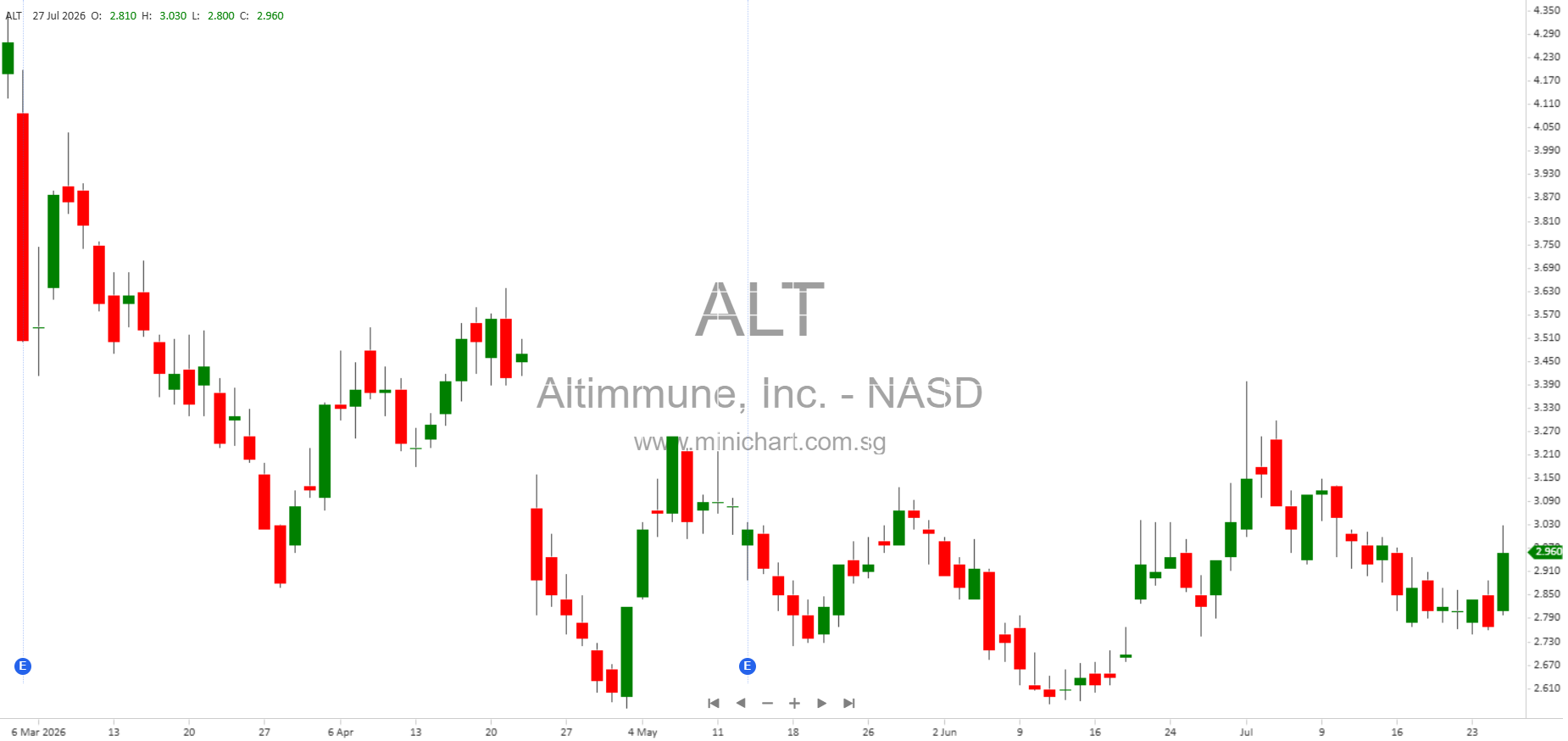
- Given the significant unmet need and potential for regulatory acceleration, these results are likely to be viewed as materially positive by investors. Pemvidutide’s progress in AUD, MASH, and ALD could substantially expand the company’s addressable market.
- Shareholders should monitor upcoming regulatory interactions, data presentations, and the initiation of Phase 3 trials as additional value inflection points for the stock.
Conference Call Details
Altimmune will hold a conference call and webcast at 8:00 a.m. ET to discuss these results. The webcast will be available for live viewing and replay on the company’s investor relations website.
About Altimmune and Pemvidutide
Altimmune is a late clinical-stage biopharmaceutical company focused on therapies for serious liver diseases. Pemvidutide is a novel, balanced glucagon/GLP-1 dual receptor agonist, in development for MASH, AUD, and ALD. The drug has shown evidence of reducing liver fat, inflammation, and fibrosis (via glucagon effects), as well as appetite suppression and weight loss (via GLP-1), with potential effects on alcohol craving and reward pathways.
Disclaimer
This article is for informational purposes only and does not constitute investment advice. The information is based on company press releases and publicly available data as of the date of publication. Investors should conduct their own due diligence and consult with a professional financial advisor before making investment decisions. Forward-looking statements are subject to risks and uncertainties that could cause actual results to differ materially from those projected. Please refer to Altimmune’s filings with the SEC for additional risk factors.