Oxford Industries, Inc. Reports Q1 2026 Results: Key Insights for Investors
Overview
Oxford Industries, Inc. (NYSE: OXM) has released its unaudited financial results for the first quarter of fiscal 2026, ending May 2, 2026. The Atlanta-based apparel company, known for brands such as Tommy Bahama and Lilly Pulitzer, has provided detailed disclosures regarding its financial performance, balance sheet, and cash flow position.
Key Highlights
- Net Income: The company reported net earnings of \$14.99 million for Q1 2026, a significant decline compared to \$26.18 million in the same period last year.
- Earnings Per Share (EPS): Diluted EPS was \$1.00, down from \$1.70 in Q1 2025. Basic EPS was \$1.01, compared to \$1.72 previously.
- Revenues & Operating Income: Operating income for the quarter was \$36.2 million (Q1 2025: not explicitly stated, but inferred stronger based on profit breakdown).
- Dividends: The company declared dividends of \$0.70 per share during Q1 2026, marginally higher than the \$0.69 per share in Q1 2025.
- Share Repurchases: The company did not repurchase shares in Q1 2026, but in Q1 2025, \$50.53 million was used for share repurchases. This is a material change in capital allocation policy.
- Cash Flow: Net cash used in operating activities was (\$3.94) million, a notable decrease from prior quarters. Net cash used in investing activities was (\$22.77) million, and there were no proceeds from debt financing (no new borrowings), but the company continues to invest in its business and pay dividends.
- Balance Sheet: The company maintains a strong equity position with \$523.4 million in total shareholders’ equity at the end of Q1 2026.
- Outstanding Shares: As of June 8, 2026, there were 14,930,932 shares outstanding.
- Filing Status: Oxford Industries remains an accelerated filer and is in compliance with all SEC reporting requirements.
Detailed Financial Performance
Income Statement Insights
- Net Income Decline: The nearly 43% drop in net income compared to Q1 2025 is a significant development. Management and shareholders should pay attention to the underlying causes, such as higher costs, changes in revenue mix, or other operational challenges.
- Earnings Per Share: The drop in both diluted and basic EPS mirrors the fall in net income. This will be closely watched by analysts and could be price sensitive.
- Dividend Policy: Despite the profit decline, Oxford Industries maintained its commitment to shareholder returns, increasing the quarterly dividend slightly.
Balance Sheet Position
- Assets: The company reported total assets of \$1.34 billion at Q1-end, up slightly from previous quarters.
- Equity: Shareholders’ equity remains robust, though the sequential change reflects the lower profits and ongoing dividend outflows.
- Other Comprehensive Income: The accumulated other comprehensive loss stands at (\$3.1) million, reflecting currency and other adjustments, but not a major swing factor this quarter.
Cash Flow and Capital Allocation
- Operating Cash Flow: Negative operating cash flow this quarter ((\$3.94) million) is notable and could be a red flag if the trend continues.
- Investing Activities: The company continued to invest in acquisitions and capital expenditures, with outflows exceeding \$22 million.
- No Share Repurchases: Unlike Q1 2025, there were no share repurchases in Q1 2026, representing a shift in capital allocation strategy that could impact the share price, especially for value-focused investors.
- Dividend Payments: Dividend payments remained strong at over \$10 million, reinforcing the company’s commitment to returning capital to shareholders.
Regulatory and Compliance Notes
- Oxford Industries is in good standing with the SEC, has filed all required reports, and remains an “accelerated filer.”
- The company is not a shell company, not an emerging growth company, and does not qualify as a smaller reporting company.
Forward-Looking Statements and Risks
The company has reiterated that forward-looking statements are subject to various risks and uncertainties, including economic conditions, consumer trends, supply chain disruptions, and other factors. Investors should carefully monitor the company’s future filings and management commentary for updates on these risks.
Potential Price Sensitive Information
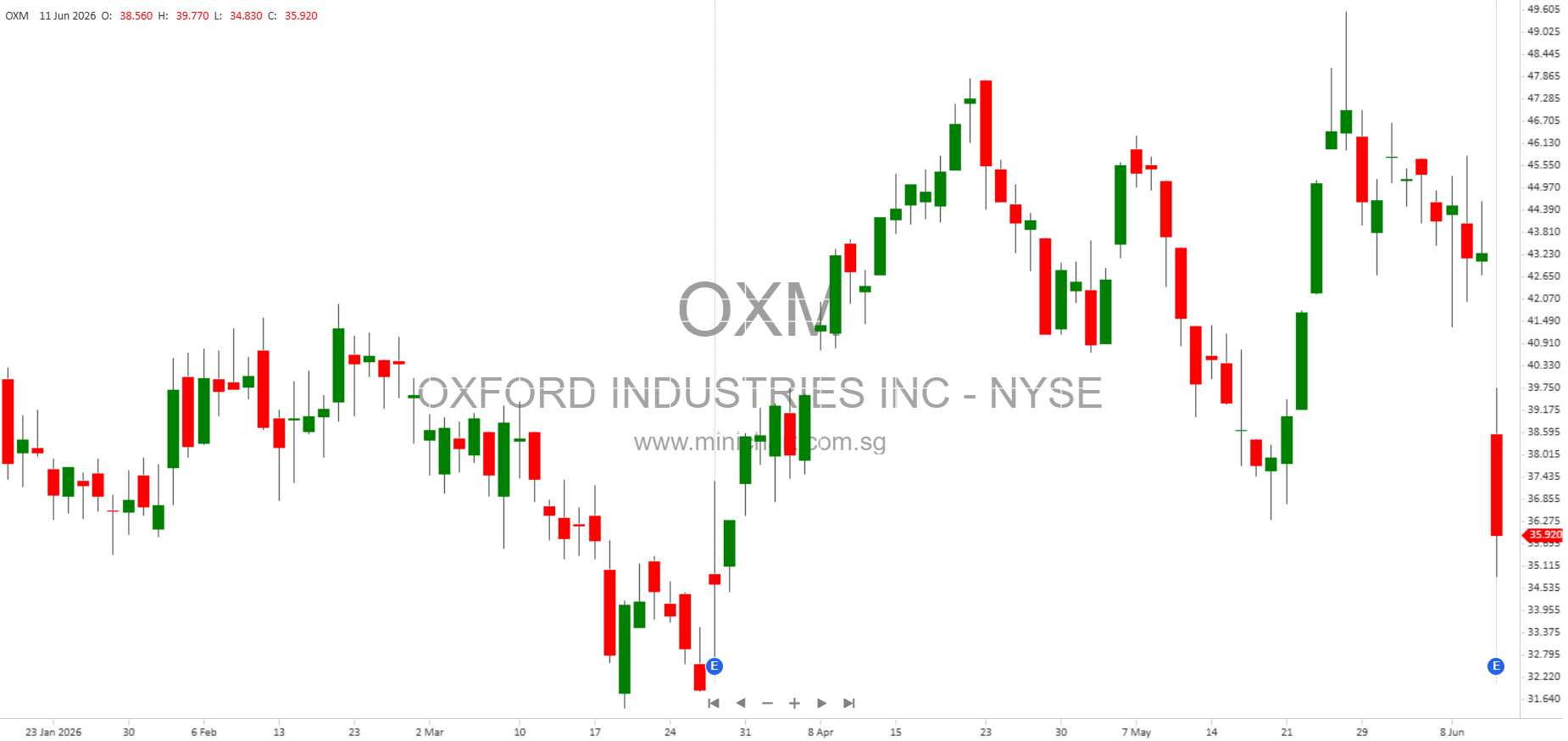
- Profitability Concerns: The sharp decline in net income and EPS may lead to negative sentiment and selling pressure on the stock if investors view this as a sign of weakening fundamentals.
- Capital Allocation Shift: The cessation of share repurchases, after significant buybacks previously, may be interpreted as either a conservative cash preservation move or a sign of fewer undervalued opportunities.
- Dividend Stability: The consistent dividend, even as profits fell, sends a mixed signal; while it reassures income investors, it could raise questions about the sustainability of payouts if earnings continue to decline.
- Negative Operating Cash Flow: This could become a concern if it persists, as it might indicate underlying operational or working capital challenges.
Conclusion
Oxford Industries’ Q1 2026 results present a mixed picture: while the company remains profitable and maintains a strong balance sheet and dividend, the significant decline in earnings and negative operating cash flow are red flags that investors should consider. The halt in share repurchases and ongoing investment in the business suggest a more cautious or opportunistic approach to capital deployment. Shareholders and potential investors should closely monitor upcoming quarters to assess whether these trends are temporary or indicative of deeper challenges.
Disclaimer: This article is for informational purposes only and does not constitute investment advice. Investors should conduct their own due diligence and consult with professional advisors before making any investment decisions. The author and publisher are not responsible for any losses arising from reliance on this information.