Hong Fok Corporation Limited: Key Takeaways from 2025 Annual Report Q&A
Hong Fok Corporation Limited (SGX: H30) has issued detailed responses to questions from the Securities Investors Association (Singapore) (SIAS) and shareholders regarding its FY2025 annual report. The responses shed light on ongoing property sales strategies, recent acquisitions, board composition, and the company’s approach to capital management – all of which may have implications for share value and investor confidence.
1. Slowing Pace of Monetisation at Concourse Skyline – What Investors Need to Know
- Declining Sales Volume: The group sold only 4 residential strata units at Concourse Skyline in FY2025, down from 9 in FY2024 and 6 in FY2023. Revenue from completed development property sales has dropped progressively from \$75.6 million in FY2022 to \$10.9 million in FY2025.
- Lease Tenure: The property stands on a 99-year lease that commenced in March 2008, raising concerns over lease decay and its impact on asset value and pricing.
- Management’s Stance: The company asserts that the declining sales pace has not hurt realised prices or the underlying value of unsold units. Demand remains primarily price- and value-driven—not significantly affected by the lease tenure. Unsold units are generating rental income, supporting cash flow and appeal to investors.
- No Fixed Monetisation Timeline: The Board does not have a set timeline for full monetisation of remaining units, preferring to sell when market conditions are favourable to maximise value.
- Potential Price Sensitivity: Investors should note that as the lease shortens, future marketability and pricing may come under pressure, especially if market sentiment shifts, or if competing supply increases.
2. \$16,000 psf Acquisition at International Building – Strategic Implications
- Significant Acquisition: In February 2025, the group acquired 5 units in International Building for \$27.8 million (approx. \$16,000 psf), incurring an additional \$1.77 million in acquisition-related costs. The units were previously held on a 999-year leasehold.
- Strategic Rationale: This purchase grants the company 100% ownership of the asset, eliminating ownership fragmentation and enabling more flexible decision-making for potential redevelopment or asset enhancement.
- Premium Valuation Justified: Management justifies the high price as a strategic play, akin to en-bloc deals, where premiums are paid for full control and future redevelopment potential.
- Potential for Asset Enhancement: Full ownership opens doors for redevelopment or change of use, but management is proceeding cautiously, with no definitive plans or milestones disclosed yet. Investors should monitor for any future announcements regarding asset enhancement initiatives, as these could be value-accretive and price-sensitive.
3. Corporate Governance and Board Independence – Shareholder Concerns
- Chairman’s Independence: Mr. Chan Pengee, Adrian, after 9 years as an independent director, became the non-executive non-independent chairman in April 2024 due to tenure rules.
- Deviation from Governance Code: The board currently does not have a majority of independent directors, as recommended when the chairman is non-independent. This is a deviation from the Singapore Code of Corporate Governance.
- Board’s Response: The company argues that a non-independent non-executive chairman is still preferable to an executive chairman, and that independence is a matter of conduct and judgement. The company highlights the presence of a Lead Independent Director (Lead ID) as an additional safeguard.
- Potential Risks: The lack of a majority of independent directors may raise concerns among institutional investors or could attract regulatory scrutiny. This could be price-sensitive if it leads to changes in board composition or governance practices.
4. Share Buy-Back Mandate and Dividend Strategy
- Share Buy-Back Activity: Since 2018, the company has exercised its share buy-back mandate, but utilisation rates have varied from as little as 0.12% to as much as 29.4% of the 10% limit. No shares were bought in FY2024, but purchases resumed in the 12 months leading up to the April 2026 AGM.
- Buy-Back Criteria: Decisions are based on share price, volume, trading conditions, and the company’s net asset value per share. Management also considers working capital needs and market liquidity.
- Dividend Policy: The company has maintained stable and consistent dividends, determined by performance and future business needs. Some shareholders have expressed a preference for increased dividends over buy-backs.
- Potential Implications: If the buy-back mandate is fully exercised for consecutive years, the public float could drop below SGX’s minimum requirement, risking a breach of Listing Rule 723 and potentially triggering a mandatory general offer under the Takeover Code. However, management asserts that public float has increased marginally in recent years and that they are mindful of these constraints.
- Privatization Concerns: Some investors suspect that buy-backs could be a cost-effective method for the Cheong family to eventually privatize the company. The board has not commented on any privatization plans.
5. Management and Insider Share Purchases
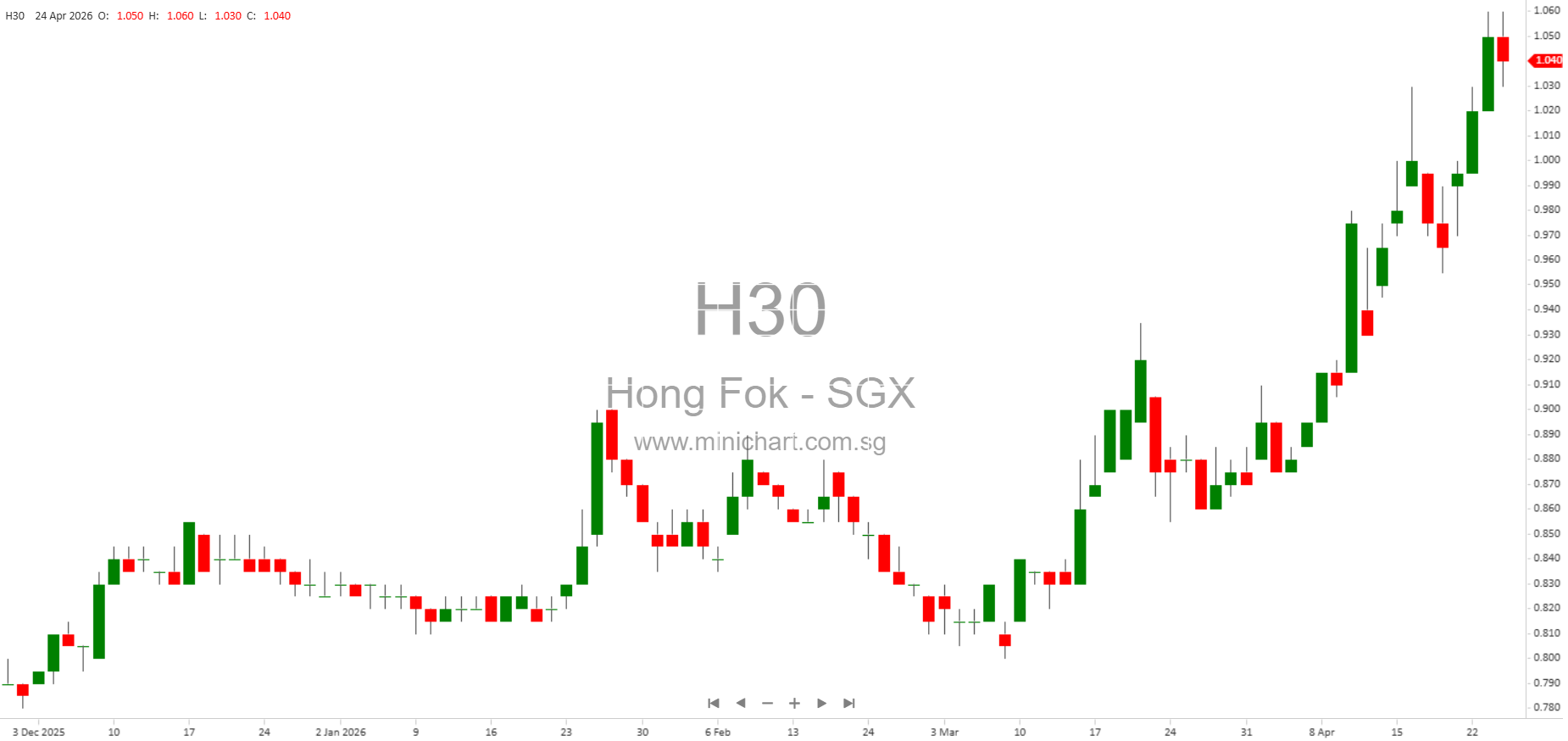
- Insider Activity: Joint CEOs Cheong Pin Chuan and Cheong Sim Eng have purchased shares in recent years at prices ranging from \$0.74 to \$1.05, with the last purchase in 2025 at \$0.75. The company notes that director share purchases are personal investment decisions, and it cannot comment on future plans.
- Potential Signal: Insider buying can signal management’s confidence in the company’s prospects to the market.
6. Cash Position and Future Fundraising
- Funding Share Buy-Backs: The company does not earmark cash specifically for buy-backs but will use available cash and/or credit facilities as appropriate, without adversely affecting financial health or gearing.
- No Immediate Fundraising: There are currently no plans to raise funds or cancel treasury shares.
7. Shareholding Structure and Takeover Code
- Public Float: As of April 2026, 30.4% of shares are held by the public. The rest are held by directors and substantial shareholders, including the Cheong siblings, who are presumed to be acting in concert under the Singapore Takeover Code.
- Takeover Code Implications: The company is mindful of the implications of the Takeover Code and SGX Listing Rules in relation to share buy-backs and public float requirements.
Conclusion: Potentially Price-Sensitive Issues for Investors
- The declining pace of property sales and lease decay at Concourse Skyline may affect future asset values and earnings.
- The \$16,000 psf International Building acquisition signals aggressive asset consolidation with potential for value creation, but also higher risk if redevelopment does not materialize.
- Deviations from the Code of Corporate Governance and the lack of a majority independent board may deter some investors and could prompt regulatory interest.
- Share buy-back activity, if aggressive, could impact public float, liquidity, and raise privatization speculation, all of which are price-sensitive.
Disclaimer: This article is for informational purposes only and does not constitute investment advice or an offer to buy or sell any securities. Investors should conduct their own due diligence and consult professional advisors before making any investment decisions. The information is based on company disclosures and may be subject to change or clarification.