Virtuix Holdings Inc. Releases Amendment No. 1 to Form 10-K: Key Investor Insights
Overview
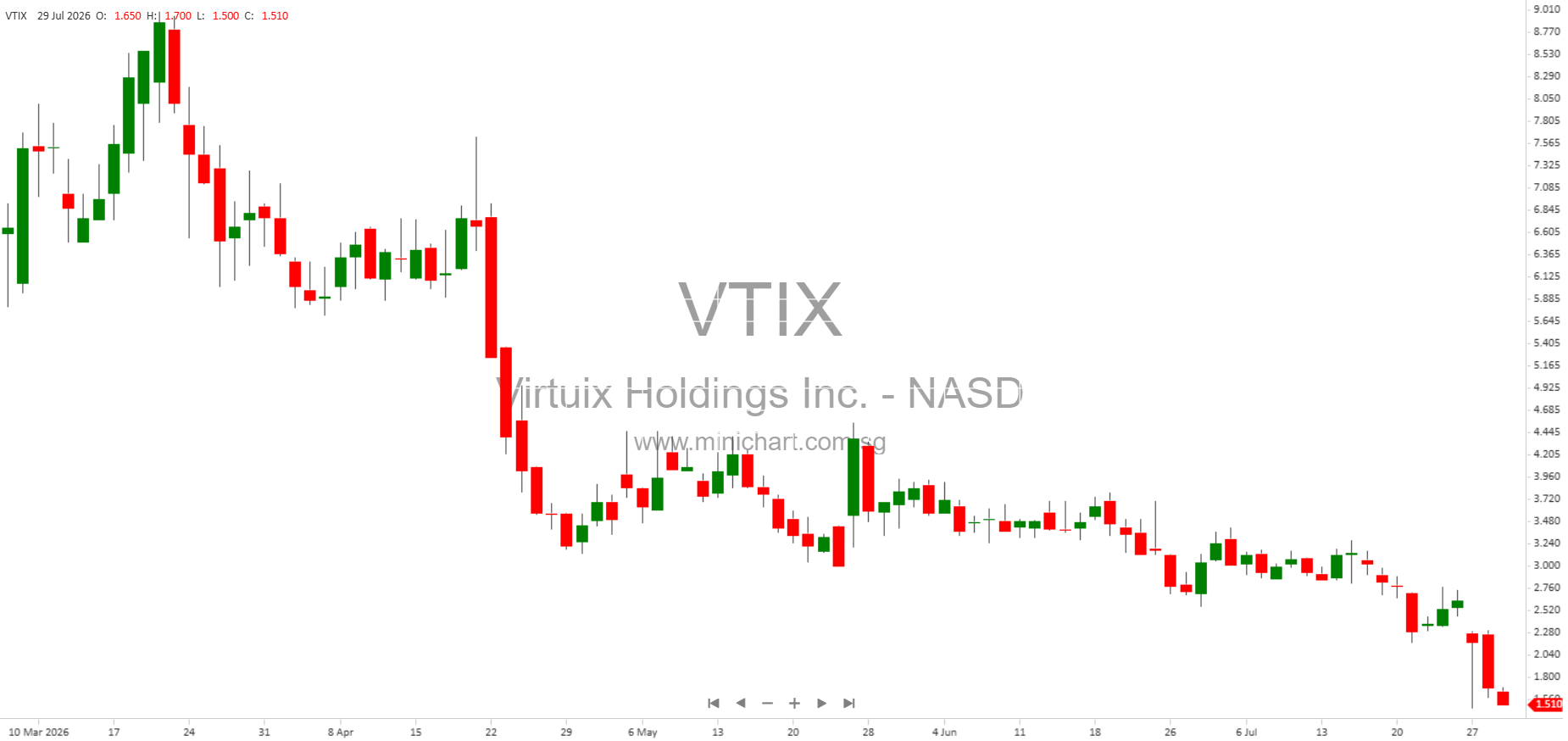
Virtuix Holdings Inc. has published Amendment No. 1 to its Annual Report on Form 10-K for the fiscal year ended March 31, 2026. This amendment was filed to include critical information required by Part III, Items 10 through 14, which were previously omitted from the original filing. The company is listed on The Nasdaq Global Market under the ticker VTIX, and this is its first post-listing annual report following its direct listing on January 27, 2026.
Key Points for Investors
- Shares Outstanding: As of July 28, 2026, the company had 29,857,526 shares of Class A common stock and 4,000,000 shares of Class B common stock issued and outstanding.
- Public Float: As of September 30, 2025, there was no established public trading market for the company’s common equity. Public trading commenced on Nasdaq on January 27, 2026.
- Controlled Company Status: Virtuix qualifies as a “controlled company” under Nasdaq rules, with more than 50% of voting power held by a single group or individual. This allows the company to rely on certain corporate governance exemptions, which may affect board composition and committee independence.
- Emerging Growth Company: Virtuix is classified as an Emerging Growth Company, which means it may take advantage of reduced disclosure requirements and extended transition periods for new accounting standards.
- Insider Trading Policy: The company has adopted robust insider trading policies. Any waivers or amendments for officers or directors will be disclosed on its investor website or in a Form 8-K filing.
- Board Leadership and Governance: The board is chaired by Jan Goetgeluk (CEO), with detailed governance policies posted online. No director or officer has been involved in legal proceedings requiring disclosure in the past ten years.
- Executive and Director Compensation:
- CEO Jan Goetgeluk received a base salary of \$250,000 in 2025, with no bonus, stock, or option awards reported for this period.
- Directors are compensated with cash retainers and restricted stock units (RSUs). For example, Randolph Read receives \$3,000 per month and an annual RSU grant valued at \$125,000, with a one-time grant of 25,000 RSUs vesting over three years.
- Annual awards for directors vest based on continued board service, aligning interests with shareholders.
- Equity Compensation Plans:
- The 2025 Omnibus Plan reserves 4,000,000 shares for issuance, with an automatic annual increase equal to 3% of outstanding shares (unless otherwise determined by the board).
- As of March 31, 2026, 4,368,742 securities are issued upon exercise of outstanding options, warrants, and rights, with a weighted average exercise price of \$1.40. The plan leaves 2,901,886 shares available for future issuance.
- Beneficial Ownership:
- All executive officers and directors as a group (10 persons) own 5,694,039 Class A shares (19.07% of Class A), 4,000,000 Class B shares (100% of Class B), and 78% voting power overall.
- No other 5% stockholders are listed, emphasizing the concentrated ownership structure.
- Related Party Transactions:
- Any transaction exceeding \$120,000 involving directors, officers, or 5% shareholders must be disclosed. No material related-party promissory notes or transactions are highlighted in this amendment.
- Audit Committee and Internal Controls:
- Audit committee oversight covers financial reporting, internal controls, accounting complaints, and compliance. No auditor attestation on internal controls under Section 404(b) of the Sarbanes-Oxley Act is reported, as allowed for emerging growth companies.
- No Financial Statement Error Corrections or Restatements: The amendment confirms that no corrections or restatements requiring recovery of incentive-based compensation occurred in fiscal year 2026.
- Bankruptcy Proceedings: Virtuix has not been involved in bankruptcy or court-confirmed plans in the past five years.
Potential Price-Sensitive Issues
- Controlled Company Status: Investors should note that Virtuix’s controlled status could impact board independence and governance, potentially affecting investor confidence and share valuation.
- Concentrated Ownership: High insider ownership (including the CEO and directors) means voting power is tightly held, which may both stabilize and limit outside influence. This could affect liquidity, takeover prospects, and governance dynamics.
- Director Compensation Structure: The shift to equity-based compensation for directors aligns their interests with shareholders but also dilutes existing holders over time due to annual share reserve increases.
- Emerging Growth Company Exemptions: Reduced disclosure and lack of auditor attestation on internal controls may make the stock more volatile, as investors may perceive higher risk compared to seasoned issuers.
- No Financial Statement Restatements: The absence of restatements or corrections is positive for stability, but investors should be alert for future changes as the company grows and transitions out of emerging growth status.
Conclusion
This amendment provides investors with newly disclosed governance, compensation, and ownership details that are crucial for evaluating Virtuix’s risk profile, growth prospects, and alignment of management with shareholder interests. The controlled company status, large insider ownership, and equity compensation plans are likely to affect share value and investor sentiment. Investors are advised to monitor future filings for changes in governance, ownership, or financial reporting standards as Virtuix matures in the public markets.
Disclaimer
This article is provided for informational purposes only and does not constitute investment advice. The information is based on the company’s official SEC filings and is subject to change. Investors should conduct their own due diligence and consult with a qualified financial advisor before making any investment decisions. The author and publisher accept no liability for any actions taken based on this article.