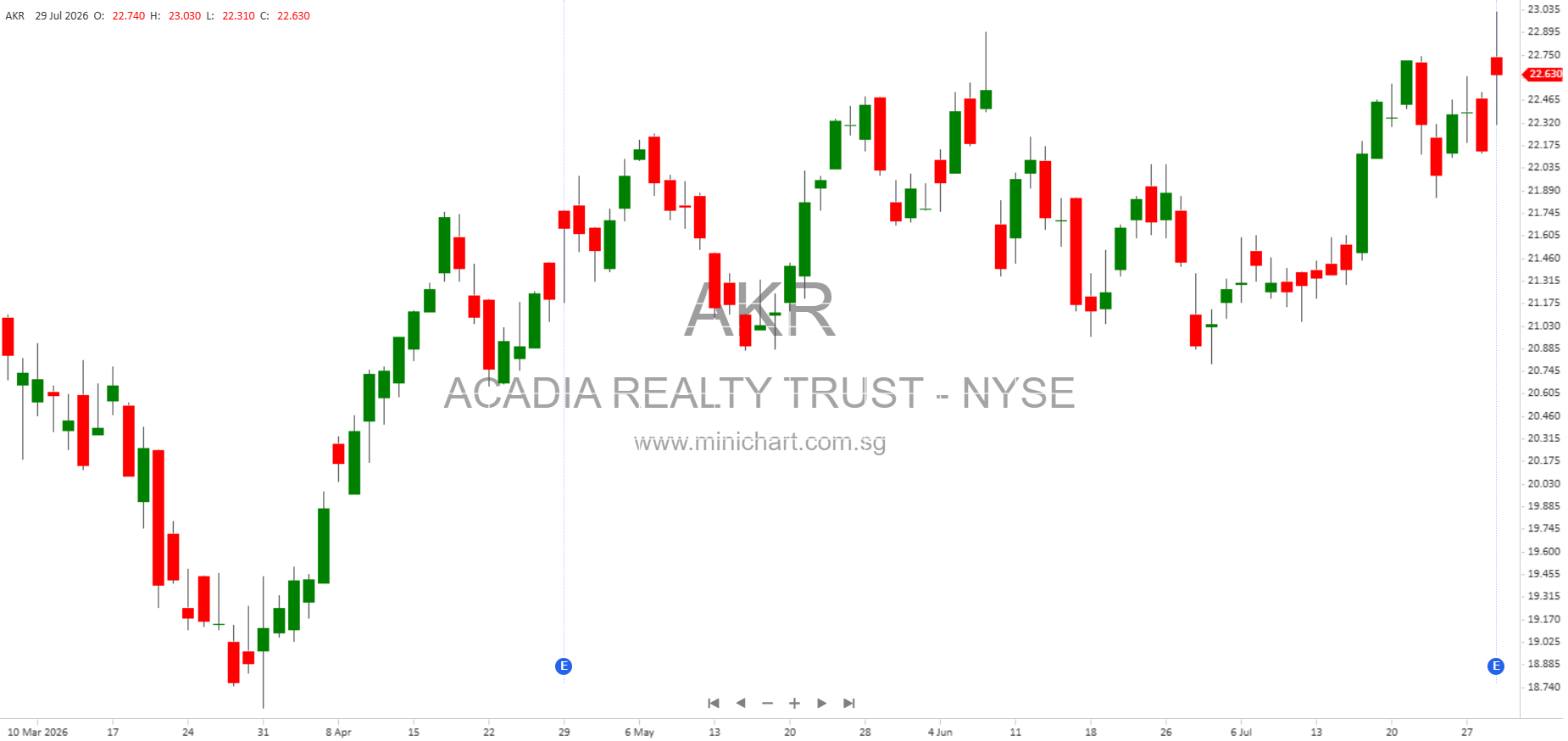
Acadia Realty Trust Q2 2026 Financial Report: Key Highlights and Investor Insights
Ticker: Not stated explicitly
Reporting Period: Quarter ended June 30, 2026
Key Points in the Q2 2026 Report
- Quarterly Filing: Acadia Realty Trust has filed its Form 10-Q for the quarter ended June 30, 2026. This is the standard quarterly financial reporting document required by the SEC.
-
Business Description & Address:
- Business Address: 411 Theodore Fremd Avenue, Suite 300, Rye, NY 10580
- The company was formerly known as Mark Centers Trust.
-
Business Segments & Structure:
- The company continues to operate across several segments, including REIT Portfolio, Structured Financing, Opportunity Funds, and Investment Management.
- There are multiple references to consolidated and unconsolidated affiliates, including Fund II, Fund III, Fund IV, and Fund V, as well as various property portfolios such as the REIT Portfolio and Core Portfolio.
- The company also manages a range of properties across different geographies, including New York (NY), Boston (MA), Palm Beach (FL), and others.
-
Debt and Financing Arrangements:
- The filing references various forms of debt, including Mortgages, Unsecured Debt, Variable Rate Debt with Interest Rate Swap Agreements, and Notes Payable.
- A key debt instrument has a maturity date of December 31, 2026.
- The company utilizes financial derivatives for risk management, including Interest Rate Swaps and Interest Rate Caps. These are tied to both REIT and Fund portfolios.
-
Equity Structure and Stock Classes:
- The company has multiple classes of shares and partnership units, including Common Stock, Preferred Stock, Series A and Series C Preferred OP Units, and LTIP Units.
- There are noncontrolling interests and redeemable noncontrolling interests, reflecting outside ownership in consolidated subsidiaries.
- Certain securities (e.g., Series A and C Preferred OP Units, Restricted Stock) are marked as antidilutive and are excluded from earnings per share calculations, which may impact reported EPS.
-
Fair Value Disclosures:
- The report includes detailed fair value measurements of assets and liabilities, categorized by valuation hierarchy (Levels 1, 2, and 3). Many of the company’s assets, including real estate investments and financial instruments, are measured at fair value.
- Fair value disclosures are critical as they impact reported asset values and may influence investor perception of the company’s financial health.
-
Commitments, Contingencies, and Subsequent Events:
- The filing references the existence of legal commitments and contingencies, though specific details are not provided in the excerpt.
- There is a section for subsequent events, which may include asset sales, acquisitions, or financing changes occurring after the balance sheet date. Such events can be highly price-sensitive if material.
-
Management and Governance:
- The Chief Executive Officer (CEO) is referenced as the chief operating decision maker (CODM) regarding segment reporting.
Potential Price-Sensitive Items for Shareholders
-
Debt Maturities and Refinancing Risk:
The maturity of a significant debt instrument on December 31, 2026, may require refinancing. The terms achieved could impact future interest expense and liquidity. -
Fair Value Adjustments:
Changes in the fair value of real estate, financial instruments, and derivatives can materially impact reported earnings and book value, particularly given the use of Level 3 (unobservable inputs) for some assets. -
Antidilutive Securities:
The exclusion of certain securities from EPS calculations may suggest the potential for future dilution if these securities become dilutive, which could weigh on share value. -
Subsequent Events:
Although not specified in detail here, any material acquisitions, dispositions, or changes in financing occurring after June 30, 2026, could significantly affect the company’s value and future prospects.
What Investors Should Watch For
- Upcoming Debt Maturities: Investors should monitor the company’s plans for refinancing or repaying debt due in late 2026.
- Portfolio Performance: Any changes in the composition or valuation of the REIT Portfolio, Opportunity Funds, or other managed assets may indicate shifts in strategy or market conditions.
- Derivative Positions: The use of interest rate swaps and caps suggests the company is managing exposure to interest rate changes—a key consideration in the current rate environment.
- Equity Transactions: Any changes in outstanding share count, equity compensation, or noncontrolling interests could impact future earnings per share and shareholder value.
- Legal or Regulatory Matters: The existence of commitments and contingencies means investors should watch for any developments that could lead to material liabilities.
Conclusion
The Q2 2026 10-Q filing from Acadia Realty Trust confirms ongoing operations across a diversified portfolio of real estate and investment vehicles, with continued use of complex financing and risk management strategies. While no single headline-grabbing event is disclosed in the excerpt provided, several elements—debt maturities, fair value changes, and subsequent events—are potentially price-sensitive and merit close attention from shareholders.
Disclaimer
This article was prepared based on a review of Acadia Realty Trust’s Q2 2026 Form 10-Q as filed with the SEC. It provides a summary for informational purposes only and does not constitute investment advice. Investors should review the full filing and consult with their financial advisor before making investment decisions. The information is believed to be accurate as of the date of the filing but may be subject to change.