Kiniksa Pharmaceuticals Q2 2026 Earnings: Strong ARCALYST Growth, Pipeline Advances, and Upgraded Guidance
Key Highlights from Second Quarter 2026 Report
- ARCALYST® (rilonacept) Q2 2026 net product revenue reached \$243.6 million, a ~55% year-over-year increase.
- 2026 full-year ARCALYST net product revenue guidance raised to \$980–\$995 million (from prior \$930–\$945 million).
- KPL-387 (monoclonal antibody IL-1 receptor antagonist) Phase 2 data showed rapid, sustained pain and inflammation reduction at the 300 mg SC monthly dose, now selected for pivotal Phase 3 (PASTORALE trial).
- Phase 3 trial for KPL-387 in recurrent pericarditis is actively enrolling and dosing patients.
- Preclinical development of KPL-1161 (quarterly SC dosing) on track, with Phase 1 trial set to begin by end of 2026.
- Q2 net income: \$25.4 million, cash position: \$525.9 million with no debt.
Financial Performance and Guidance
Kiniksa Pharmaceuticals delivered a robust second quarter, with ARCALYST net product revenue rising to \$243.6 million, up from \$156.8 million in Q2 2025—a 55% increase. Total revenue for the quarter mirrored this, with operating expenses at \$216.4 million (vs. \$136.6 million in Q2 2025). Net income for the quarter was \$25.4 million, up from \$17.8 million in the same period last year. The company ended the quarter with \$525.9 million in cash, cash equivalents, and short-term investments, and reported no debt, reflecting a strong balance sheet.
Importantly, due to increasing demand and strong growth in both new and repeat ARCALYST prescribers, Kiniksa raised its full-year 2026 ARCALYST net sales guidance to \$980–\$995 million, up from the prior \$930–\$945 million. Management reaffirmed its expectation to remain cash flow positive on an annual basis.
ARCALYST Commercial Progress
- ARCALYST net product revenue for Q2 2026 was \$243.6 million.
- As of Q2 2026, about 21% of the estimated 14,000 U.S. patients with multiple-recurrent pericarditis were on ARCALYST treatment.
- Over 5,000 prescribers have written ARCALYST prescriptions for recurrent pericarditis since launch.
- The average total duration of ARCALYST therapy in recurrent pericarditis is approximately three years, consistent with the median duration of disease.
Pipeline Updates: KPL-387 and KPL-1161
KPL-387 (IL-1 Receptor Antagonist)
- Phase 2/3 trial in recurrent pericarditis: Interim analysis showed the 300 mg SC monthly dose led to rapid, sustained reductions in both pain and inflammation as early as the first dose.
- Primary Efficacy Endpoint: Median time to treatment response was 4.0 days (95% CI: 3.0, 6.0).
- Secondary Endpoints: Median time to pain response was also 4.0 days, and time to CRP normalization was 8.0 days (CRP ≤0.5 mg/dL).
- KPL-387 was generally well-tolerated, consistent with the known safety profile of IL-1 pathway inhibition.
- The pivotal Phase 3 PASTORALE trial (event-driven, double-blind, placebo-controlled, randomized withdrawal) is now enrolling up to 85 patients. The primary endpoint is time to first adjudicated pericarditis recurrence.
- A supplemental Phase 2 study is ongoing to evaluate transitioning patients from standard therapies to KPL-387 monotherapy.
KPL-1161 (Fc-modified Monoclonal Antibody IL-1 Receptor Antagonist)
- KPL-1161 is being developed with a target profile of quarterly SC dosing.
- Preclinical activities are progressing, and a Phase 1 clinical trial is expected to initiate by the end of 2026.
Product Background and Regulatory Status
ARCALYST
ARCALYST is a weekly, subcutaneously injected recombinant fusion protein that blocks both IL-1α and IL-1β signaling. It is approved by the FDA for recurrent pericarditis, cryopyrin-associated periodic syndromes (CAPS), and deficiency of IL-1 receptor antagonist (DIRA). The drug holds Breakthrough Therapy and Orphan Drug exclusivity for recurrent pericarditis in the U.S., with similar status granted in the EU for idiopathic pericarditis.
Safety Information: ARCALYST can suppress the immune system, increasing the risk of serious infections. Patients should not start ARCALYST if they have current or chronic infections. Concurrent use of other immunosuppressive biologics (such as Kineret, Enbrel, Humira, Remicade) is not recommended due to heightened infection risk. Regular blood tests for cholesterol, triglycerides, and monitoring for allergic reactions are required during therapy.
Important Shareholder/Investor Information
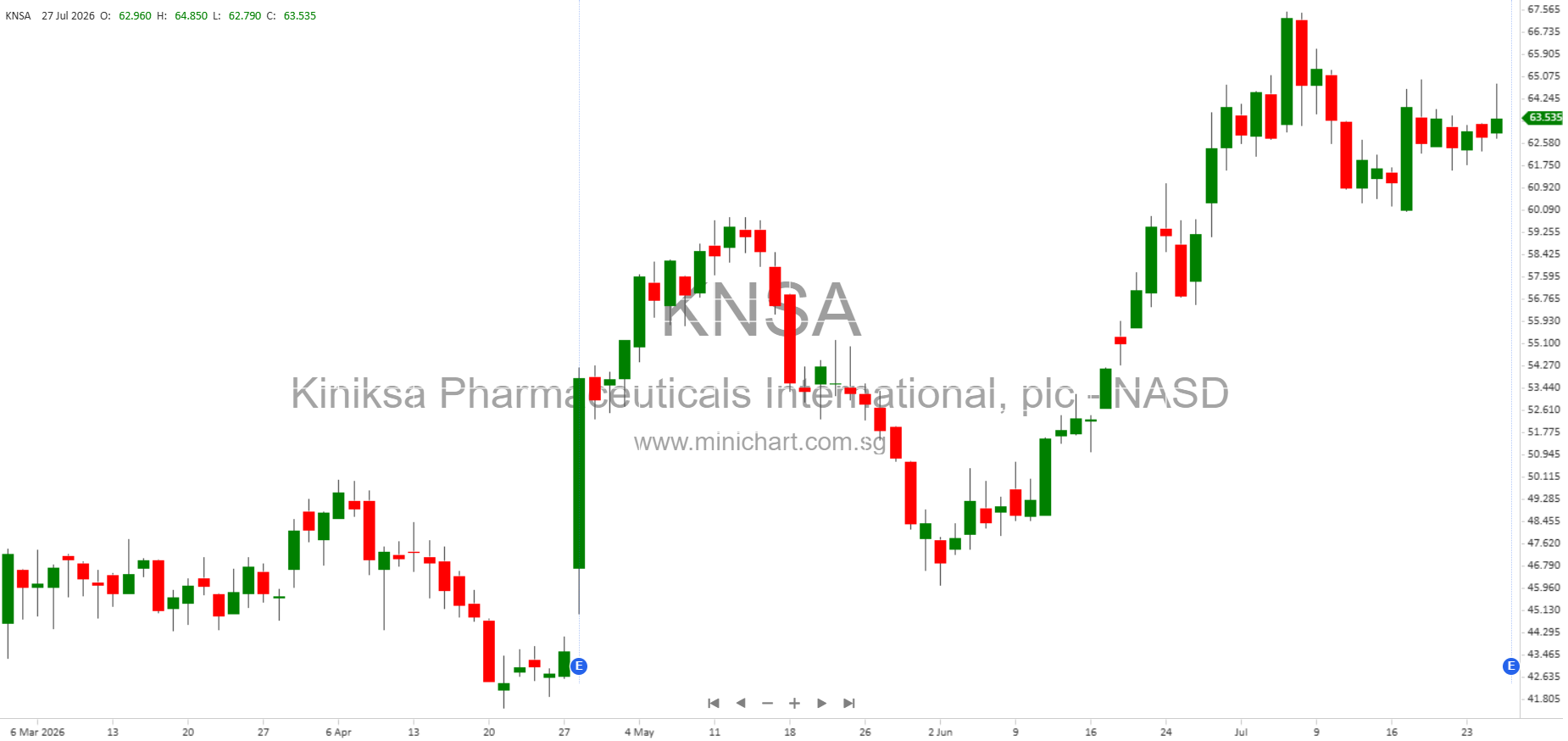
- Raised 2026 ARCALYST revenue guidance signals ongoing commercial momentum and could positively affect share valuation.
- Strong cash position and no debt provide strategic flexibility and reduce financial risk.
- Positive Phase 2 KPL-387 data and Phase 3 advancement in a high-need indication (recurrent pericarditis) could materially expand Kiniksa’s future addressable market and pipeline value.
- On track for new pipeline milestones (KPL-1161 first-in-human by end of 2026) enhances long-term growth prospects.
- Ongoing profitability and an expected annual cash flow positive status reduce the likelihood of near-term financing risk.
Conclusion
Kiniksa’s Q2 2026 results reflect a company in strong commercial health, with ARCALYST continuing its expansion and the pipeline progressing on multiple fronts. The upgraded guidance for 2026 ARCALYST sales, positive pipeline data, and robust cash position are all likely to be viewed favorably by investors. However, future performance will depend on continued commercial execution, successful pipeline milestones, and regulatory outcomes.
Disclaimer
This article is provided for informational purposes only and does not constitute investment advice. All forward-looking statements are subject to risks and uncertainties as discussed in Kiniksa’s filings with the SEC. Investors should conduct their own due diligence and consult a licensed financial advisor before making any investment decisions.