Johnson & Johnson Announces Comprehensive Proposed Resolution of Ovarian Talc Litigation
Key Highlights from the Report
- Proposed Resolution of Talc Litigation: Johnson & Johnson (JNJ) has announced an agreement for a comprehensive resolution of its remaining ovarian talc litigation. This agreement is subject to the express participation of at least 95% of the remaining claimants.
- Favorable Court Ruling: The proposal follows a favorable ruling by the Multi-District Litigation (MDL) court and an acknowledgment from plaintiffs’ counsel regarding their inability to prove that J&J’s talc products caused any specific claimant’s ovarian cancer (“specific causation”).
- Financial Commitment: The proposed settlement involves a \$5.5 billion commitment from J&J, with the first payment of no more than \$3 billion to be made in 2027 and no further payments due before 2028.
- Litigation Status: J&J has already settled approximately 95% of filed mesothelioma lawsuits, all state consumer protection claims, and all talc-supplier disputes.
- Scientific Backing: The company continues to assert, supported by court findings, that talc claims lack scientific merit and are not supported by reliable expert evidence. Studies cited by the company indicate talc is safe, does not contain asbestos, and does not cause cancer.
Details Investors Need to Know
- Potential Impact on Shareholder Value: The resolution, if successful, could eliminate the significant legal overhang and litigation expenses associated with approximately 76,000 remaining ovarian talc claims, potentially improving J&J’s future earnings outlook and removing a notable source of uncertainty.
- Conditional Participation: The settlement is contingent on at least 95% of claimants agreeing, which means there is still some execution risk. Investors should monitor updates on participation rates.
- Timing of Payments and Financial Impact: The agreement structures payments so that the majority of cash outflow would not occur until 2027 or later, preserving near-term cash flow and balance sheet flexibility.
- Legal and Regulatory Risk Reduction: Resolving the ovarian talc litigation could significantly reduce J&J’s exposure to ongoing legal and reputational risks relating to its talc products, a matter that has weighed on the company’s valuation for more than a decade.
- Kenvue Separation: Prior to its separation, J&J agreed to retain all talc-related liabilities and indemnify Kenvue (its former consumer health unit) for any and all costs arising from talc-related litigation in the US and Canada—eliminating overhang risk for Kenvue shareholders but maintaining talc risk on J&J’s books.
- Discontinuation of Talc Product: J&J discontinued talc-based JOHNSON’S® Baby Powder globally in 2023 as part of a strategic portfolio review.
- Forward-Looking Statements: Management notes that actual outcomes may differ due to legal, regulatory, and other risk factors. The resolution is not final and depends on several factors, including the participation rate and potential court approval.
In-Depth Article
New Brunswick, NJ, July 27, 2026 – Johnson & Johnson (NYSE: JNJ) has announced a landmark agreement for a comprehensive resolution of the remaining ovarian talc litigation. This proposed settlement is the culmination of years of legal proceedings and comes after a pivotal court ruling in federal Multi-District Litigation (MDL) that found the plaintiffs could not prove specific causation between J&J’s talc products and individual cases of ovarian cancer.
According to the company, the settlement is contingent on the participation of at least 95% of remaining claimants, a significant threshold that, if met, could bring an end to most of the 76,000 outstanding claims. Under the terms of the deal, J&J would commit \$5.5 billion in total, with an initial payment capped at \$3 billion in 2027 and no additional payments required before 2028. This structure aims to manage the company’s cash flow while addressing the legal overhang.
The resolution follows a critical turning point in the litigation. Plaintiffs’ counsel withdrew their specific causation experts after a comprehensive hearing, effectively conceding their inability to provide the necessary scientific evidence. The MDL court subsequently ordered plaintiffs to demonstrate why their claims should not be dismissed, reinforcing J&J’s long-standing assertion that the cases lack scientific merit. The company’s legal team, led by Erik Haas, Worldwide Vice President of Litigation, emphasized that unreliable expert opinions sustained these claims and that rigorous judicial review has now exposed their weaknesses.
Over the years, J&J has prevailed in the overwhelming majority of tried ovarian cases and has made significant progress in resolving other talc-related lawsuits, including settling 95% of filed mesothelioma cases, all state consumer protection claims, and all talc-supplier disputes. J&J continues to maintain that its talc is safe, does not contain asbestos, and does not cause cancer—a position supported by decades of research and review by independent experts and regulatory agencies.
As part of a broader strategic shift, J&J discontinued talc-based JOHNSON’S® Baby Powder globally in 2023 and completed the separation of its consumer health business, Kenvue, in August 2023. Importantly for investors, J&J retained all liabilities related to talc litigation and has agreed to indemnify Kenvue for any costs arising from litigation in the US and Canada.
Management cautions that while the proposed resolution marks a potential end to a 15-year legal battle, finality depends on claimants’ participation and other contingencies. The company notes that litigation outcomes are subject to uncertainty, and forward-looking statements in its communications reflect current expectations that may change with new information or future developments.
Potential Share Price Impact
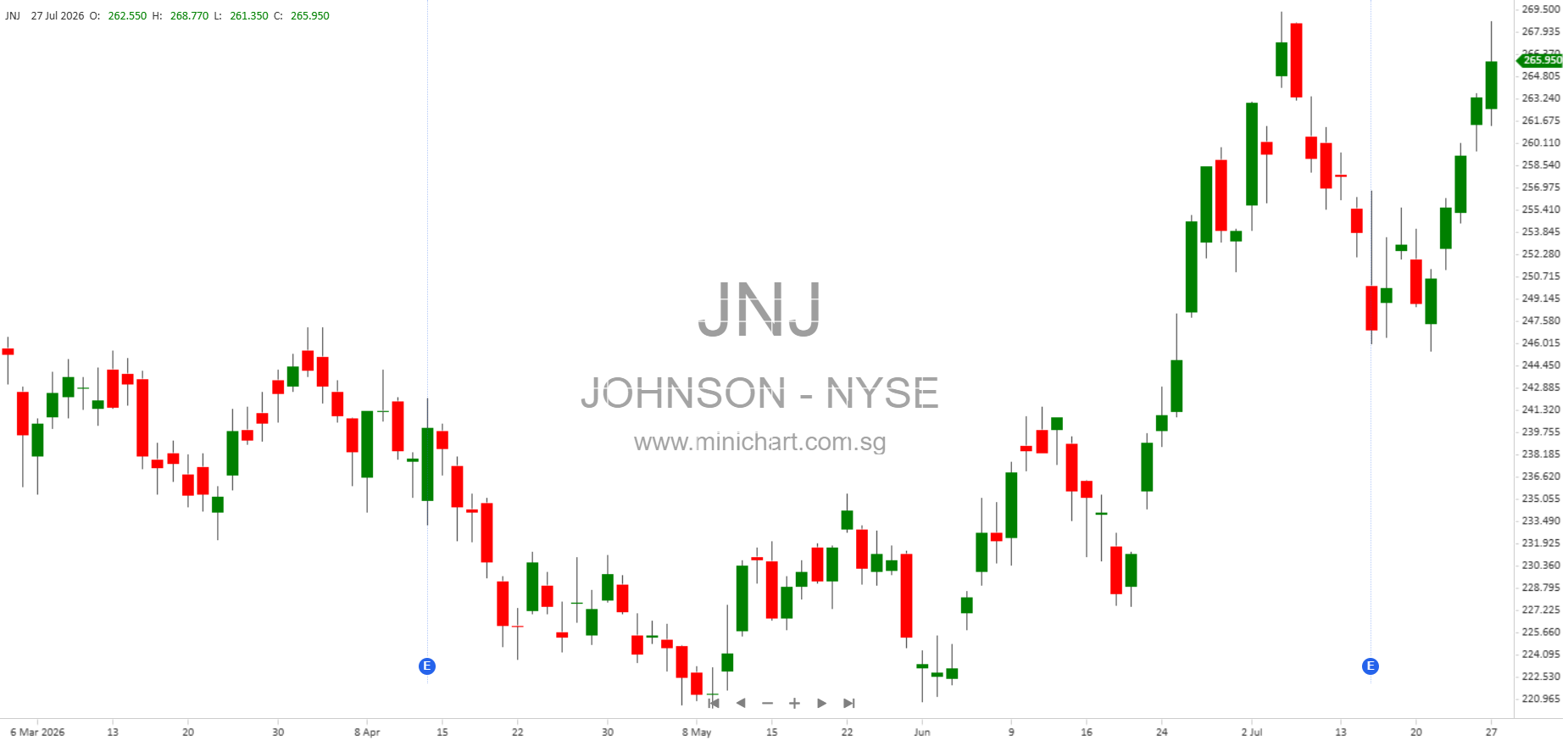
- Positive Catalysts: If the settlement is finalized and litigation risk is substantially reduced, this could be a positive catalyst for J&J shares, improving sentiment and potentially leading to a re-rating of the stock.
- Risk Factors: Failure to achieve the required participation, additional legal challenges, or higher-than-expected financial outflows could negatively affect share value.
Further Information
Additional details on J&J’s position and the science supporting the safety of talc are available at www.FactsAboutTalc.com.
For more information about Johnson & Johnson’s ongoing litigation and risk disclosures, investors are encouraged to review the company’s most recent filings with the Securities and Exchange Commission, including its Annual Report on Form 10-K and Quarterly Reports on Form 10-Q.
Disclaimer
This article is for informational purposes only and does not constitute investment advice. The proposed resolution of talc litigation is subject to various risks and uncertainties, including but not limited to litigation outcomes, regulatory actions, and claimants’ participation rates. Actual results may differ materially from those expressed or implied. Investors should consult the company’s SEC filings and speak with financial advisors before making investment decisions.