Credo Technology Group FY2026 Annual Report: Key Details and Investor Insights
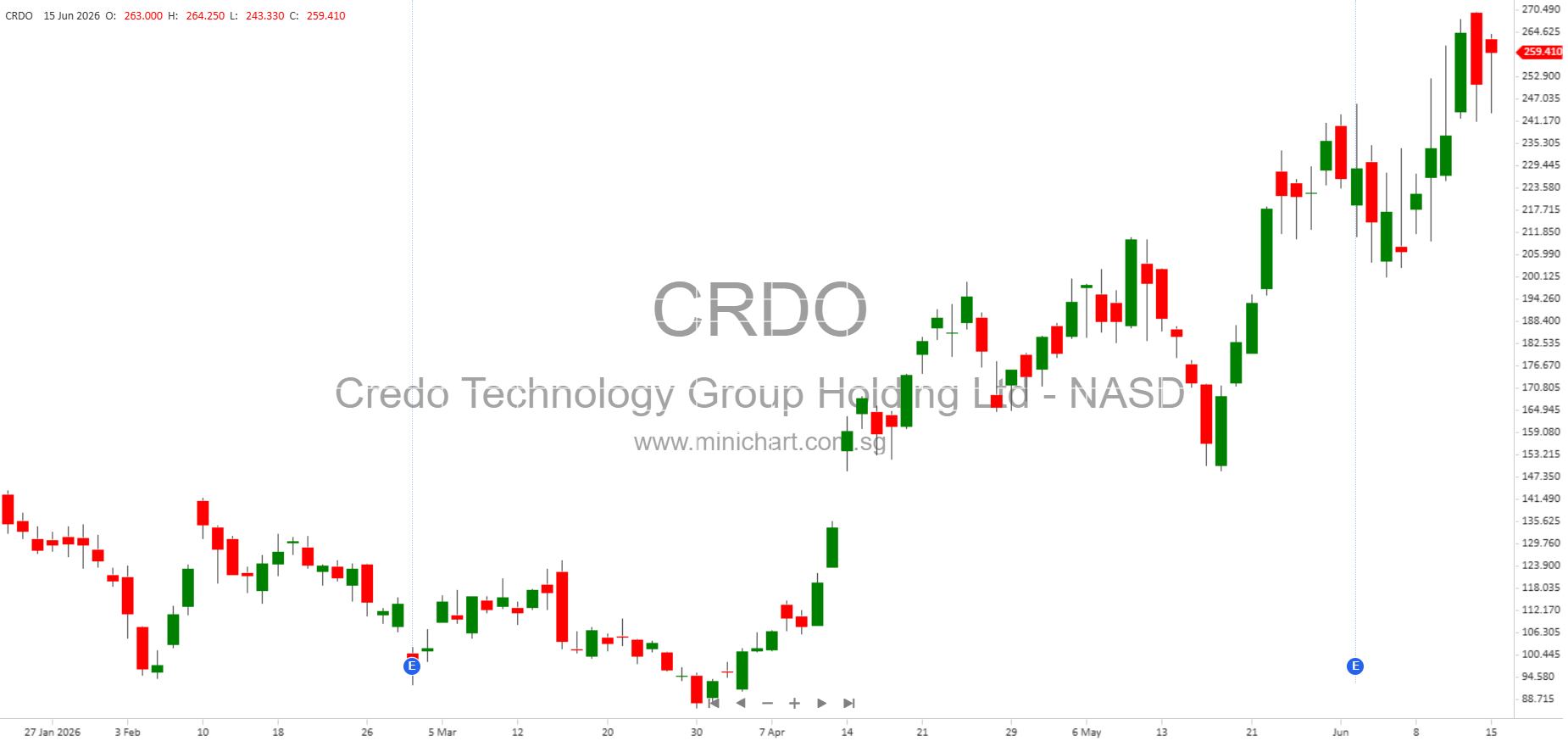
Credo Technology Group Holding Ltd. (CRDO) has released its annual report for the fiscal year ended May 2, 2026. The report contains several critical updates and factors that investors and shareholders should closely monitor, as they may influence the company’s share price and future outlook.
Key Financial Highlights
- Record Revenue Growth: Credo reported an extraordinary surge in total revenue, achieving \$1.3 billion in FY2026, up significantly from \$436.8 million in FY2025. This more than doubling in revenue is a substantial milestone, likely to draw attention from the market.
- Customer Concentration: In FY2026, only two customers accounted for a substantial portion of the company’s revenue. The loss or reduction in orders from any one of these customers could have a significant negative impact on future revenues and operating results.
- No Long-Term Commitments: Credo does not have long-term purchase commitments from its customers. This poses a risk of revenue volatility and may affect the company’s ability to forecast and plan long-term investments.
- Profitability and Costs: While revenue growth has been strong, Credo acknowledges the potential for increased costs in research and development, expansion, marketing, and general administration. These investments may not immediately translate into higher revenues, potentially impacting profitability.
- Accumulated Deficit: The company notes it has an accumulated deficit and may continue to incur net losses in the future. Sustaining profitability remains a key challenge.
Strategic and Operational Updates
- Product Portfolio Expansion: The company intends to continue broadening its portfolio by developing new products to meet the evolving needs of the data infrastructure ecosystem and expanding into adjacent markets.
- Customer Base Growth: Credo is targeting accelerated customer acquisition and expansion into new market segments by scaling its sales and marketing capabilities.
- Design Wins: The business model is heavily dependent on achieving design wins, where customers select Credo products for incorporation into their systems. However, these are not legally binding, and there is no guarantee they will result in actual sales.
- Supply Chain and Manufacturing Risks: The company relies on a limited number of third-party manufacturers, assemblers, and testers. Disruptions could jeopardize product delivery and revenue streams. Additionally, a significant amount of raw materials and components are sourced from single or sole suppliers, increasing operational risk.
- Macroeconomic and Geopolitical Risks: Credo cites exposure to global macroeconomic uncertainties, including the risk of recession, inflation, high interest rates, and international trade tensions (especially between the US and China). These could impact supply chains, demand, and regulatory environments.
- Intellectual Property Risks: The company faces challenges in protecting its IP, especially outside the United States, and may be exposed to litigation or infringement risks.
- Cybersecurity: There is an ongoing risk of security breaches, cyberattacks, and disruptions to IT systems, which could impact business operations.
- M&A Activity: Credo has pursued, and may continue to pursue, mergers, acquisitions, and investments. Such activities carry integration and execution risks, which could adversely affect results.
- ESG and Sustainability: Environmental, social, and governance considerations are integrated into the company’s strategy. Product designs aim for lower power consumption and improved energy efficiency, supporting long-term value creation and compliance with evolving regulatory standards.
Shareholder and Regulatory Matters
- Company Structure: Investors hold shares in a Cayman Islands-based holding company, not directly in the operating subsidiaries. Substantially all operations are carried out by wholly-owned subsidiaries in the US and other countries.
- Compliance and Reporting: Credo is a well-known seasoned issuer, up-to-date with its SEC filings and has undergone auditor attestation of its internal controls under the Sarbanes-Oxley Act.
- Ordinary Shares Outstanding: As of June 8, 2026, there were 177,898 ordinary shares outstanding.
- Stock Exchange: Credo’s ordinary shares (par value \$0.00005 per share) are listed under the symbol CRDO on The Stock Market LLC.
Principal Risks and Potential Price-Sensitive Issues
- Revenue Dependence on Major Customers: The heavy reliance on a small customer base is a material risk. Loss of a key customer could sharply impact revenues and trigger a negative market response.
- No Long-Term Sales Commitments: The lack of binding long-term contracts increases revenue unpredictability and may lead to sharp share price movements on changes in order volume.
- Macroeconomic Vulnerabilities: Exposure to economic slowdowns, inflation, and trade policy shifts could impair margins, growth prospects, and investor sentiment.
- Execution Risks in Expansion and R&D: Increased spending on product development and market expansion may not yield proportional revenue gains, affecting future profitability and share price stability.
- Competition: The company faces intense competition and expects this to increase, which could affect pricing power, margins, and market share.
- Supply Chain Disruption: Single-source suppliers and manufacturing partners create vulnerability to disruptions, which could materially affect operational performance.
- Legal and Regulatory Risks: International operations expose Credo to shifting regulatory requirements, especially concerning US-China trade relations and outbound investment restrictions.
- Cybersecurity and IP Risks: Any significant breach or loss of IP could result in financial loss and reputational harm.
Conclusion
Credo Technology Group’s FY2026 report reveals major revenue growth and ambitious expansion plans but highlights several significant risks—including customer concentration, lack of long-term contracts, global macroeconomic and supply chain vulnerabilities, and the need for continued investment. These developments are highly relevant to shareholders and could drive share price volatility in response to future operational or market events.
Disclaimer: This article is a summary and interpretation of Credo Technology Group’s FY2026 annual report for informational purposes only and does not constitute investment advice. Investors should review the full official filing and consult with their own financial advisors before making any investment decisions. The author and publisher take no responsibility for investment losses related to the information contained herein.