Wolfspeed, Inc. Emerges from Chapter 11: Major Financial Restructuring, New Capital Structure, and Impacts for Investors
Key Points from the Report
- Wolfspeed, Inc. has successfully emerged from Chapter 11 bankruptcy following the confirmation and implementation of its prepackaged reorganization plan (the “Plan”), effective September 29, 2025.
- The company adopted fresh start accounting as of the Plan Effective Date, fundamentally altering its balance sheet and future financial comparability.
- All required regulatory approvals were obtained by January 29, 2026, triggering significant equity and liability reclassifications, as well as the completion of strategic transactions with Renesas Electronics America Inc. (“Renesas”).
- The reorganization led to the cancellation of all outstanding “Old Common Stock,” with shareholders receiving a much smaller allocation of “New Common Stock.”
- Senior creditors and Renesas received substantial new debt and equity instruments, giving them considerable influence over the company’s future governance and capital structure.
- Wolfspeed’s estimated enterprise value upon emergence was \$2.6 billion, with pro forma stockholders’ equity of \$757 million, and a reorganization value of \$3.8 billion.
- The company issued approximately 43.6 million shares of New Common Stock, including significant allocations to Renesas and former creditors.
- Pro forma net loss per share for the periods reported is materially higher than before the restructuring, reflecting the impact of the reorganization and fresh start accounting adjustments.
Details of the Reorganization and Financial Implications
1. Capital Structure Overhaul
- Senior Secured Notes: Creditors received \$1.3 billion in new Senior Secured Notes due 2030, a redemption payment of \$308.5 million for a portion of the old notes, and \$10.5 million in commitment fees. The fair value of the new notes was \$1.38 billion.
- Convertible Notes: Holders received rights to buy \$301 million of new 2.5% Convertible Second-Lien Senior Secured Notes due 2031 (fully backstopped), \$296 million of new 7/12% Second Lien Senior Secured PIK Toggle Notes, and 24.5 million shares of New Common Stock. Convertible notes were valued using a binomial lattice model; \$168.8 million of the value was classified as equity.
- Renesas Transaction:
- Renesas received \$204 million in new convertible debt, a warrant to purchase 4.94 million shares at \$23.95/share, and 16.85 million shares of New Common Stock.
- Upon regulatory approval, contingent liabilities related to the equity contract and warrants were reclassified to equity, and a \$10 million gain from contingent cash was realized.
- Termination of Old Agreements: All previous indentures and deposit agreements were terminated, replaced by the new capital instruments.
- Existing Shareholders: Old Common Stock was canceled. Existing shareholders received only 1.3 million shares of New Common Stock, a substantial dilution.
- Contingent Shares and Cash: Upon timely receipt of regulatory approvals, 871,287 additional shares were distributed to existing equity holders (instead of Renesas). \$10 million of Contingent Cash was returned to Wolfspeed (classified as a non-operating gain).
2. Fresh Start Accounting & Valuation
- Wolfspeed adopted fresh start accounting, meaning post-bankruptcy financials are not comparable with previous periods.
- The estimated enterprise value at emergence was \$2.6 billion, with the implied equity value of \$569 million for common stock outstanding as of the effective date, and \$757 million total stockholders’ equity (after adding back equity-classified premiums).
- Reorganization value (enterprise value plus cash, liabilities, less non-operating assets and costs) was \$3.8 billion.
- Asset valuations used income, market, and cost approaches, with major adjustments for depreciation, amortization, and inventory value.
3. Impact on Financial Statements
- For the nine months ended March 29, 2026:
- Pro forma net loss: \$530.6 million
- Pro forma net loss per share: \$12.00 (basic and diluted)
- Weighted average shares outstanding: 44.2 million
- For the year ended June 29, 2025:
- Pro forma net loss: \$1.21 billion
- Pro forma net loss per share: \$27.85 (basic and diluted)
- Weighted average shares outstanding: 43.6 million
- All potentially dilutive securities (Renesas warrants, new convertible notes) were excluded as their effect would have been anti-dilutive due to the net loss.
Key Issues Shareholders Must Know (Price-Sensitive Information)
- Massive Dilution of Existing Shareholders: Old equity interests were heavily diluted, receiving only about 1.3 million out of 43.6 million new shares. The vast majority of equity is now held by former creditors and Renesas.
- Renesas as a Strategic Shareholder: With 16.85 million shares and significant debt and warrants, Renesas is a major stakeholder and has governance rights, potentially influencing future strategic direction.
- High Leverage and New Debt Load: The company emerged with over \$2.1 billion in new debt, raising concerns about future interest costs and financial flexibility.
- Fresh Start Accounting Impact: Financial statements post-emergence are not comparable to historical results; future earnings per share and book values will reflect the new capital structure and asset valuations.
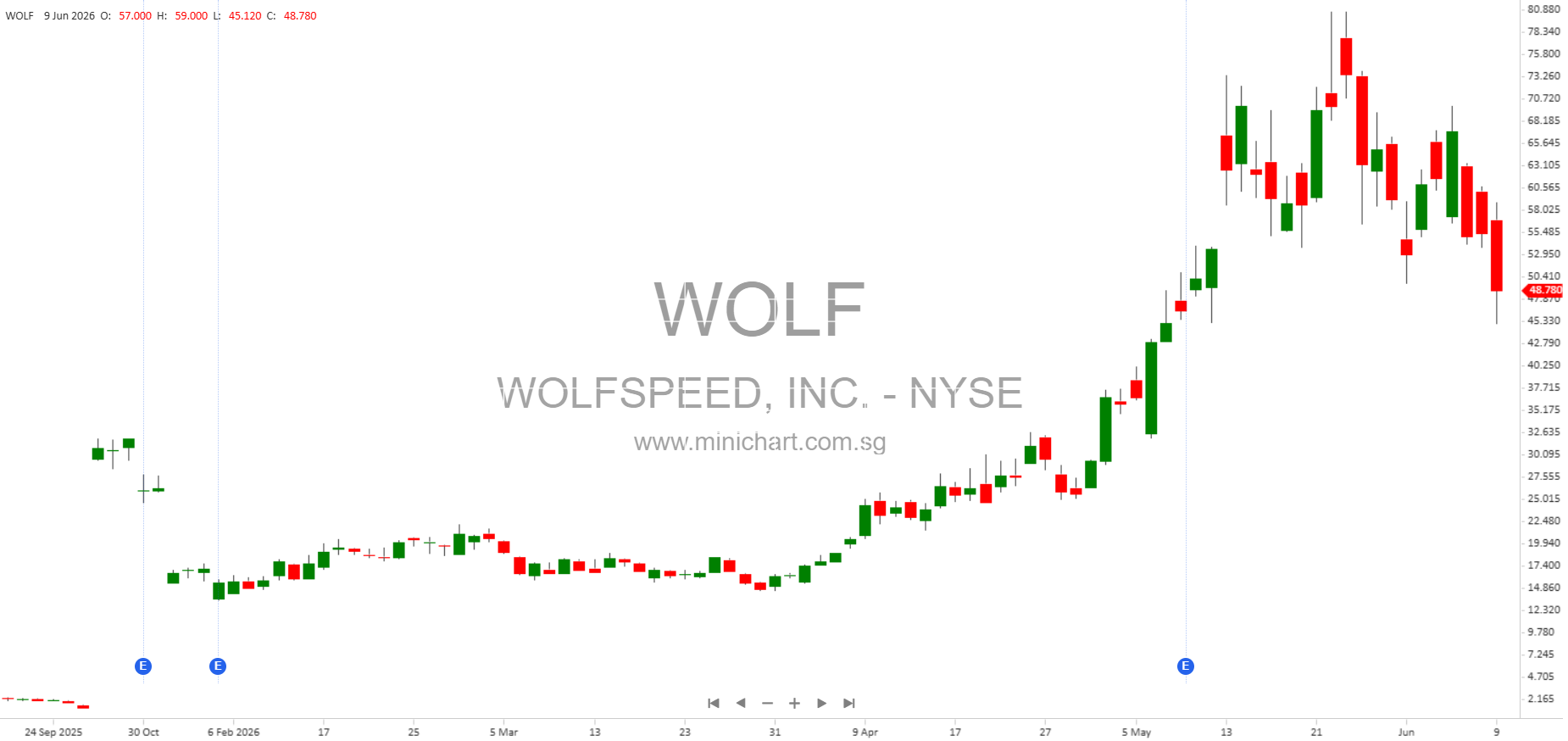
- Potential for Further Share Price Volatility: The combination of a new strategic investor, high leverage, and a dramatically altered shareholder base increases the potential for significant share price movements as the market digests the new structure and outlook.
- Net Losses Remain Significant: Despite restructuring, the company reported substantial pro forma net losses, which could weigh on investor sentiment.
- Equity Incentive Plan Pending: The Plan allows for management incentive equity awards, but none were granted as of the effective date, which could further affect dilution if implemented.
Conclusion
Wolfspeed’s emergence from bankruptcy and adoption of a new capital structure represents a watershed moment for the company. The massive dilution of old shareholders, the rise of Renesas as a key strategic investor, and the heavy new debt load are all highly material developments that investors must factor into their valuation and risk assessment.
The fresh start accounting and reorganization have reset the company’s financials, but the ongoing net losses and high leverage mean Wolfspeed’s path to sustainable profitability and value creation remains challenging. Shareholders should expect continued volatility as the market absorbs the implications of the new structure, debt levels, and ownership changes.
Disclaimer
This article is for informational purposes only and does not constitute financial or investment advice. Investors should review all available filings and consult with their financial advisors before making investment decisions regarding Wolfspeed, Inc. Past performance is not indicative of future results.