Air China Limited 2025 Annual Report: Comprehensive Review and Investor Implications
Financial Performance: Return to Losses Despite Revenue Growth
- Revenue: Air China Limited reported a significant increase in revenue for 2025, reaching RMB 171.48 billion, up from RMB 166.7 billion in 2024 and RMB 141.1 billion in 2023. This reflects continued recovery and expansion of operations following the pandemic era.
- Profitability: Despite the revenue growth, the company swung back to a loss from operations, posting a loss of RMB 389 million (compared to a profit of RMB 2.22 billion in 2024). Loss before taxation widened to RMB 1.62 billion (2024: RMB 1.6 billion loss), and loss after taxation deepened to RMB 3.54 billion, significantly higher than 2024’s RMB 2.44 billion loss.
- Loss Attributable to Equity Shareholders: RMB 1.79 billion loss for 2025, compared to a smaller loss of RMB 233 million in 2024.
- EPS: Loss per share of RMB 0.11 (2024: RMB 0.01 loss per share).
- EBITDA: RMB 30.33 billion, slightly lower than 2024’s RMB 31.32 billion.
- Gearing Ratio: High financial leverage continues, with a gearing ratio of 88.57% (2024: 88.16%).
- No Dividend: The Board proposed no dividend distribution for 2025 due to negative distributable profits.
Operational & Strategic Highlights
- Network Growth: Cumulative available seat kilometers (ASK) reached 367.641 billion, up 3.24% year-on-year. Passengers carried reached 160.6 million, up 3.4%.
- Fleet Expansion: The company introduced 17 new aircraft during the year, utilizing RMB 4.2 billion in proceeds from a targeted A-share issuance.
- Capital Raising: Air China completed a private placement of 854.7 million A-shares to its controlling shareholder CNAHC, raising RMB 6 billion to fund fleet expansion and working capital. An additional A-share issuance (not exceeding RMB 20 billion) has been approved for 2026, targeting CNAHC and CNAC Holding for debt repayment and liquidity enhancement—potentially significantly impacting the company’s capital structure and shareholder dilution.
Risk Factors and Market Sensitivities
- Jet Fuel Price Volatility: Jet fuel costs remain a key risk. A 5% change in average jet fuel price would impact costs by approximately RMB 2.5 billion. The company uses fuel surcharges to partially offset this risk.
- Foreign Exchange Exposure: The company is exposed to USD exchange fluctuations; a 1% change in RMB/USD affects net profit and equity by RMB 140 million. Notably, Air China had no foreign exchange hedging instruments as of year-end, increasing sensitivity to currency movements.
- Competitive Pressure: The industry remains highly competitive, with Air China facing significant challenges from both domestic and international carriers.
- High Leverage and Liquidity: Net current liabilities remain high (RMB 82.5 billion), but management asserts sufficient liquidity from banking facilities to meet obligations.
Corporate Governance and Shareholder Engagement
- Governance: The company maintains high corporate governance standards, with regular board meetings, dedicated committees (audit, risk, remuneration), and “three lines of defense” risk management structure. Information disclosure is rated “Grade A” by the Shanghai Stock Exchange.
- Shareholder Engagement: Air China actively engaged with investors through results briefings, roadshows in Hong Kong and Shanghai, and online Q&A platforms. The company emphasizes transparent and timely information sharing, especially with minority shareholders.
- Changes to Articles of Association: Amendments were made in 2025 to align with updated regulatory requirements and operational needs, approved by shareholders.
Capital and Shareholding Structure
- Total Share Capital: 17.45 billion shares (A shares: 71.6%, H shares: 28.4%).
- Major Shareholders: CNAHC holds 42.53% (A shares), Cathay Pacific owns 15.09% (H shares), and China National Aviation Corporation (Group) owns 11.18%.
- Public Float: Company remains compliant with Hong Kong Stock Exchange requirements.
Connected Transactions and Related Party Dealings
- Significant Related Party Transactions: These include financial services, aircraft leasing, and asset transfers with group companies. All continuing connected transactions have been confirmed by independent directors and auditors as fair, reasonable, and in the interests of all shareholders.
- Future Fundraising: The planned RMB 20 billion A-share placement (targeted for 2026) is a major event, with proceeds earmarked for debt repayment and working capital—this will be highly relevant for investors watching dilution and leverage metrics.
Outlook and Strategic Objectives
- Network Optimization: Focus on strengthening the global route network and hub value, optimizing resource allocation, and enhancing marketing and service innovation.
- ESG and Sustainability: The company is pursuing green, low-carbon transition initiatives, with oversight by the Strategy and Investment Committee. Details are in the separately published 2025 Sustainability & ESG Report.
- Dividend Policy: While the company maintains an “active dividend policy” in principle, actual distribution is contingent on distributable profits, and no dividend was declared for 2025.
Debt Profile
- Corporate Bonds: Air China issued multiple tranches of super short-term commercial paper and medium-term notes in 2025, with interest rates ranging from 1.51% to 1.96%. The company continues to rely on debt markets for liquidity and capital expenditure funding.
Key Takeaways for Investors
- Potential Share Price Movers:
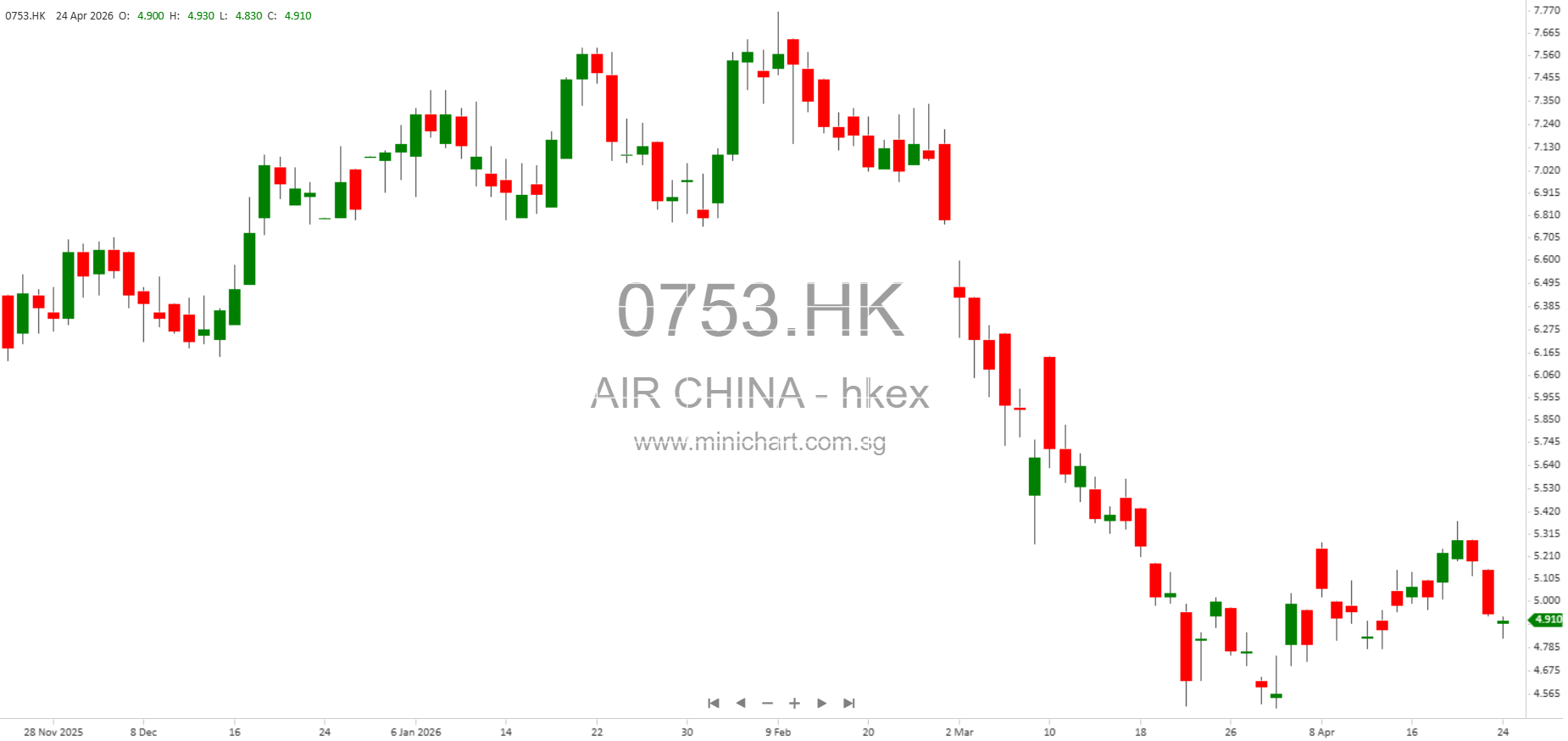
- Significant net loss for 2025 despite revenue growth may pressure the share price.
- Approval and impending execution of a substantial RMB 20 billion A-share issuance to controlling shareholders may result in significant dilution and warrants close monitoring.
- Exposure to fuel and foreign exchange risks remains high; the lack of hedging could amplify earnings volatility.
- No dividend payout for 2025 may disappoint yield-focused investors.
- Continuous fleet expansion and capital expenditure highlight ongoing growth ambitions, but also increase financial leverage risks.
Disclaimer: This article is for informational purposes only and does not constitute investment advice. Investors should review the full annual report and consult their own financial advisors before making investment decisions. The information above is based on publicly available disclosures as of 26 March 2026 and may be subject to change.