Shui On Land 2025 Sustainability Report: Comprehensive Analysis and Shareholder Implications
Overview
Shui On Land Limited has released its 2025 Sustainability Report, marking the twelfth annual disclosure of environmental, social, and governance (ESG) performance. The report, covering the period from 1 January to 31 December 2025, is noteworthy for its alignment with the latest Hong Kong Exchange (HKEX) ESG and International Financial Reporting Standards (IFRS) S2 Climate-related Disclosures. The report is a major reference point for shareholders and investors, providing a transparent account of Shui On Land’s progress, strategy, and governance in sustainability—a growing driver of value and risk in the real estate sector.
Key Points and Potentially Price-Sensitive Information
1. ESG Ratings and Market Recognition
- GRESB 5-Star Rating: Shui On Land elevated its Global Real Estate Sustainability Benchmark (GRESB) rating to the highest 5-Star level—an achievement that demonstrates its industry-leading sustainability practices.
- HKQAA “AA” Rating: The company achieved an “AA” rating from the Hong Kong Quality Assurance Agency (HKQAA) for sustainability performance.
- CDP “A-List” Status: Shui On Land maintained its place on the CDP “A-List” for climate performance and supplier engagement.
- Award-Winning Performance: The company received the “Decarbonisation Award” from the American Chamber of Commerce in Shanghai and the “Most Sustainable Organisation Award” at the Best Corporate Governance and ESG Awards 2025 from the Hong Kong Institute of Certified Public Accountants.
Investor Implication: These recognitions enhance the company’s reputation and could attract ESG-focused investment. Sustained improvement in ESG ratings often correlates with lower cost of capital, greater access to green financing, and premium valuation multiples in capital markets.
2. Governance and Integration of ESG into Remuneration
- Board-Level Commitment: Shui On Land’s Sustainable Development Executive Committee and Board actively oversee ESG strategy, with four reports to the Executive Committee and two to the Board Sustainability Committee in the reporting year.
- Remuneration Link: Executive remuneration—including for the CEO, CFO, Chief Sustainability Officer, and key project and department heads—is now directly linked to performance on sustainability KPIs such as carbon reduction, diversity and inclusion, and health and safety.
- Board Diversity: 60% of board members are Independent Non-Executive Directors (INEDs), and female representation on the Board increased to 40% (from 36% in 2024 and 31% in 2023).
Investor Implication: Linking pay to sustainability performance and increasing board diversity demonstrate Shui On Land’s alignment with global investor expectations for robust ESG governance, which is increasingly factored into investment decisions and could positively impact share valuation.
3. Climate and Nature-Related Disclosures—Alignment with New Regulatory Standards
- IFRS S2 and HKEX ESG Code Compliance: The 2025 report fully aligns with the latest HKEX requirements and IFRS S2 Climate-related Disclosures, including scenario analysis, risk assessment, and transition planning.
- Double Materiality Assessment: Shui On Land reassessed its material ESG issues through a double materiality approach, considering both financial and impact materiality across its business and value chain.
- Physical and Transition Risks: The company identified extreme precipitation and heat as the most significant physical risks to its assets, and undertook comprehensive risk assessments and scenario analysis. Transition risks include regulatory mandates, energy and material cost volatility, shifting investor/consumer preferences, and potential for higher insurance costs.
- Climate Resilience Guideline: The company embedded a new Resilience and Adaptation Guideline for Physical Climate Risks into all new developments, supporting asset resilience and compliance.
Investor Implication: Early alignment with emerging climate disclosure standards positions Shui On Land for continued access to global capital and minimizes the risk of regulatory non-compliance or “brown discount” on asset values.
4. Sustainability Performance and Targets (5C Pillars)
- Decarbonisation: Shui On Land surpassed its 2024 Sustainability-Linked Bond target of a 25% reduction in Scope 1 & 2 GHG emissions intensity (from 2019), achieving a 51.3% reduction.
- Renewable Energy: 35% of electricity is from renewable sources, with over 1,000m2 of rooftop solar panels installed at CPIC Xintiandi Tower 1 and 2.
- Employee Development: Average training hours per employee reached 47 hours in 2025, exceeding the 2030 target of 40 hours per year. Accumulated volunteer hours since 2019 reached 225,517 (ahead of the 2030 goal of 150,000).
- Health and Safety: Zero contractor safety incidents—well below internal targets.
- Supply Chain Ethics: 100% of contractors and suppliers have acknowledged the company’s Supplier Code of Conduct.
Investor Implication: Outperformance on climate and social targets, combined with robust supply chain management, materially reduces operational and reputational risks, increasing the likelihood of continued outperformance and investor confidence.
5. Sustainable Financing and Green Bonds
- Shui On Land has been an early adopter of green financing, launching a green bond in 2019 and a Sustainability-Linked Bond in 2021. Proceeds have been used for asset upgrades, energy efficiency, and water conservation initiatives.
- The company’s 2021 Sustainability-Linked Bond was tied to tangible emission reduction targets, all of which were exceeded.
Investor Implication: Effective use of green financing enhances Shui On Land’s ESG profile, improves cost of capital, and signals the company’s ability to meet or surpass sustainability-linked covenants—potentially avoiding financial penalties and enhancing investor trust.
6. Enhanced Risk Management and Emergency Preparedness
- Climate-related and other sustainability risks are now fully embedded in the company’s Enterprise Risk Management (ERM) framework. The company has conducted asset-level physical climate risk inspections and scenario analysis for transition risks.
- Internal Audit and Emergency Preparedness Teams have stepped up training and audits, with 11 risk management training sessions delivered to over 400 employees in 2025.
Investor Implication: Enhanced risk management supports organisational resilience, limits financial losses, and strengthens the company’s long-term viability, which is likely to be positively received by the market.
7. Cybersecurity and Data Protection
- Shui On Land renewed its ISO 27001 and ISO 27701 certifications for its Personal Information Security Management System, demonstrating strong commitment to data privacy and cybersecurity—a key risk area for real estate and infrastructure firms.
- The company’s Information Safety Policy and improved cybersecurity protocols are aimed at reinforcing business resilience in an increasingly digital environment.
Investor Implication: Strong cybersecurity credentials reduce the risk of costly data breaches and regulatory penalties, supporting operational continuity and protecting shareholder value.
8. Stakeholder Engagement and Materiality
- An independent consultant was engaged in 2025 to ensure fair and transparent stakeholder engagement, including 12 face-to-face interviews and an online survey.
- Stakeholder feedback is systematically escalated to the Board, ensuring that investor, employee, and partner concerns are integrated into strategic planning.
Investor Implication: Proactive stakeholder engagement reduces social risk and enhances license to operate, which can be material in high-profile urban development projects.
9. Assurance and Regulatory Compliance
- The report’s disclosures have been independently assured by the Hong Kong Quality Assurance Agency (HKQAA) under ISSA 5000, confirming adherence to HKEX ESG, GRI, and SASB standards. No material inconsistencies or misstatements were found.
Investor Implication: Independent assurance of ESG disclosures adds credibility and supports confidence among institutional investors and regulators.
Conclusion: Implications for Shareholders and Potential Impact on Share Price
Shui On Land’s 2025 Sustainability Report contains several developments that could be price-sensitive and influence share value:
- Achievement of top-tier ESG ratings and awards positions the company as a sector leader, likely to attract increased capital from ESG-focused funds and index inclusions.
- Direct linkage of executive pay to sustainability performance aligns management incentives with shareholder and societal interests, reducing governance risk and supporting long-term value creation.
- Superior performance against climate targets and proactive risk management mitigate future regulatory and physical risks, reinforcing the company’s competitive advantage and premium asset status.
- Demonstrable progress on supply chain ethics, board diversity, and cybersecurity further de-risks the business and enhances attractiveness to global investors.
- Continued leadership in green and sustainable financing reduces borrowing costs and signals capacity to meet future sustainability-linked obligations, which may support upward re-rating of the share.
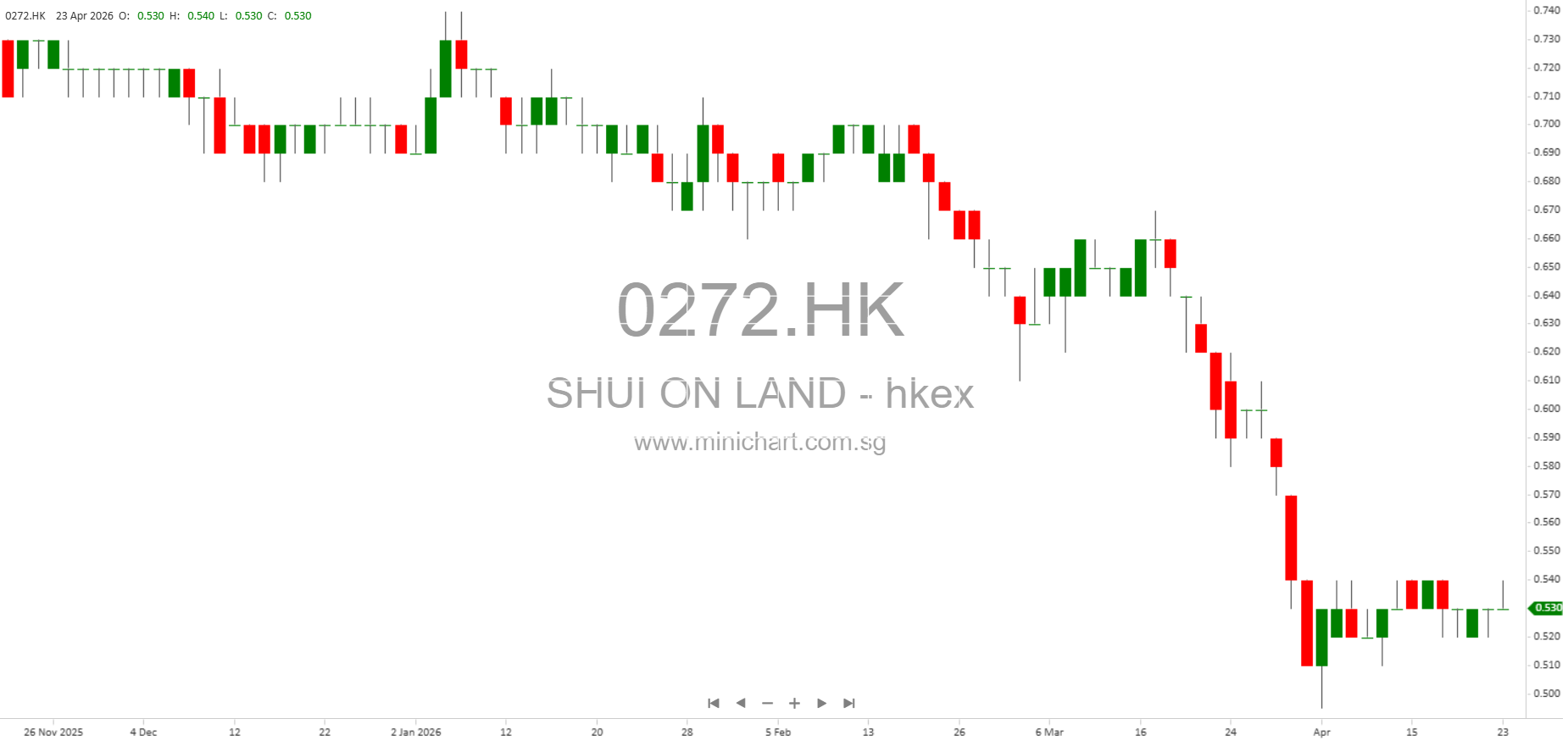
The combination of robust ESG performance, innovative risk management, and regulatory leadership suggests that Shui On Land is well-positioned to benefit from the growing investor focus on sustainability, potentially driving positive share price momentum.
Disclaimer
This article is for informational purposes only and does not constitute investment advice or a recommendation to buy or sell any securities. Investors should conduct their own research or consult a licensed financial advisor before making investment decisions. The author and publisher are not responsible for any losses or damages that may result from reliance on the information provided herein.