Passage Bio Delivers Promising Interim Data for PBFT02, Faces FDA Trial Mandate, and Launches Strategic Review
Key Highlights from Passage Bio’s Latest Announcement
- PBFT02 Gene Therapy Shows Promising Biomarker Improvements in Frontotemporal Dementia (FTD) with GRN mutations.
- FDA Requires Randomized Controlled Registrational Trial for PBFT02 in FTD-GRN, rejecting single-arm design.
- Company Initiates Strategic Review, considering mergers, acquisitions, asset sales, and other alternatives to maximize shareholder value.
- Wedbush PacGrow Engaged as Financial Advisor to assist with strategic review process.
Interim upliFT-D Trial Data: Key Efficacy and Safety Findings
Passage Bio (NASDAQ: PASG) released updated interim data from its ongoing Phase 1/2 upliFT-D study evaluating PBFT02, an investigational, one-time gene therapy for the treatment of FTD with granulin (GRN) mutations. The report is particularly significant for investors due to its potential to impact the future of the company’s lead program and its overall strategic direction.
Clinical Efficacy Signals
-
Reductions in Brain Atrophy:
- In patients with earlier-stage disease (Clinical Dementia Rating [CDR] global score of 1 at baseline), PBFT02 led to a 64% reduction in whole brain atrophy at 12 months compared to untreated patients (3.1% vs 8.7% atrophy).
- A 54% reduction in frontotemporal cortex atrophy was also observed (4.6% vs 9.9%).
- These improvements were not seen in patients with more advanced disease (CDR score of 2), guiding patient selection for further studies.
-
Stabilization of Plasma Neurofilament Light (NfL):
- PBFT02-treated patients showed an average reduction of 1.0 pg/mL in plasma NfL at 12 months, whereas untreated patients showed an increase of 13.5 pg/mL in the same period.
-
Robust Increases in CSF Progranulin (PGRN):
- Dose 1 (4.5e13 total genome copies) elevated CSF PGRN from below 3 ng/mL at baseline to 22.8 ng/mL at 12 months and 24.2 ng/mL at 18 months.
- Dose 2 (2.2e13 total genome copies) achieved similar PGRN levels, reaching 22.6 ng/mL at 6 months (n=1).
-
Safety Profile:
- PBFT02 was generally well-tolerated across 10 FTD-GRN and 1 FTD-C9orf72 patient.
- No new treatment-related serious adverse events (SAEs) since last update. Previously, three asymptomatic SAEs (venous sinus thrombosis and hepatotoxicity) were observed in two patients but resolved.
- No evidence of dorsal root ganglion (DRG) toxicity or complications from intrathecal administration.
Regulatory Update: FDA Sets High Bar for Registration
In a recent Type C meeting, the FDA informed Passage Bio that a randomized controlled registrational trial (and not a single-arm study) will be required for PBFT02 approval in FTD-GRN. While the company possesses robust natural history data and the disease is rare and underserved, the FDA’s position introduces substantial ethical, logistical, and financial challenges for further development. Passage Bio is currently evaluating next steps for both the PBFT02 program and its overall corporate strategy.
Strategic Review: Major Corporate Developments Underway
-
Passage Bio has initiated a comprehensive review of strategic alternatives to maximize shareholder value. Potential outcomes being considered include:
- Merger or acquisition transactions
- Reverse merger
- Sale of assets
- Strategic partnerships or licensing opportunities
- Other corporate actions
- The company has engaged Wedbush PacGrow as its financial advisor to assist with the process. No timeline has been set, and there is no guarantee that any transaction will occur.
Implications for Shareholders
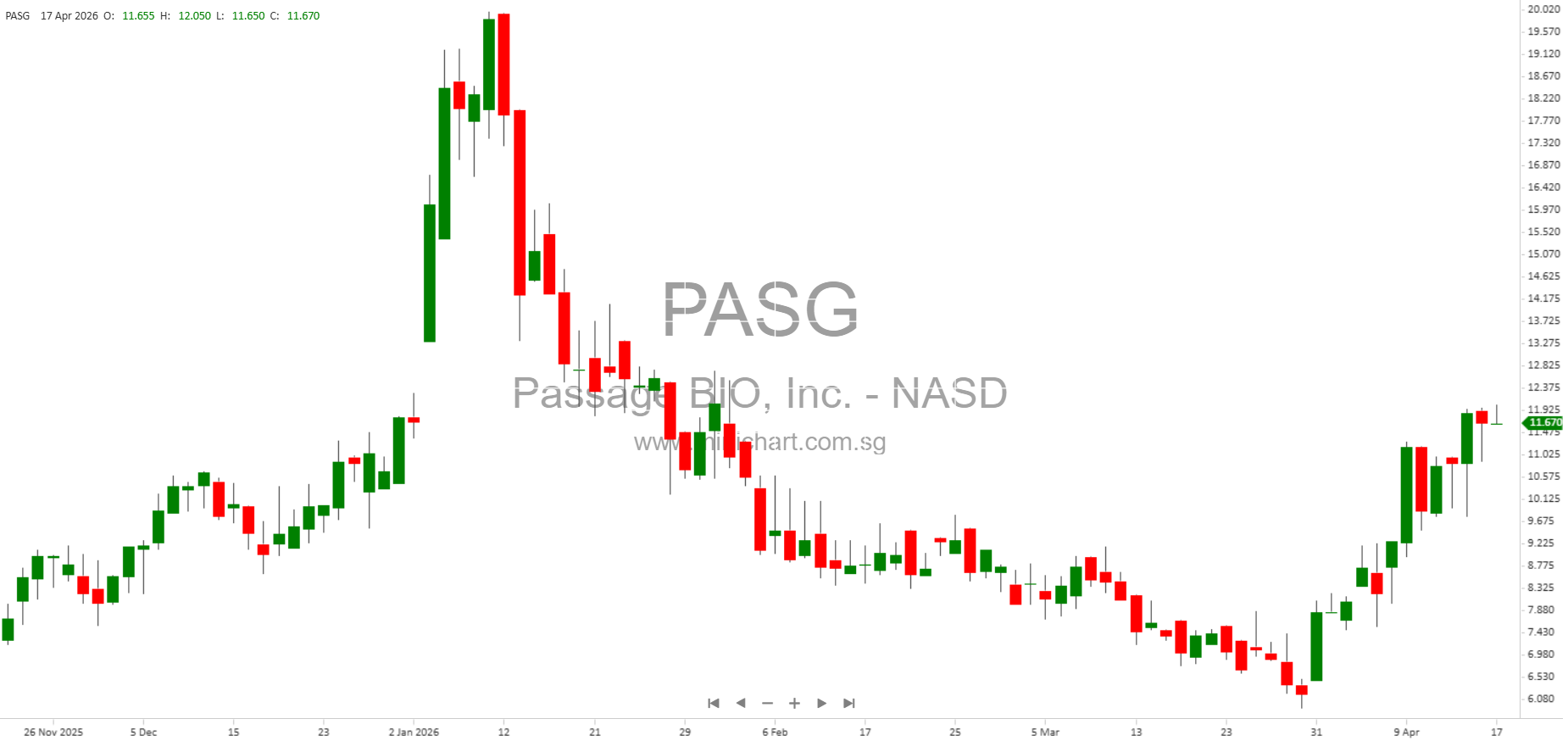
These announcements are highly price-sensitive and could significantly impact Passage Bio’s share value. The positive interim efficacy and safety data for PBFT02 could boost investor confidence in the underlying technology and clinical program. However, the FDA’s requirement for a randomized controlled trial—given the rare, progressive nature of FTD-GRN—may delay product approval timelines and increase development costs, which could be viewed negatively.
Most notably, the initiation of a strategic review signals potential transformational corporate actions, including the possibility of a sale, merger, or other significant transactions. Such actions often result in material share price movements, depending on the outcome and counterparties involved.
About Passage Bio
Passage Bio is a clinical stage genetic medicines company focused on one-time therapies for neurodegenerative diseases. Its lead candidate, PBFT02, aims to address diseases like FTD by elevating progranulin to restore lysosomal function and slow neurodegeneration.
Investor Contact
Stuart Henderson
Passage Bio
[email protected]
Media Contact
Mike Beyer
Sam Brown Inc. Healthcare Communications
312.961.2502
[email protected]
Disclaimer: This article is for informational purposes only and does not constitute investment advice or a recommendation to buy or sell any securities. Investors should conduct their own due diligence and consult with their financial advisors before making investment decisions. Forward-looking statements involve risks and uncertainties which are detailed in the company’s filings with the SEC. Actual results may differ materially from those expressed or implied herein.