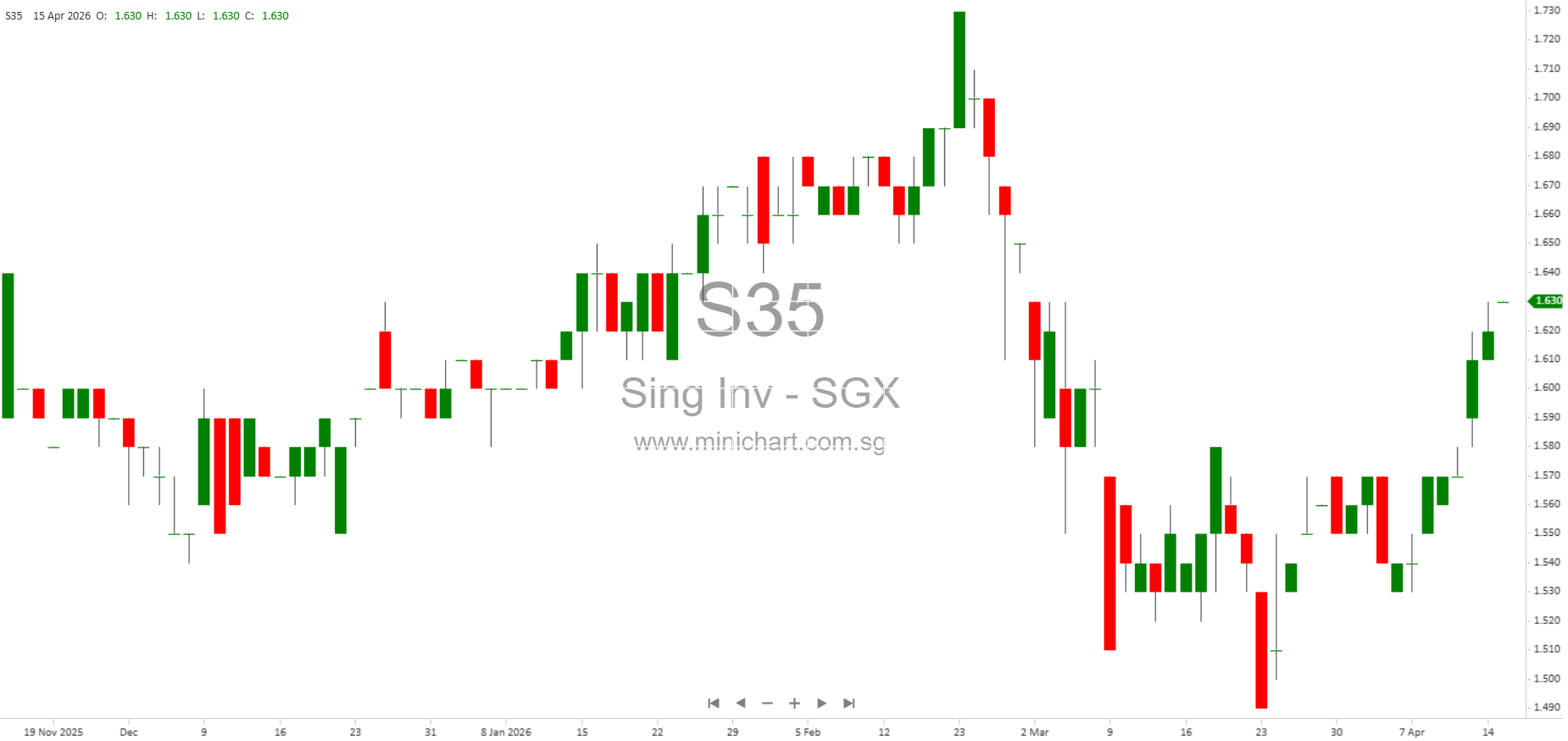
Sing Investments & Finance FY2025 Results: Key Highlights and Investor Insights
Record Net Profit and Loan Book Expansion
Sing Investments & Finance Limited (“SingFinance”) has posted a record net profit of S\$42.3 million for the financial year ended 31 December 2025, an impressive 16% increase from the previous year. The group’s loan book expanded to S\$2.79 billion, reflecting a 4% year-on-year growth. This robust performance is particularly notable given the backdrop of declining market interest rates in Singapore during 2025.
Net Interest Margin Expansion and Outlook
SingFinance’s Net Interest Margin (NIM) rose by 28 basis points to 2.27% (from 1.99%), primarily due to disciplined deposit pricing and efficient management of the loan/deposit ratio. Notably, the group’s savings from lower deposit costs more than offset the decline in asset yields as interest rates eased.
However, management warns that the current NIM level may not be sustainable. With limited scope for further rate cuts and expectations of rising deposit costs in 2026, especially in the second half, margin pressures are anticipated. Additionally, the ongoing Middle East crisis introduces further uncertainty, with possible implications for inflation and interest rates. This is a key point for shareholders as future profitability may be less robust if margins come under pressure.
Credit Quality Remains Strong
The group’s stage 3 credit-impaired assets stood at S\$10.3 million (0.4% of the loan portfolio), which management considers immaterial and compares favourably with industry peers. These non-performing loans are either secured by collateral or risk-shared with a Singapore statutory board, with net exposures fully provided for.
Most stage 3 loans are from property mortgages and working capital loans, with borrowers spanning general commerce, finance, professionals, and private individuals. Regular, systematic reviews and rigorous provisioning (including collateral haircuts to forced-sale values) are in place to manage credit risk.
Progress on Green and Sustainable Financing
SingFinance’s two largest lending segments—property loans and automotive financing—comprise over half its total customer loans. In line with broader market trends, the group is making early moves into green financing:
- Launched dedicated electric vehicle (EV) financing packages with attractive rates for SME dealers, covering end-to-end costs from purchase to sale. Take-up is growing, though still in early stages.
- Introduced working capital loans for SME-led solar panel installations.
Initial credit performance for these green products has been stable, with margins consistent with the broader portfolio. However, SME adoption is constrained by upfront costs and long payback periods.
Internally, SingFinance has strengthened sustainability capabilities since 2022, including annual e-learning on ESG risks, and is embedding these skills into its business lines. The Board has set specific limits on onboarding industries with high environmental risk and expects management to report regularly on progress. While implementation is in its early stages, the Board is balancing commercial viability with long-term sustainability objectives—an area for investors to watch as the green finance landscape evolves.
Dividend Policy and Capital Management
The Board has proposed a dividend of 7.5 cents per share for 2025 (42% payout ratio), consistent with recent years but below the pre-pandemic level of around 47%. As at 31 December 2025, the capital adequacy ratio (CAR) is 15.2%, a comfortable 3.2% above the regulatory minimum.
Importantly, unlike local banks, SingFinance does not plan to undertake share buybacks or special dividends at this stage. The Board’s rationale is to preserve capital for future growth amid regulatory requirements and a dynamic risk environment. This more conservative approach may disappoint investors seeking higher capital returns in the short term, especially in view of local banks’ willingness to return excess capital via optimisation initiatives. However, management signals that this position may be revisited once economic conditions stabilise and credit demand improves.
Key Shareholder Considerations and Possible Price Sensitivities
- Potential NIM Pressure in 2026: Management’s guidance that margins are likely to come under pressure due to rising deposit costs may weigh on future profitability and valuation.
- Prudent Credit Management: Low non-performing loan ratios and conservative provisioning provide reassurance, but any deterioration in economic conditions or escalation of geopolitical risks (e.g., Middle East crisis) could impact asset quality.
- No Immediate Capital Optimisation: The absence of special dividends or buybacks may cap upside in shareholder returns in the near term.
- Early-Stage Green Finance Initiatives: Growing traction in green loans could be a long-term positive, but the impact is not yet material at portfolio level.
Conclusion
Overall, SingFinance’s FY2025 report highlights solid operational execution, robust credit quality, and prudent capital management. However, the outlook for 2026 is more cautious, with margin pressures and slower capital returns likely themes for the year ahead. Investors should monitor the group’s ability to defend margins, manage asset quality, and ramp up green financing in a challenging operating environment.
Disclaimer: This article is for informational purposes only and does not constitute investment advice or a recommendation to buy or sell any securities. Please consult your financial adviser before making investment decisions.