The Children’s Place, Inc. 2025 Annual Report: Key Insights for Investors
Overview
The Children’s Place, Inc. (“the Company”) has released its Annual Report on Form 10-K for the fiscal year ended January 31, 2026 (Fiscal 2025). The report provides significant updates on the Company’s financial position, strategic direction, risk factors, and recent changes in ownership structure, all of which could have material implications for shareholders and potential investors.
Key Highlights
-
Controlled Company Status:
As of this report, Mithaq Capital SPC (“Mithaq”) owns more than 50% of The Children’s Place’s outstanding shares. As a result, the Company is now a “controlled company” under Nasdaq’s Listing Rules. This allows the Company to rely on exemptions from certain corporate governance requirements, such as having a majority independent board and fully independent committees for Human Capital and Compensation, and Corporate Responsibility, Sustainability, and Governance. -
Market Capitalization and Shares Outstanding:
The aggregate market value of common stock held by non-affiliates was \$38,010,941 as of August 2, 2025. As of April 6, 2026, there were 22,211,880 shares of Common Stock (\$0.10 par value) outstanding. -
Listing and Filing Status:
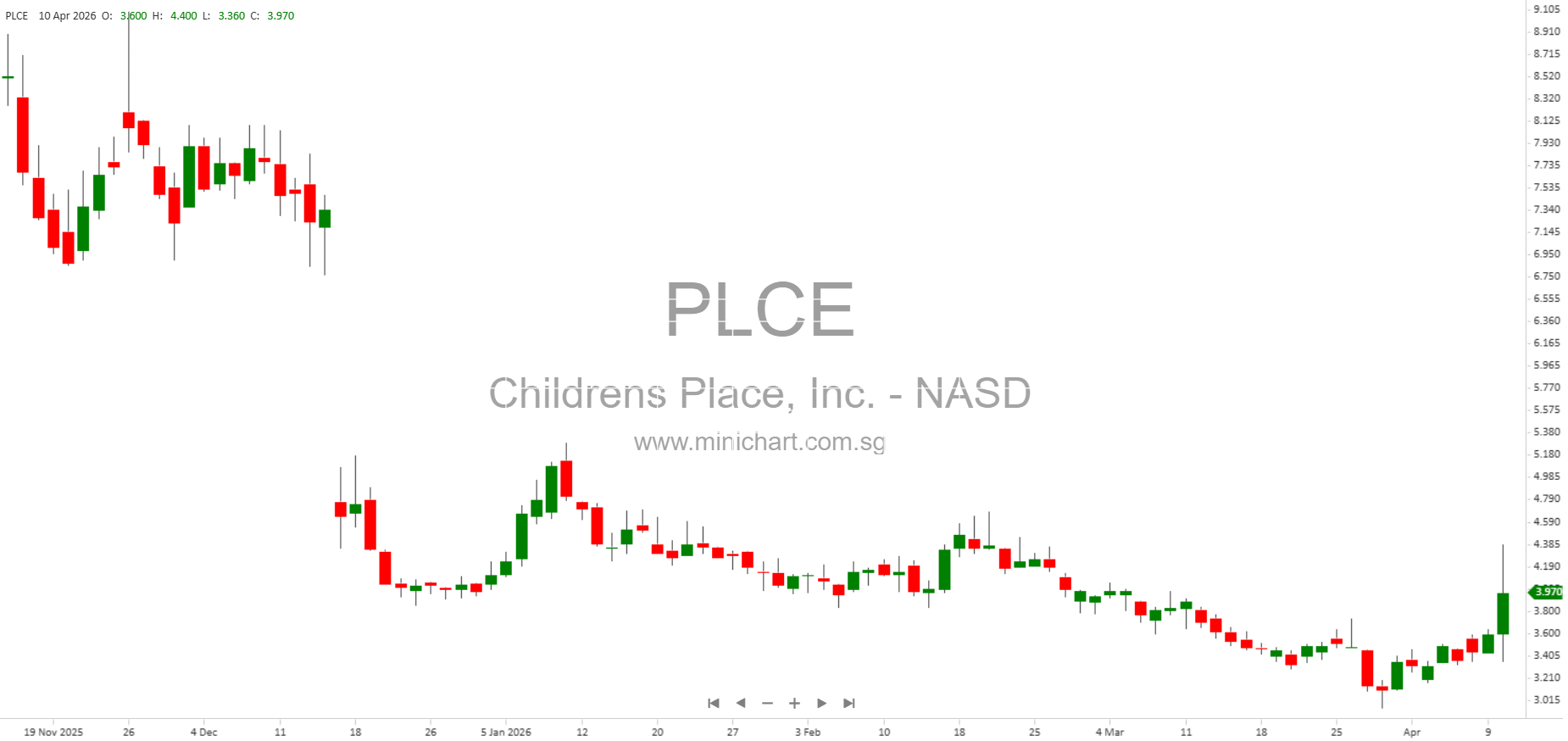
The Company’s common stock trades on the Nasdaq Global Select Market under the symbol “PLCE.” The Company is a non-accelerated filer and a smaller reporting company, which affects its reporting and disclosure obligations. -
Financial Reporting and Internal Controls:
The Company has not filed a report on and attestation to its management’s assessment of internal control over financial reporting by its external auditor, as permitted for smaller reporting companies. -
ESG and Sustainability Reporting:
The Company published its latest Environment, Social & Governance (ESG) Report in October 2024 and plans to issue its next Sustainability and Social Impact Update in 2026. Future reports will shift focus to regulatory compliance and supply chain transparency, aligning with evolving industry and legal requirements.
Risks and Strategic Considerations
-
Liquidity and Access to Capital:
The Company’s ability to fund operations, capital expenditures, and debt service is dependent on generating sufficient cash flow, maintaining access to credit facilities, and managing seasonal sales fluctuations. Recent macroeconomic conditions, including high inflation, tariffs, and geopolitical instability, are cited as potential negative influences on consumer spending and overall liquidity. -
Strategic Initiatives and Business Transformation:
The Company is focused on three strategic pillars: delivering quality and value to customers, optimizing infrastructure for e-commerce, and expanding/refurbishing its North American retail store fleet. Central to this is a business systems transformation focused on digital expansion and inventory management. Any delays, cost overruns, or failures in these projects could have a material adverse effect on operations and financial results. -
Store Optimization Risks:
Risks are associated with identifying and closing underperforming stores, achieving anticipated sales transfer rates, and optimizing customer segmentation. Failure in these areas, or in opening and managing new locations, could result in impairment charges and reduced profitability. -
Supply Chain and Vendor Dependence:
The Company relies heavily on unaffiliated manufacturers, suppliers, and transport providers globally. Disruptions, bankruptcies, or ethical/legal breaches among these partners could materially impact operations and financial performance. The Company also notes exposure to currency fluctuations, especially in its Canadian operations, and does not hedge foreign currency receivables/payables. -
Macroeconomic and Geopolitical Risks:
The report highlights continued risks from inflation, tariffs, pandemics, natural disasters, and geopolitical events, any of which could disrupt operations, increase costs, or reduce consumer demand. -
Management and Organizational Risks:
The Company’s success is highly dependent on its senior management team. Any disruption or ineffective leadership, particularly at the highest levels, could materially affect business operations and culture. -
Private Label Credit Card Exposure:
Regulatory changes, such as new limits on credit card late fees, may negatively affect income and cash flow from the Company’s private label program, impacting customer credit availability and overall sales. -
Insurance and Self-Insurance Risks:
The Company self-insures certain risks and purchases insurance policies for others. Unfavorable claims experience could materially impact financial results. -
Merchandise and Technology Risks:
The apparel industry is subject to rapid shifts in fashion and consumer preference. The Company must anticipate and respond to these trends, as well as changes in technology and shopping patterns, or risk excess inventory, lost sales, and reduced profitability.
Potentially Price-Sensitive Developments
-
Change to Controlled Company Status:
The transition to “controlled company” status and the reliance on related Nasdaq exemptions are significant governance changes. This may affect board independence and oversight, which could be viewed positively or negatively by institutional investors and may impact share price volatility. -
Ongoing Liquidity and Access to Capital:
The Company’s explicit statement of its dependence on cash flow and access to credit amid ongoing macroeconomic uncertainty signals elevated risk. Any negative developments in liquidity, credit access, or continued economic headwinds could have immediate share price implications. -
Strategic Transformation Execution:
The success or failure of business transformation initiatives, particularly in digital and inventory management, are material to future growth and profitability. Delays, cost overruns, or operational disruptions could drive substantial share price movements. -
ESG and Regulatory Focus:
The shift in ESG reporting focus may alter investor perception, particularly among those with a sustainability or impact mandate.
Conclusion
The Children’s Place, Inc.’s 2025 Annual Report underscores significant strategic, operational, and financial risks and changes, including a new “controlled company” status, ongoing transformation initiatives, and continued macroeconomic and supply chain challenges. These factors should be closely monitored by investors as they may materially impact future performance and the Company’s share price.
Disclaimer
This article is provided for informational purposes only and should not be construed as investment advice. Please consult your financial advisor before making investment decisions. The information above is based on the Company’s 2025 Annual Report and may be subject to change or clarification in future filings or announcements.