Comprehensive Review: First America Resources Corp. (FSTJ) 2025 Annual Report – Key Investor Insights
Executive Summary
First America Resources Corp. (“the Company”, OTC: FSTJ), together with its wholly owned subsidiary METech Recycling, Inc., has released its audited annual report for the fiscal year ended December 31, 2025. This report provides a detailed view into the Company’s financial performance, capital structure, risk dynamics, related party transactions, share structure, and other critical developments. The following analysis highlights key findings and investor-relevant issues that may prove highly significant to the Company’s valuation and share price trajectory.
Key Financial Highlights
- Revenue Growth and Gross Margin: The Company reported revenues of \$10,345,098 for FY2025, a notable increase from \$9,104,152 in 2024, reflecting continued business growth. However, gross margin slightly contracted from 56.2% in 2024 to 55.1% in 2025, indicating some pressure on profitability due to rising costs.
- Net Income Decline: Despite higher revenues, net income dropped sharply to \$2,765 in 2025 compared with \$211,112 the prior year. This dramatic fall is primarily attributed to increased operating expenses, especially payroll, professional fees, and general administrative costs, which outpaced revenue gains.
- Impact of Non-Recurring Items: The 2025 net income figure was materially supported by a one-time \$346,000 Employee Retention Credit. Excluding this, the Company would have posted a net loss for the year—an important consideration for investors evaluating ongoing profitability.
- Earnings Per Share (EPS): Basic and diluted EPS remained at \$0.00 for both 2025 and 2024, based on an unchanged weighted average of 87,964,090 shares outstanding. This underlines the limited profitability for shareholders and may weigh on valuation multiples.
Share Structure and Liquidity
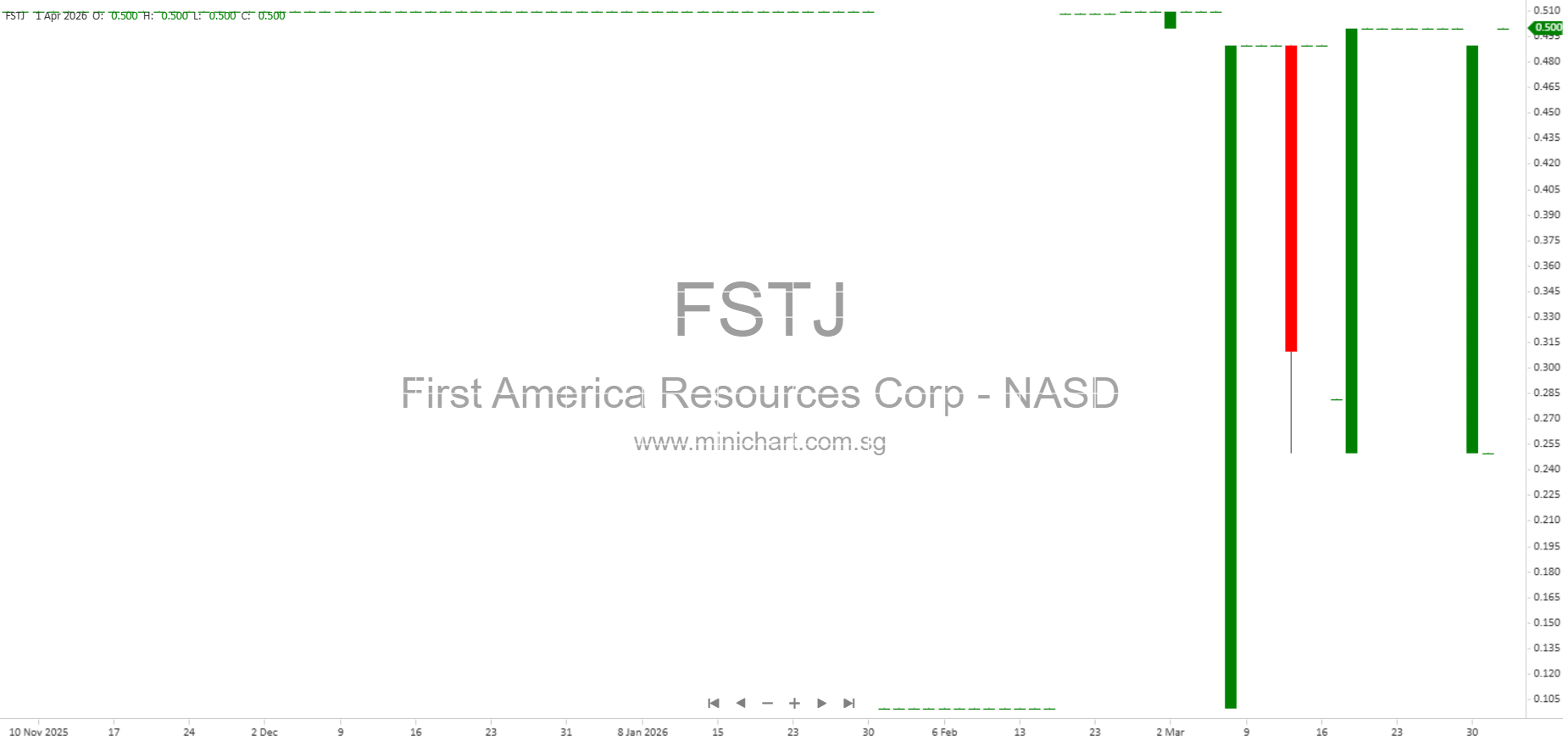
- Share Capital: The Company has 500 million shares authorized, with 87,964,090 shares outstanding as of March 31, 2026. The public float is extremely limited at only 1,576,080 shares, with just 47 shareholders of record, making the stock potentially illiquid and susceptible to significant price swings.
- No Dividends: The Company has never declared or paid cash dividends and does not anticipate doing so in the foreseeable future, preferring to reinvest earnings for growth.
- No Equity Compensation Plans: There are no securities authorized for issuance under equity compensation plans, limiting share dilution risk but also possibly affecting long-term employee incentives.
Balance Sheet and Capital Structure
- Assets and Equity: Total assets stood at \$6,884,472 as of December 31, 2025. However, the Company reports a persistent accumulated deficit of \$3,211,157 and a negative stockholders’ equity (deficit) of \$1,587,927, which may raise going-concern and solvency questions for some investors.
- Related Party Debt: The Company is significantly reliant on related party financing. Outstanding notes payable to major shareholder First American Management Group Corp. (FAMGC) totaled \$519,000 at year-end. Loans from officer Jian Li, which are interest-free and due on demand, amounted to \$228,933.
- Concentration Risks: The Company’s purchasing activity is highly concentrated, with First America Metal Corp. (FAMC, its second largest shareholder) representing 51% of accounts payable. Such concentration in both payables and customer revenue presents notable counterparty risk.
Cash Flow and Liquidity
- Cash Flow from Investing: Net cash used in investing activities was minimal at \$(2,729) for 2025, a sharp reduction from \$(106,291) the prior year, indicating tighter capital spending or reduced investment activity.
- No Defaults: The Company has not defaulted on any debt obligations as of the reporting date, despite its negative equity.
- No Off-Balance Sheet Arrangements: As of December 31, 2025, there were no off-balance sheet arrangements, reducing the risk of hidden liabilities.
Operational and Market Risks
- Inflation and Cost Pressures: The Company faced continuing inflationary pressures in 2025, impacting payroll, logistics, and facility leasing costs. Management notes that while revenue growth has helped, margin compression of approximately 110 basis points was observed.
- Regulatory and Compliance: No outstanding or unresolved SEC staff comments were reported, and the Company asserts compliance with applicable environmental and financial regulations.
- Risk Factors and Forward-Looking Statements: The report stresses numerous risks, including customer/vendor concentration, cost inflation, competition, regulatory changes, and the uncertainty of forward-looking statements. The Company’s actual results may differ materially from expectations due to these risks.
Other Noteworthy Items
- Audit Opinion: The independent auditor gave an unqualified (clean) opinion on the 2025 and 2024 consolidated financial statements, with no critical audit matters identified.
- Human Capital: The Company employs approximately 60 full-time staff across various functions.
- Recent Accounting Changes: Adoption of FASB ASU 2023-09 (Income Taxes) and ASU 2023-07 (Segment Reporting) did not materially affect disclosures or financial results.
Potentially Price-Sensitive Issues for Shareholders
- Sharp Drop in Net Income: The near-elimination of net income compared to the prior year, even with a large one-off government credit, signals underlying cost pressures and operational challenges.
- Reliance on Related Parties: Shareholders should be aware of the Company’s dependence on related party financing and business concentration, which may create conflicts of interest and increase operational risk.
- Persistent Stockholders’ Deficit: The ongoing negative equity position may affect the Company’s ability to raise new capital, secure credit, or meet exchange listing requirements in the future.
- Low Public Float: The extremely limited public float may result in high share price volatility, illiquidity, and susceptibility to large price swings on relatively small trading volumes.
Conclusion
First America Resources Corp. delivered revenue growth in 2025 but saw a collapse in net income and continued to operate with a significant accumulated deficit and negative equity. The Company’s financial stability is supported by related parties, with substantial operational risks arising from cost inflation and business concentration. The lack of EPS growth, no dividend prospects, and a very small public float may limit share price performance, while any moves to address capital structure or improve profitability could be price-sensitive going forward. Investors should monitor the Company’s efforts to control costs, manage related party risk, and improve its capital position for any developments that could materially impact share value.
Disclaimer: This article is for informational purposes only and does not constitute investment advice. Investors should conduct their own research or consult a financial advisor before making investment decisions. The Company’s financial condition and results are subject to numerous risks that could materially impact future performance.