Jupiter Neurosciences, Inc. (JUNS) 2025 Annual Report: Key Insights for Investors
Executive Summary
Jupiter Neurosciences, Inc. (“JUNS”, Nasdaq: JUNS), a pharmaceutical company focused on neurological and rare diseases, has released its 2025 Annual Report. The report details clinical progress, strategic initiatives, financial risks, and regulatory developments that are highly relevant for shareholders and could significantly impact the company’s share price.
Key Highlights
-
Clinical Pipeline Progress:
- JUNS is prioritizing the development of JOTROL™ for Parkinson’s Disease, currently in a Phase IIa clinical trial.
- The company’s pipeline includes other indications, but progress depends on financing and regulatory acceptance. Notably, the FDA has not yet confirmed if JUNS can reference third-party trial data in their submissions.
-
New Consumer Product Line:
- Launched “Nugevia”—a direct-to-consumer longevity and wellness product line. Initial sales and social media promotions began in the second half of 2025, aiming to diversify revenue streams and tap into the wellness market.
-
Successful Capital Raise:
- Completed a public offering of 2,750,000 shares at \$4.00 per share, generating gross proceeds of \$11 million. This offering facilitated the Nasdaq Capital Market listing, enhancing liquidity and visibility.
-
Debt and Financing Risks:
- JUNS has substantial indebtedness related to convertible promissory notes issued with its Standby Equity Purchase Agreement.
- Low trading volume in JUNS common stock could hinder the company’s ability to utilize the Standby Equity Purchase Agreement to pay down debt, directly impacting cash flow and operational flexibility.
-
Financial Performance and Going Concern Risk:
- The company has not generated meaningful revenue from product sales and continues to incur significant net losses, with management and auditors raising substantial doubt about JUNS’s ability to continue as a going concern.
- The report includes an explanatory paragraph from the auditor regarding the company’s ability to continue as a going concern.
-
Capital Needs and Dilution:
- JUNS will require substantial additional capital to finance operations and advance its clinical programs. Failure to secure capital may force delays or cancellations of research and commercialization efforts.
- Any future capital raise may result in substantial dilution to shareholders or require JUNS to relinquish rights to technologies or product candidates.
-
Competition and Regulatory Uncertainty:
- The company faces intense competition in the pharmaceutical sector. Competitors’ faster development or superior products could negatively impact JUNS’s commercial prospects.
- Regulatory authorities (FDA, EMA, etc.) may not accept data from international trials, adding uncertainty to the clinical strategy.
-
Nasdaq Listing Risk:
- Failure to meet Nasdaq Capital Market’s continued listing requirements could result in JUNS’s securities being delisted, which would severely affect liquidity and investor confidence.
-
Stock Volatility and Liquidity:
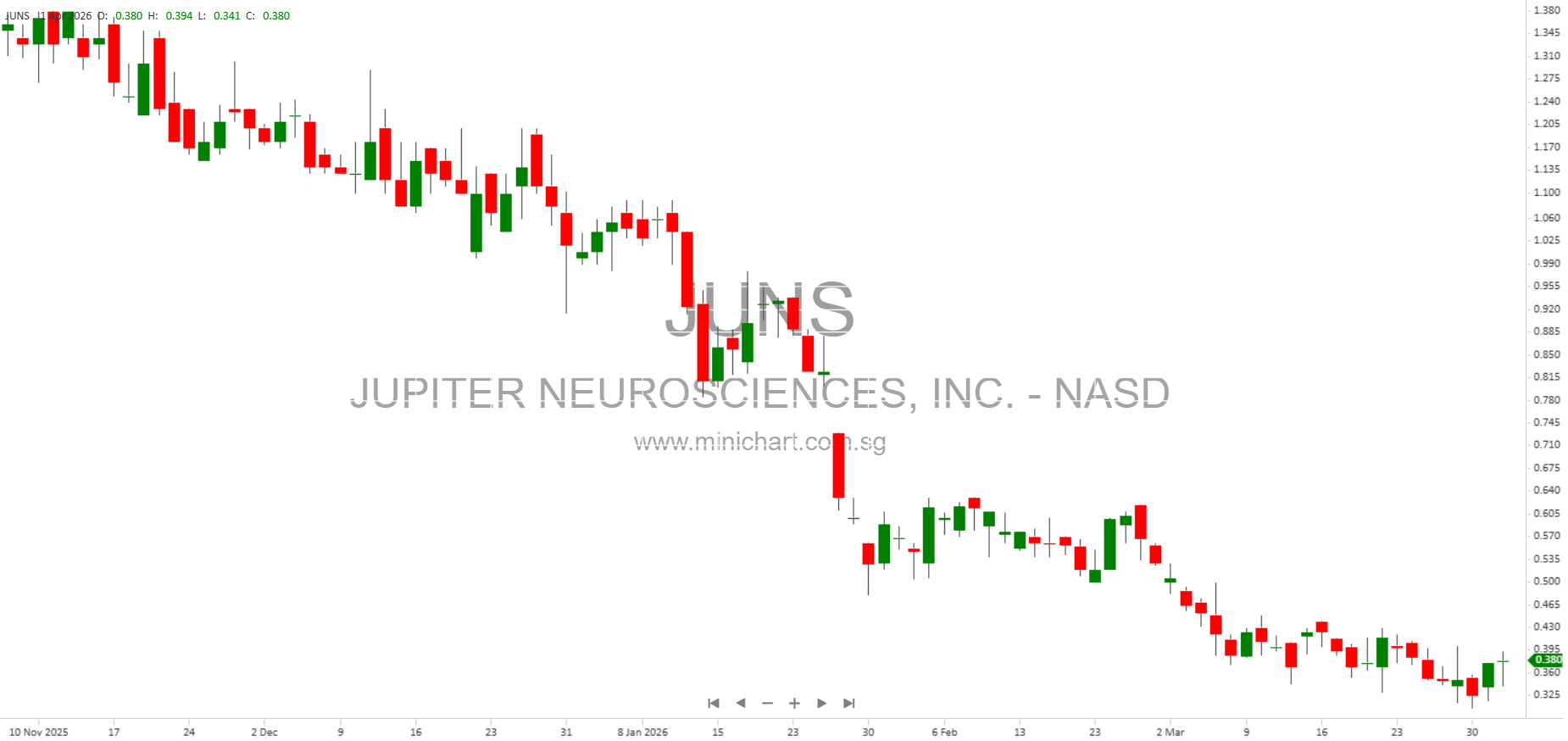
- JUNS’s common stock is subject to rapid and substantial volatility due to low trading volumes and small public float. Extreme price fluctuations, “short squeezes,” and difficulties in liquidating positions are possible.
-
Strategic Out-Licensing:
- JUNS is considering out-licensing opportunities for Asian markets to reduce development risk and cost, potentially generating milestone and royalty income.
- Interest from large and mid-sized pharmaceutical companies for future collaborations, especially in Asia, could drive future revenue if clinical milestones are met.
-
Management and Talent Risk:
- Success is highly dependent on attracting and retaining skilled executive officers and employees.
Shareholder Considerations & Potential Price Sensitive Events
- Going Concern Risk: Both management and auditors have flagged substantial doubt about the company’s ability to continue as a going concern. This is a major risk for shareholders and could prompt significant price movement if not addressed with future capital raises.
- Nasdaq Listing Risk: Any failure to maintain Nasdaq Capital Market listing would likely result in sharp share price declines due to reduced liquidity and institutional access.
- Dilution Risk: Further capital raises, particularly via equity, may dilute shareholder value.
- Debt Servicing & Cash Flow: The company’s ability to pay down convertible debt is dependent on stock liquidity; continued low volume could hamper refinancing efforts and increase bankruptcy risk.
- Clinical Milestones: Success or failure in the Phase IIa trial for Parkinson’s Disease and acceptance of clinical data by regulatory authorities are potential catalysts for share price movement.
- Strategic Partnerships: Any announcement of out-licensing deals or collaborations, especially in Asia, could substantially move the share price.
- Product Launches & Revenue Diversification: Early sales from Nugevia and expansion into consumer wellness could provide new revenue streams, but their impact remains uncertain.
- Stock Volatility: Low trading volume and small float mean the share price may be highly volatile and susceptible to manipulation or rapid moves.
Other Notable Points
- As of March 31, 2026, JUNS had 36,281,252 shares of common stock outstanding, par value \$0.0001 per share.
- JUNS is classified as a non-accelerated filer, a smaller reporting company, and an emerging growth company, but has not elected to use the extended transition period for new accounting standards.
- No meaningful revenues have been generated yet from product sales; commercial success depends on clinical and regulatory milestones.
- Industry conferences and trade shows are being leveraged for strategic partnerships and visibility.
Conclusion
The 2025 Annual Report from Jupiter Neurosciences, Inc. contains multiple risks and opportunities directly affecting shareholder value. The most price-sensitive issues are the company’s going concern status, dependence on additional capital, clinical trial progress, Nasdaq listing risk, and potential for strategic out-licensing deals. Investors should monitor these closely, as any developments could result in significant share price movement—both positive and negative.
Disclaimer: This article is for informational purposes only and does not constitute investment advice. Investors should conduct their own due diligence and consult professional advisors before making any investment decisions. The information is based on the company’s 2025 Annual Report and may be subject to change or interpretation. Past performance and forward-looking statements are not guarantees of future results.