HireQuest, Inc. 2025 Annual Report: Key Takeaways for Investors
Executive Summary
HireQuest, Inc. has released its Annual Report on Form 10-K for the year ended December 31, 2025. This comprehensive filing provides significant insights into the company’s operations, strategic direction, financial health, and risk landscape. Below, we summarize and analyze the most impactful aspects for shareholders and prospective investors, highlighting areas that could materially affect the future value of HireQuest shares.
Key Financial and Corporate Highlights
- Public Float & Share Count: The aggregate market value of voting and non-voting common equity held by non-affiliates as of June 30, 2025, was approximately \$66.1 million. As of March 27, 2026, HireQuest had about 14.0 million shares of common stock outstanding.
- Stock Details: Common Stock, \$0.001 par value, trading on the Nasdaq Stock Market under the symbol “HQI”.
- Dividend Policy: The company declared dividends of \$0.24 per common share in both 2024 and 2025, reflecting a continued commitment to shareholder returns.
- Authorized Shares: 30 million common shares authorized, with 14,079,692 issued as of December 31, 2025, and 14,072,804 as of December 31, 2024.
- Preferred Stock: 1,000,000 shares authorized, none issued or outstanding.
Business Strategy and Outlook
- Growth via Acquisitions: Acquisitions are central to HireQuest’s growth strategy. The company aims to supplement organic growth with strategic purchases, then convert acquired company-owned offices to franchises. This reduces operational overhead and incentivizes franchisees to maximize performance.
- Responsible Capital Allocation: HireQuest finances day-to-day needs primarily from operational cash flow, using reserves and a bank line of credit for major investments, acquisitions, and dividends.
- National Footprint: The company leverages its franchise model to achieve scale, aiming to grow same-store and system-wide sales and increase national account penetration, partially insulating shareholders from margin volatility.
- Brand Awareness: Ongoing expansion and service improvements are expected to drive greater brand recognition, repeat business, and new customer acquisition.
Risks that May Affect Shareholder Value
Acquisition-Related Risks
- Integration Challenges: Difficulty integrating acquired companies, especially operational software and financial systems, could hinder expected growth. Notably, HireQuest previously identified a material weakness in internal controls over financial reporting (2021–2024), which has been remediated as of December 31, 2025. However, new weaknesses could emerge as acquisitions continue.
- Shareholder Dilution: Acquisitions financed through equity issuances may dilute existing shareholders.
- Impairment Risk: Acquisitions can add goodwill and intangibles, which if impaired, could result in significant charges and negatively impact financial results.
- Key Personnel Loss: Loss of key executives or franchisees from acquired entities may erode the value of those assets or businesses.
- Market Reaction: Announced acquisitions could be viewed negatively by the market, adversely affecting the share price.
Franchise Model Risks
- Reduced Control: Converting offices to franchises decreases HireQuest’s direct operational control, which may result in variability in performance and compliance.
- Franchise Lending Risks: The company extends loans to franchisees for buying office assets, which are its largest and riskiest loans. Repayment depends on franchisee success and may expose HireQuest to credit risk.
- Dependency on Franchisee Expansion: The growth strategy relies on finding buyers for newly acquired assets. Failure to do so may require HireQuest to operate or close offices, potentially increasing costs and distracting management.
Liquidity and Credit Facility Risks
- Debt Covenants: The company’s line of credit with Bank of America imposes restrictive covenants. Failure to meet these could trigger default, requiring immediate repayment and potentially impacting operations, liquidity, and share value.
- Increased Debt Load: Higher debt levels could hinder strategic initiatives, limit future financing, and reduce flexibility to respond to market changes.
- Refinancing Risk: Changes to or loss of the line of credit, or inability to refinance debt on favorable terms, could negatively affect financial condition and results.
- Liquidity Constraints: Insufficient liquidity could prevent the company from pursuing accretive opportunities and meeting operating needs.
Operational and Industry Risks
- Talent Acquisition: HireQuest may face challenges in attracting sufficient qualified candidates to meet client needs, especially in tight labor markets.
- Management Dependency: The company is highly dependent on its senior management and key employees. Loss of these individuals could disrupt operations.
- Workers’ Compensation Reserve Volatility: The company’s large workers’ compensation reserve is inherently volatile due to estimation challenges, which could significantly swing reported earnings and impact the share price.
- Employment Claims Risk: The business is exposed to claims relating to personal injury, wage and hour disputes, discrimination, and other liabilities arising from the actions of clients or temporary workers.
- Growth Execution: Franchisee expansion is central to growth. Macroeconomic trends, local market conditions, and talent recruitment challenges may hinder new office openings.
- Technology Change: The staffing industry’s adoption of new technology may require significant investment in systems and controls. Failure to keep pace could erode competitiveness.
Technology & Cybersecurity Risks
- IT System Upgrades: The company’s ongoing investments in proprietary systems are material, and upgrades may be disruptive, costly, and potentially affect accounting procedures and internal controls.
- Cybersecurity: The improper disclosure of, or access to, confidential information could materially harm the company’s reputation and financial results.
Stock and Governance Risks
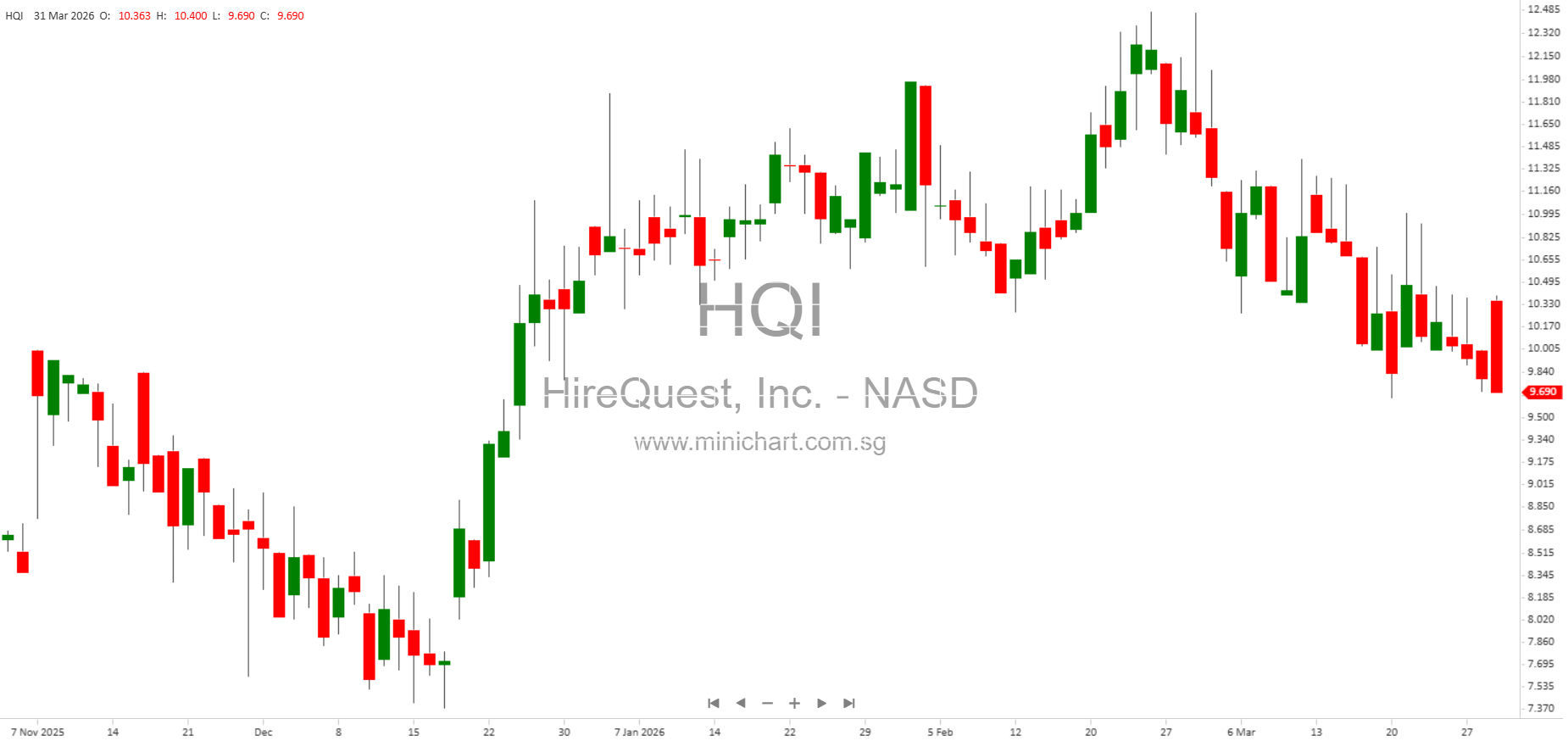
- Low Trading Volume & Volatility: HireQuest’s shares typically trade in low volumes, making the stock relatively illiquid and more susceptible to volatility. In 2025, the stock price ranged from \$7.38 to \$15.75.
- Concentrated Ownership: A small group of insiders and family trusts control a significant portion of outstanding shares, potentially influencing strategic direction and delaying or preventing a change in control.
- Analyst Coverage: Only two analysts cover the stock. Changes in their recommendations or withdrawal of coverage could negatively impact visibility and share price.
- Internal Controls History: The company remediated a material weakness in internal control over financial reporting in 2025, but future deficiencies could arise, impacting financial reporting and investor confidence.
Other Notable Items
- Regulatory & Compliance: The company is not a well-known seasoned issuer or emerging growth company, and its financials do not reflect corrections of previous errors or restatements requiring recovery of executive compensation.
- State Taxes: State taxes in Florida, Tennessee, Georgia, New York, New Jersey, and South Carolina accounted for the majority of the company’s tax expense in 2025.
- SEC Reporting: All Securities Exchange Act filings are available on the company’s website (www.hirequest.com).
Conclusion: Shareholder Considerations
HireQuest’s 2025 Annual Report reveals a company pursuing aggressive franchise-driven growth, underpinned by acquisitions and a focus on capital efficiency. While the business model offers operating leverage, it is not without risk. Execution on acquisitions, integration, franchisee performance, and maintaining robust internal controls are all critical to delivering value. The company’s liquidity position and ability to manage its credit facility will also be closely watched by investors. The relatively low liquidity of the shares and the volatility in stock price could magnify reactions to any developments—positive or negative. Investors should weigh these factors carefully when considering the stock.
Disclaimer: This article is for informational purposes only and does not constitute investment advice or a recommendation to buy or sell any security. Investors should conduct their own due diligence and consult with financial advisors before making investment decisions. The author does not guarantee the accuracy or completeness of the information provided and accepts no liability for any actions taken based on the content of this summary.