National Fuel Gas Company Enters Amended and Restated Credit Agreement: Key Details for Investors
Summary of the Report
- National Fuel Gas Company (“NFG”) filed a Current Report on Form 8-K regarding its entry into a material definitive agreement.
- The agreement is an Amended and Restated Credit Agreement dated March 27, 2026, involving NFG, multiple lenders, and PNC Bank, National Association as Administrative Agent.
- This new agreement replaces the existing credit facility, potentially impacting the company’s financial flexibility, borrowing costs, and risk profile.
Key Points for Shareholders and Investors
1. Terms of the New Credit Agreement
- The Credit Agreement provides a revolving line of credit to NFG, which can be used for general corporate purposes.
- Interest Rates:
- Alternate Base Rate loans bear interest at a rate per annum equal to the sum of (1) the greatest of (a) the prime rate, (b) the overnight bank funding rate plus 0.5%, and (c) Daily Simple SOFR plus 1%, and (2) an applicable margin ranging from 0.00% to 0.525% based on NFG’s credit ratings.
- Facility fees also apply, ranging from 0.125% to 0.225% per annum, again depending on credit ratings. The current facility fee rate for NFG is 0.175% per annum.
- Covenants and Restrictions:
- The agreement contains affirmative, negative, and financial covenants customary for such facilities. These include limitations on mergers, consolidations, asset sales, and incurrence of liens.
- A key financial covenant is that NFG must maintain a debt-to-capitalization ratio not exceeding 0.65 at the end of any fiscal quarter. This covenant is important for shareholders, as breaching it could trigger financial penalties or accelerate repayment obligations.
- Immediate Repayment Clause:
- If certain events of default occur, all obligations under the Credit Agreement may become immediately due and payable.
2. Additional Credit Lines
- NFG maintains additional uncommitted or discretionary lines of credit with other financial institutions for general corporate purposes. This increases financial flexibility.
- Some lenders under the Credit Agreement also perform other financial services for NFG, such as investment banking, underwriting, and advisory services.
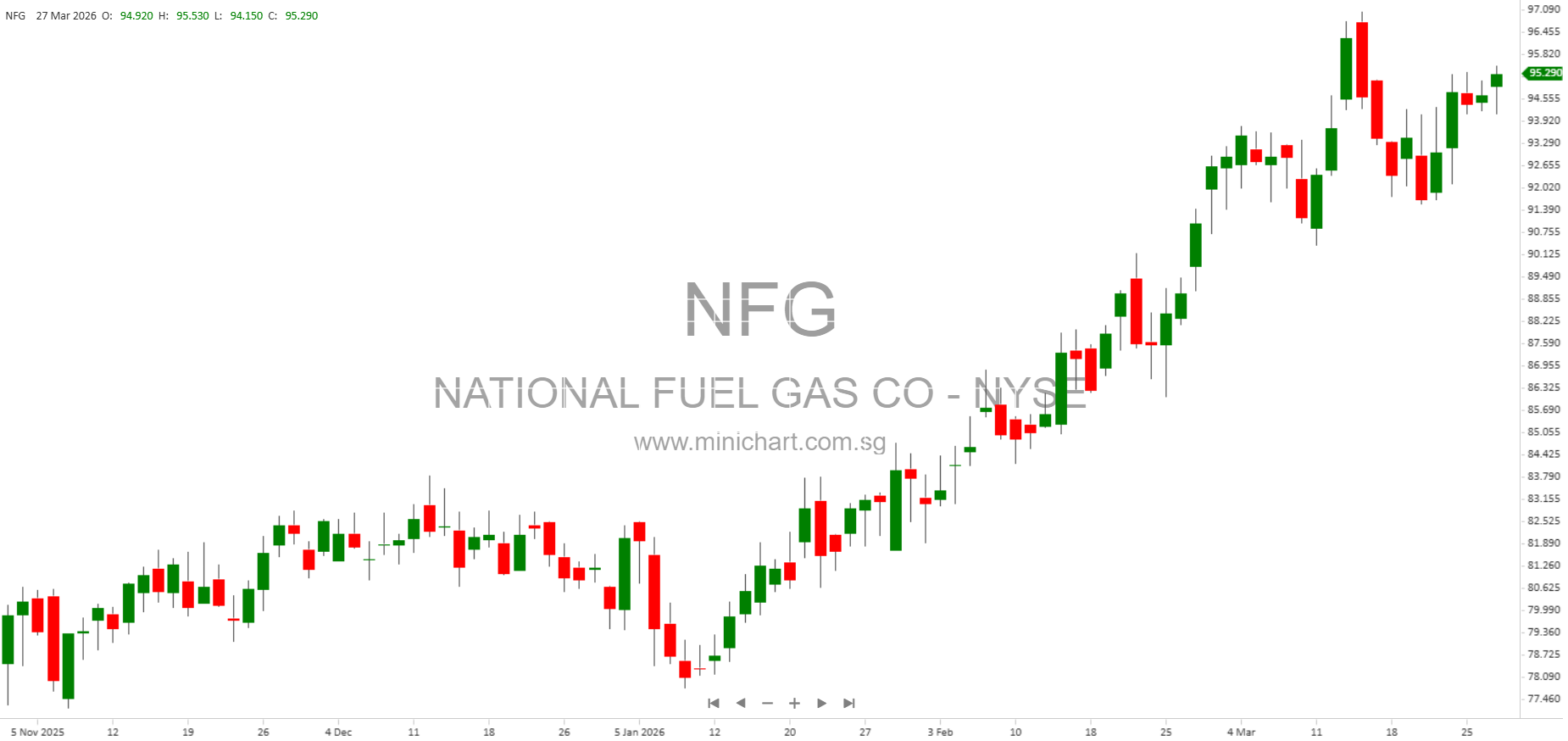
3. Potential Impact on Share Price
- Financial Flexibility: The new credit facility, with its improved terms and flexibility, could support NFG’s growth, acquisitions, and liquidity. This is generally positive for shareholders.
- Debt Capacity: The debt-to-capitalization covenant is a key risk factor. If the company’s leverage increases significantly, or if its credit ratings deteriorate, both the borrowing costs and facility fees could rise, negatively impacting net income and potentially the share price.
- Interest Rate Exposure: The use of SOFR and related benchmarks means that NFG’s interest costs will be sensitive to market rate fluctuations. Investors should monitor interest rate trends and NFG’s credit rating.
- Default Risk: Any breach of covenants or financial distress could trigger immediate repayment, which would be highly negative for share value.
4. Regulatory and Disclosure Commitments
- All schedules and attachments to the Credit Agreement are available to the SEC upon request, ensuring regulatory transparency.
- Shareholders can access the full Amended and Restated Credit Agreement as Exhibit 10.1 to the 8-K filing for further details.
Articles of Agreement: Expanded Details for Investors
- Definitions: The agreement includes detailed definitions of key terms, including “Affiliate,” “Alternate Base Rate,” “Anti-Corruption Laws,” and “Applicable Margin,” which sets the basis for pricing and compliance.
- Interest and Fees: A pricing grid is included, linking applicable margins and facility fees to NFG’s credit ratings by S&P, Moody’s, and Fitch. Split ratings are handled with specific rules to avoid manipulation.
- Financial Covenants: The debt-to-capitalization ratio and other covenants are strictly defined. These covenants are crucial for maintaining creditworthiness and avoiding default.
- Events of Default: Detailed triggers for default include breach of covenants, insolvency, and cross-defaults. Immediate repayment could be demanded, which would have severe financial consequences.
- Regulatory Compliance: NFG must comply with anti-money laundering, anti-corruption, and sanctions laws, as well as maintain proper disclosures and tax certifications.
Conclusion
The entry into an Amended and Restated Credit Agreement is a significant event for National Fuel Gas Company, directly impacting its financial strength, risk profile, and operational flexibility. Investors should closely monitor:
- Any changes in NFG’s credit ratings (which impact interest margins and fees).
- Compliance with the debt-to-capitalization covenant and other financial conditions.
- Interest rate trends in the broader market (due to SOFR-based pricing).
- Potential for new financing, acquisitions, or changes in business strategy facilitated by increased credit capacity.
While the agreement strengthens NFG’s financial position, any breaches or changes in creditworthiness could be price-sensitive and affect shareholder value.