Andersen’s 2025 Annual Report: Key Points and Investor Insights
Andersen, a leading provider of tax, financial, and valuation services, has released its Annual Report for the fiscal year ending December 31, 2025. The report contains significant details that current and prospective shareholders should closely examine, as several developments described may have a direct impact on the company’s share value and strategic outlook.
1. Financial Performance and Results
- Revenue Growth: Andersen reported revenue of \$838.7 million in 2025, up from \$731.6 million in 2024, indicating strong top-line growth year over year.
- Net Loss: The company recorded a net loss of \$(130.2) million for 2025, a reversal from net income of \$134.8 million in 2024. This loss was primarily attributed to the issuance of new profits interest units and equity restructuring costs.
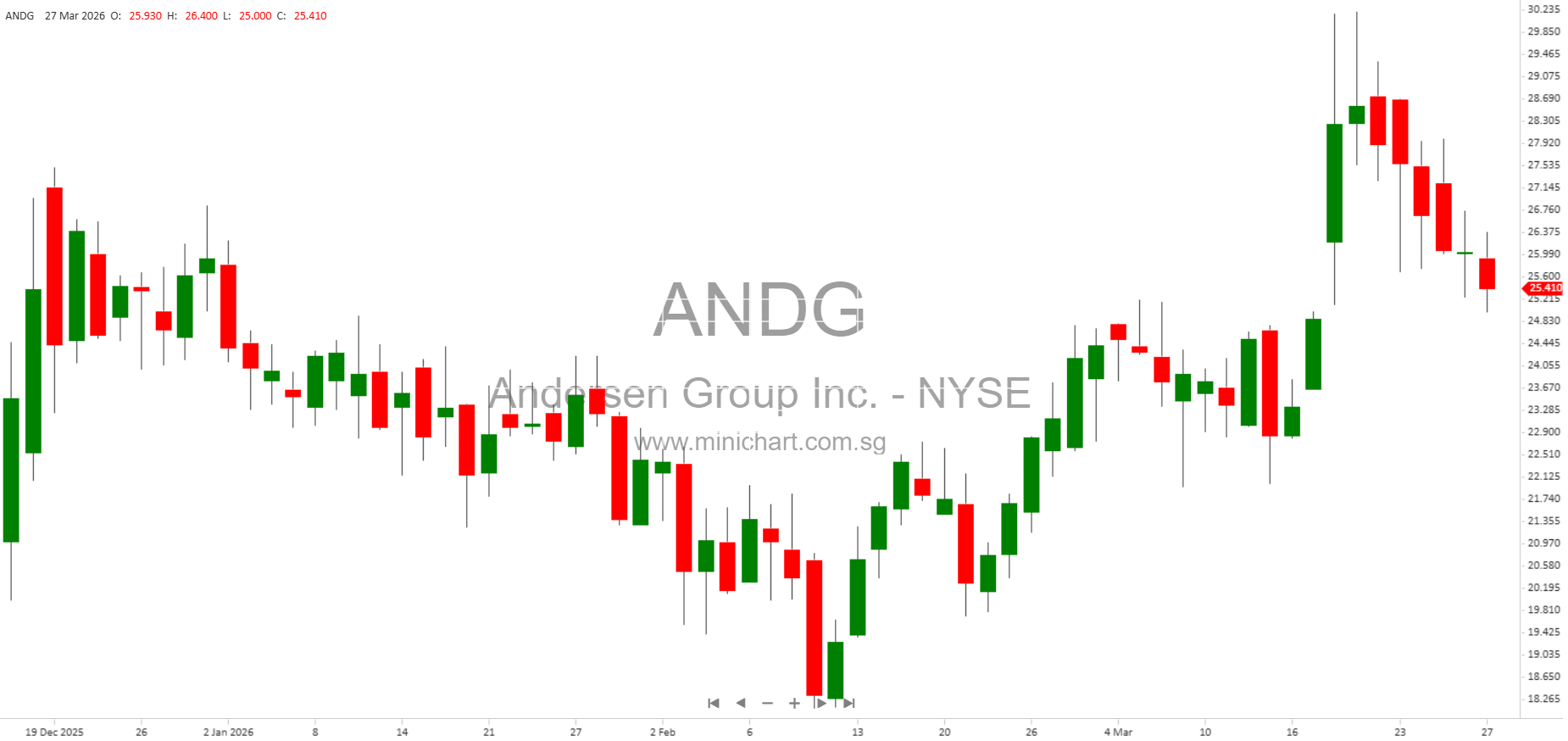
- Public Float: The company was not a public entity as of the last business day of its most recent second fiscal quarter and could not calculate its public float for that date. However, its Class A common stock began trading on the New York Stock Exchange (NYSE) under the symbol ANDG as of December 17, 2025.
- Shares Outstanding: As of March 20, 2026, Andersen had 12,650,000 shares of Class A common stock and 98,826,563 shares of Class B common stock outstanding.
2. Business Model and Service Offerings
- Service Lines: Andersen focuses on Business Tax Services, Alternative Investment Funds, and Valuation Services. The company does not provide audit or related financial statement attestation services, setting it apart from Big Four competitors.
- Clients: Its diverse client base includes individuals, wealthy families, businesses, and institutional clients across several industries: financial services, consumer products, healthcare, hospitality, manufacturing, pharmaceuticals, biotech, private equity, real estate, technology, and venture capital.
- Thought Leadership: Andersen’s professionals are recognized leaders, regularly publishing influential materials and offering educational resources, such as the “Tax Economics of Charitable Giving” and newsletters like “For the Record”. The firm also operates the Andersen Institute for Finance and Economics, focusing on topics like technological innovation and climate change.
3. Growth Strategies and Technology Investment
- Expansion: The report highlights that Andersen is in the early stages of addressing a substantial market opportunity and intends to grow by:
- Expanding work with existing clients,
- Attracting new high-quality clients,
- Strengthening the Andersen brand,
- Expanding international presence through partnerships, acquisitions, and business combinations.
- Technology & AI: Significant investments are being made in advanced technology and AI platforms to enhance service delivery and operational efficiency. Partnerships with third-party AI firms and the use of AI in due diligence, process management, and contract negotiations are expected to drive future competitiveness and innovation.
4. Risks and Challenges Highlighted
Investors should be aware of several material risks and uncertainties:
- Profitability and Growth: There is no guarantee that Andersen can sustain its historical revenue growth or return to profitability, especially after 2025’s net loss.
- Client Demand: The business is highly dependent on sustained client demand and the ability to adapt service offerings to technological and industry changes. Any significant reduction in demand could materially impact results.
- Firm Culture: Maintaining Andersen’s unique firm culture is identified as a critical success factor. Rapid growth, geographic expansion, and public company pressures could strain this culture, potentially impacting the ability to attract and retain top talent.
- Competition: The firm faces intense competition from the Big Four, national and regional firms, and boutique consultancies. Rapid technological changes, especially in AI, could erode competitive advantages.
- Internal Controls: Material weaknesses in internal control over financial reporting have been identified. If remediation is ineffective, this could impair the company’s ability to produce timely and accurate financial statements and comply with regulations.
- Cybersecurity: The risk of cybersecurity incidents is noted as a potential threat to reputation and client trust.
- Dual-Class Structure: Control is concentrated with “Aggregator,” which holds approximately 98.7% of the combined voting power of outstanding capital stock. This significantly limits the ability of public shareholders to influence corporate matters, including the election of directors and major transactions.
- Quarterly Volatility: Investors may see significant fluctuations in operating results and key metrics from quarter to quarter, which could result in share price volatility and missed market expectations.
5. Regulatory and Reporting Compliance
- SEC Filings: Andersen affirms its commitment to making regulatory filings and investor materials available through its website and the SEC’s official site. The company utilizes multiple communication channels, including social media, for material disclosures.
- Emerging Growth Company: Andersen qualifies as an “emerging growth company” and a “smaller reporting company,” which may affect its reporting obligations and the way it implements new accounting standards.
6. Outlook and Forward-Looking Statements
Andersen’s management emphasizes that forward-looking statements in the Annual Report are subject to risks, uncertainties, and assumptions. Investors should not rely solely on these statements as predictions of future performance. The company does not undertake to update forward-looking statements except as required by law.
Potentially Price-Sensitive Highlights
- Recent Net Loss and Profitability Concerns: The swing to a net loss and the company’s caution about sustaining profitability could weigh on share price sentiment.
- Material Weaknesses in Internal Controls: Acknowledged internal control deficiencies could increase regulatory scrutiny and investor concern.
- Concentration of Voting Power: The dual-class structure, with almost all voting power held by Aggregator, could be viewed negatively by public investors seeking influence or governance changes.
- Ongoing Technology Investment: Aggressive investment in AI and technology, while a growth driver, may also introduce execution and integration risks.
Conclusion
Andersen’s 2025 Annual Report presents a picture of a rapidly growing, highly specialized professional services firm with significant ambitions in the tax, finance, and valuation space. However, the report also highlights material risks and uncertainties, including recent losses, internal control weaknesses, and the challenges of sustaining growth and culture in a competitive, technology-driven market. Shareholders and potential investors should weigh these factors carefully, as they could have a meaningful impact on Andersen’s valuation and share price in the coming periods.