VanEck Bitcoin ETF (HODL) Files Amended Annual Report: Key Risks and Strategic Insights for Investors
The VanEck Bitcoin ETF (HODL) has filed its amended 10-K/A annual report for the fiscal year ended December 31, 2025. This comprehensive filing outlines the Trust’s investment objectives, principal risks, regulatory environment, and other critical updates that investors and shareholders should closely review.
1. Key Points from the Report
- Trust Objective: The Trust’s principal objective is to reflect the performance of the price of bitcoin, less the expenses of the Trust’s operations. This product allows investors to gain bitcoin exposure through a traditional brokerage account, removing barriers such as the need to hold bitcoin directly or interact with exchanges.
- Passive Investment Vehicle: The ETF is a passive vehicle, meaning it does not attempt to time the market, hedge exposure, or speculate on bitcoin price movements. The Trust will not actively attempt to avoid losses or capitalize on bitcoin price gains but will simply track the bitcoin price itself.
- Listing and Structure: Shares of the Trust are listed on the Cboe BZX Exchange under the ticker “HODL.” As of February 28, 2026, there were 59,400,000 Shares outstanding. The ETF operates as a non-accelerated filer, a smaller reporting company, and an emerging growth company.
- Transparency and Reporting: The Trust provides annual, quarterly, and current SEC reports on its website, and makes all filings freely available to the public.
2. Risks and Price-Sensitive Issues for Shareholders
-
Extreme Volatility in Bitcoin and Digital Assets:
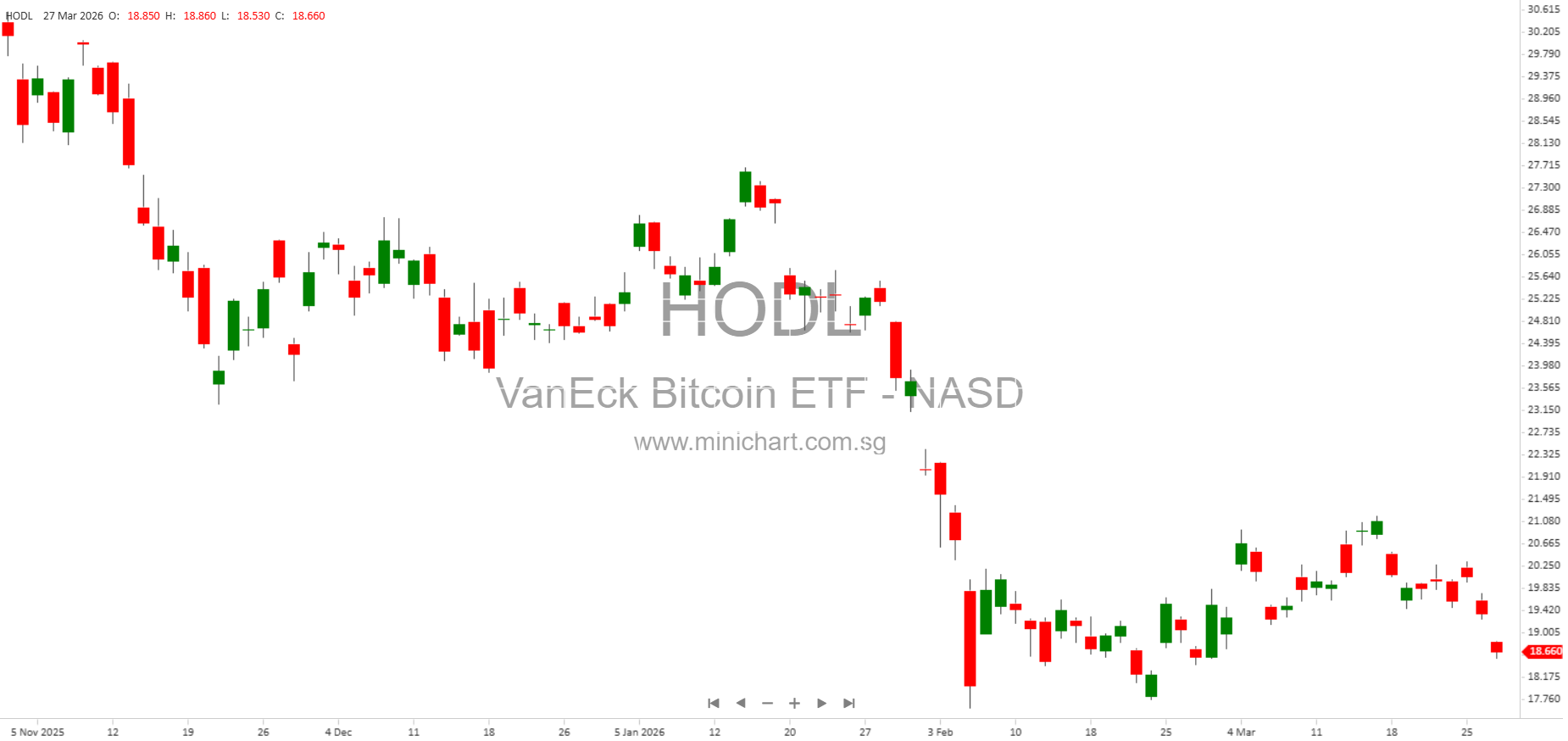
- The report highlights that bitcoin’s trading price has experienced extreme volatility and may continue to do so. Future periods of high volatility or declines in bitcoin’s price could materially damage the value of ETF Shares, potentially resulting in substantial or total loss for shareholders.
-
Risks Inherent to Digital Assets:
- Bitcoin and other digital assets are bearer instruments. Loss, theft, destruction, or compromise of the private keys could result in permanent loss of assets. The irrevocable nature of bitcoin transactions means that stolen or incorrectly transferred bitcoin may be irretrievable.
-
Reliance on the MarketVectorTM Bitcoin Benchmark Rate:
- The ETF’s NAV is tied to the MarketVectorTM Bitcoin Benchmark Rate, which has a limited history. If the index fails to track global bitcoin prices or is subject to manipulation, the ETF’s value could be adversely affected.
-
Security Threats to Custodians:
- The Trust’s bitcoin is custodied with Gemini Trust Company, LLC and Coinbase Custody Trust Company, LLC. Security breaches at these custodians could halt ETF operations, result in loss of assets, and significantly impact the share price.
-
Regulatory Uncertainty:
- The digital asset market in the U.S. is in a state of regulatory uncertainty. Any adverse legislative or regulatory developments—such as bans, restrictions, or onerous requirements on bitcoin, mining, wallets, or services—could significantly harm the value of both bitcoin and ETF Shares.
- If regulatory changes require ETF participants to register as money service businesses or comply with additional regulations, costs may rise and liquidity could be reduced.
-
Taxation and Compliance:
- The U.S. federal tax treatment of digital assets remains uncertain. Shareholders are advised to consult tax advisers regarding all aspects of holding ETF Shares, as changes or clarifications could affect after-tax returns.
- Individual U.S. shareholders must report on their tax returns the receipt, acquisition, sale, or exchange of any financial interest in virtual currency, including ETF Shares.
-
Risks of Market Manipulation:
- The SEC has identified risks such as wash trading, price manipulation by dominant holders, hacking, trading on non-public information, stablecoin-related risks, and fraud at exchanges. Any realization of these risks could lead to severe price disruptions in bitcoin and the ETF.
-
Operational Risks:
- The ETF relies on third-party service providers for custody, administration, and transfer agency. Any failure in these services or poor risk management may disrupt ETF operations and negatively impact share value.
-
Market and Economic Factors:
- The ETF is exposed to broad economic and market conditions, including supply-demand shifts in bitcoin, investor sentiment, fiat currency trends, global events, technological changes, and competitive pressures from other digital assets.
-
Potential Conflicts of Interest:
- The Sponsor and its affiliates have no fiduciary duties to the Trust or shareholders beyond those stated in the Trust Agreement and may favor their own interests.
3. Other Critical Points
-
Share Creation and Redemption:
The ETF creates and redeems shares only in large basket sizes, in exchange for bitcoin or cash. Shares may trade at a premium or discount to NAV depending on market liquidity and demand. -
No Investment Company Act Protections:
Shareholders do not have protections under the Investment Company Act of 1940 or the Commodity Exchange Act. -
Environmental and Social Risks:
Bitcoin mining consumes significant electricity, which may lead to negative public opinion or regulatory restrictions, potentially affecting the ETF. -
Hard Forks and Airdrops:
If bitcoin undergoes a hard fork or airdrop, the Sponsor has discretion to determine which network is recognized for the Trust. There is no guarantee shareholders will benefit from such events.
4. Shareholder Action Items
- Stay updated on regulatory developments, as any significant government action or change in the legal landscape could drastically affect share value.
- Monitor the security and operational soundness of the Trust’s custodians (Gemini and Coinbase Custody).
- Consult with tax advisors regarding the U.S. and international tax implications of holding ETF Shares, as reporting and tax liabilities can change.
- Be aware of the ETF’s potential for trading at a premium or discount to NAV, especially during periods of market stress or dislocation.
- Understand that the ETF is not an actively managed product and does not attempt to mitigate downside risk or capitalize on upside volatility.
5. Conclusion
The VanEck Bitcoin ETF represents an accessible vehicle for gaining exposure to bitcoin within a traditional investment account. However, shareholders must be aware of the significant risks—including extreme volatility, regulatory uncertainty, security threats, operational dependencies, potential market manipulation, uncertain tax treatment, and the lack of certain investment protections. Any materialization of these risks could have a swift and severe impact on the ETF’s share price and investor capital.
Investors are urged to thoroughly review the full risk disclosures in the annual report and seek professional advice tailored to their circumstances.
Disclaimer: This article summarizes information from VanEck Bitcoin ETF’s 2025 annual report as filed with the SEC. It is for informational purposes only and does not constitute investment advice, a solicitation, or an offer to buy or sell any security. Investors should consult their own advisors before making investment decisions. The risks associated with bitcoin and related investment products are significant and could lead to total loss.