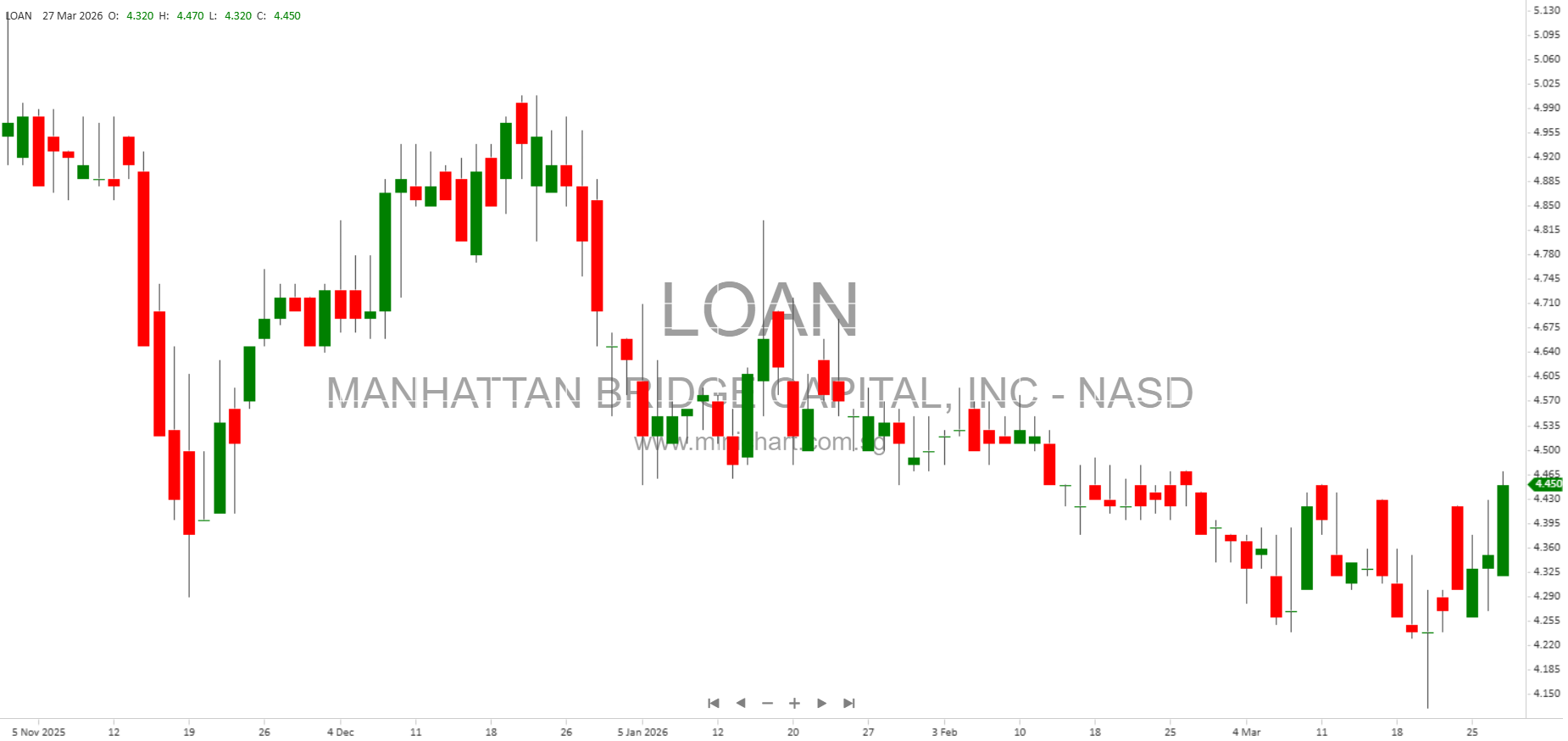
Manhattan Bridge Capital, Inc. 10-K Annual Report: Detailed Investor Analysis
Overview
Manhattan Bridge Capital, Inc. (“Manhattan Bridge Capital,” “the Company”) has released its Annual Report on Form 10-K for the fiscal year ended December 31, 2025. The Company operates as a New York-based real estate finance firm specializing in originating, servicing, and managing a portfolio of first mortgage loans. Notably, it offers short-term, secured, non-bank loans (commonly known as “hard money” loans) primarily collateralized by real estate in the New York metropolitan area, as well as New Jersey, Connecticut, and Florida.
Key Business and Growth Strategies
- Capital Preservation and Dividend Focus: The Company’s main objective is to protect and preserve capital while delivering attractive risk-adjusted returns to shareholders, principally through dividends.
- Selective Loan Origination: Manhattan Bridge Capital remains exclusively focused on originating, servicing, and managing short-term real estate loans secured by first mortgages—emphasizing flexibility, speed, and deep expertise in the local real estate market.
- Adaptability: Management intends to stay flexible, ready to take advantage of other real estate-related opportunities as they arise, including the possibility of direct or indirect investments in real estate.
-
Strategic Pillars:
- Capitalize on structural changes and liquidity demand in real estate lending.
- Adapt to economic, political, and social trends impacting real estate lending.
- Remain flexible to capitalize on cyclical investment opportunities.
- Maintain qualification as a REIT and exemption from registration under the Investment Company Act.
Financing Strategies & Competitive Position
- Sources of Capital: The Company primarily utilizes lines of credit to finance its lending operations. Maintaining a low debt-to-equity ratio is highlighted as a competitive advantage, especially amidst rising interest rates, which have reduced liquidity and competition in the market.
- Disciplined Lending: Rigorous underwriting and loan closing procedures, including third-party appraisals, credit checks, and legal reviews, are central to risk management and capital preservation.
Regulatory and Structural Issues
- REIT Status: The Company operates as a Real Estate Investment Trust (REIT), which has significant tax advantages but also requires compliance with distribution and asset requirements.
- Investment Company Act Exemption: Manhattan Bridge Capital currently qualifies for exemption from the Investment Company Act by limiting investment in securities to less than 40% of total assets. Any change in this status could trigger substantial regulatory burdens and affect leverage, operations, and portfolio composition.
Risks and Price-Sensitive Factors for Shareholders
The report details a comprehensive set of risks that may materially affect the Company’s business, financial condition, and share price. Investors should note:
- Funding Constraints: Loan origination, revenues, and profits are limited by available funds. Without increased working capital, business growth may stagnate.
- Competitive Market Pressures: The New York metropolitan real estate lending market is highly competitive. Larger competitors have greater access to capital and established relationships.
- Interest Rate Sensitivity: Rising borrowing costs due to higher interest rates may impact profitability and dividend payments. Borrowings are based on SOFR, exposing the Company to short-term rate fluctuations.
- Management Authority: The management team has broad authority to make lending decisions. If management fails to consistently generate attractive loans, revenue and share price could be adversely affected.
- Loan and Collateral Risks: Incorrect estimates of loan yields or collateral values may result in losses and write-offs.
- Leverage Risks: Use of leverage can amplify both gains and losses. High indebtedness may reduce financial flexibility, limit acquisitions, expose the Company to interest rate fluctuations, and reduce surplus funds available for dividends.
- Liquidity Risks: Illiquidity in the loan portfolio may make it difficult to quickly sell assets at fair value, potentially leading to losses during forced liquidations.
- Borrower Concentration: Portfolio concentration in specific regions or asset types heightens vulnerability to local downturns, increasing risk of defaults and potential share price declines.
- Regulatory and Tax Risks: Challenges to REIT status by the IRS, compliance with REIT distribution requirements, and reliance on legal and tax advice are ongoing risks.
- Cybersecurity: Security breaches could disrupt operations, damage reputation, incur financial costs, or lead to regulatory action.
- Shareholder Structure: The interests of the largest shareholder may not align with those of other shareholders, potentially affecting governance and share value.
- Limited Trading and Volatility: The Company’s common stock is considered speculative, with limited trading volume and volatility that could affect share price.
Summary of Material Risks That May Impact Share Price
- Interest rate changes directly affect profitability, dividend payments, and loan origination volumes.
- Liquidity and funding constraints may limit growth and loan origination capacity.
- Competitive pressures and inability to attract qualified management could reduce market share and profitability.
- Regulatory and compliance risks may affect REIT status and subject the Company to new legal burdens.
- Cybersecurity threats could disrupt operations or result in financial losses.
- High borrower concentration, incorrect collateral valuation, or loan yield estimation may lead to significant losses.
- Limited trading volume and future offerings may lead to price volatility and dilution.
Important Shareholder Information
- Dividend Policy: The Company emphasizes long-term dividend payments, but future payouts may be impacted by profitability and interest rates.
- REIT Compliance: Maintaining REIT status is central to the business model, but compliance is ongoing and subject to IRS scrutiny.
- Management Flexibility: The board has granted management broad discretion to change business strategies and policies without shareholder consent. This could result in riskier loans or expansion into new asset classes.
- Regulatory Filings: All reports and filings are available on the Company’s website, providing transparency for investors.
Conclusion
Investors should be aware of the Company’s strong focus on capital preservation, disciplined lending, and adaptability in a competitive market. However, material risks—including interest rate sensitivity, funding constraints, regulatory compliance, management discretion, cybersecurity threats, and limited liquidity—could significantly impact profitability, dividend payments, and share value. Any adverse developments in these areas should be closely monitored as they may be price-sensitive and affect the Company’s market valuation.
Disclaimer: This article summarizes information from Manhattan Bridge Capital, Inc.’s 10-K Annual Report and is intended for informational purposes only. It does not constitute investment advice or a recommendation to buy or sell securities. Investors should conduct their own due diligence and consult financial advisors before making investment decisions.