Globa Terra Acquisition Corporation 2025 10-K: Key Highlights and Investor Insights
Overview
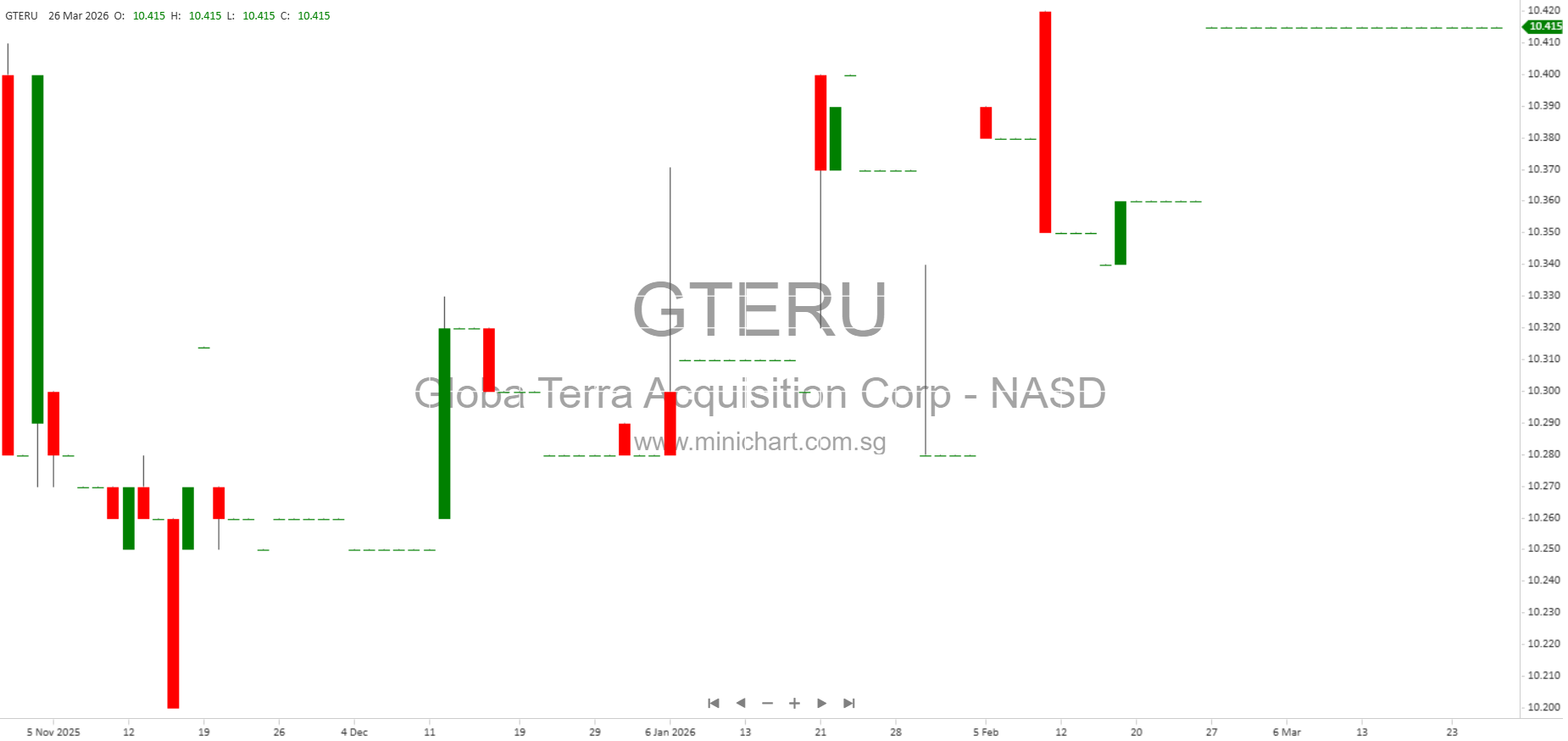
Globa Terra Acquisition Corporation (“Globa Terra”) has filed its Annual Report on Form 10-K for the fiscal year ended December 31, 2025. As a Cayman Islands exempted company listed on Nasdaq, Globa Terra operates as a Special Purpose Acquisition Company (SPAC), actively seeking to effectuate an initial business combination, primarily targeting the agribusiness and water sectors.
Key Points of the Report
- Public Listing and Security Details: Globa Terra’s securities, including units (GTERU), Class A ordinary shares (GTERR), and public warrants, are registered and traded on the Nasdaq Stock Market LLC. The company is classified as a non-accelerated filer, a smaller reporting company, and an emerging growth company under U.S. securities law.
- SPAC Structure and Timeline: The company must complete an initial business combination within a specified timeframe, or risk liquidation and return of funds to shareholders. As of December 31, 2025, Globa Terra had \$174,995,500 available for a business combination assuming no redemptions.
- Financial Status: The company reported a cash balance of \$551,127 and an accumulated deficit of \$520,068. Its auditor has raised substantial doubt about Globa Terra’s ability to continue as a “going concern” unless a business combination is successfully completed.
- Redemption and Liquidation Risks: If no business combination is completed within the set timeframe, the company will redeem public shares for cash and dissolve. Shareholders may receive only \$10.00 per share or less in some circumstances, with warrants and rights expiring worthless.
- Target Acquisition Criteria: Globa Terra screens for businesses with strong fundamentals, positive cash flows, multi-country operations, and public company readiness. It seeks to add value through private equity-style operational improvements and emphasizes ESG (Environmental, Social, and Governance) principles.
- Forward-Looking Statements and Risks: The annual report contains extensive forward-looking statements and details numerous risks, including challenges in identifying suitable acquisition targets, competition in the SPAC market, and the possibility of dilution or unfavorable business combinations.
- Shareholder Rights and Voting: In many circumstances, Globa Terra can complete a business combination without a shareholder vote, limiting direct investor input. Where required by law or Nasdaq rules, shareholder approval will be sought, particularly for transactions involving related parties or significant share issuances.
- Potential for Insider Transactions: The company, its sponsor, or affiliates may purchase public shares or warrants in the open market or privately, potentially influencing voting outcomes or the level of public float, impacting share liquidity and price.
- ESG and Sector Trends: The report highlights sector trends such as digitization in agriculture, the rise of alternative proteins, fintech transformation in agri-finance, and the growing importance of ESG practices—factors seen as essential for shareholder value creation.
- Competitive Landscape: The market for SPAC targets is highly competitive, with many SPACs searching for suitable business combinations, possibly leading to increased valuations and more challenging negotiations.
- Regulatory and Compliance Considerations: Globa Terra is subject to the Sarbanes-Oxley Act and other U.S. regulations. As an emerging growth company, it benefits from some reduced reporting requirements, but will face heightened compliance and audit obligations if it grows or matures beyond certain thresholds.
Important Issues and Potentially Price-Sensitive Information
- Going Concern Warning: The auditor’s note expressing substantial doubt about the company’s ability to continue as a going concern is material and could negatively affect investor sentiment and the share price. This reflects the urgent need for a successful business combination.
- Redemption/Liquidation Risk: If the company cannot consummate a business combination within the required timeframe, there is a risk that shareholders may only recover \$10.00 per share or less, and all warrants/rights will expire worthless.
- Potential Dilution and Insider Purchases: The company, sponsor, or affiliates may buy shares or warrants privately or on the market, which can impact the public float and shareholder control—potentially affecting the share price and liquidity.
- Risk of No Shareholder Vote: The board may complete a business combination without a shareholder vote unless required by law or Nasdaq rules, limiting investors’ opportunity to influence key decisions and potentially leading to transactions not favored by the broader investor base.
- Sector Focus and ESG Emphasis: The company’s strategy to invest in high-growth agribusiness or water sector targets with strong ESG credentials could attract or deter certain investors, influencing demand for its shares.
- SPAC Market Conditions: Increased competition among SPACs for acquisition targets could lead to less favorable deal terms, or even failure to find a suitable target, both of which could impact share value.
Additional Details
- Shareholder Redemptions and Tender Offers: The company may conduct redemptions via tender offer or shareholder vote, depending on the transaction structure and applicable regulations. Tender offers must comply with SEC rules and provide detailed financial disclosures to shareholders.
- Fairness Opinions: Globa Terra is not required to obtain a fairness opinion from an independent financial advisor unless the acquisition involves an affiliated entity or the board cannot independently determine fair market value, placing reliance on the board’s judgment for valuation.
- Potential Write-downs or Impairments: Even with extensive due diligence, the company may face unforeseen risks or issues post-acquisition, potentially leading to write-downs, impairments, or restructuring charges that could affect financial results and share price.
- Reporting and Compliance: As a smaller reporting and emerging growth company, Globa Terra enjoys reduced disclosure obligations but will face more extensive requirements if it grows in size or revenue.
Conclusion
The 2025 10-K for Globa Terra Acquisition Corporation contains several disclosures that are highly relevant for current and prospective investors. The most significant issues are the company’s pressing need to complete a business combination to avoid liquidation, the auditor’s “going concern” warning, and the risks associated with the SPAC’s operational and regulatory environment. The company’s sector focus and ESG criteria reflect current market trends, but competition and uncertainty in the SPAC market pose substantial risks.
Disclaimer
This article is for informational purposes only and does not constitute investment advice or a recommendation to buy or sell any securities. Investors should conduct their own due diligence and consult with financial professionals before making investment decisions. The information herein is based on publicly available filings and may not include all material information relevant to individual investment circumstances.