The Dixie Group, Inc. Releases March 2026 Investor Presentation: Key Updates and Strategic Outlook
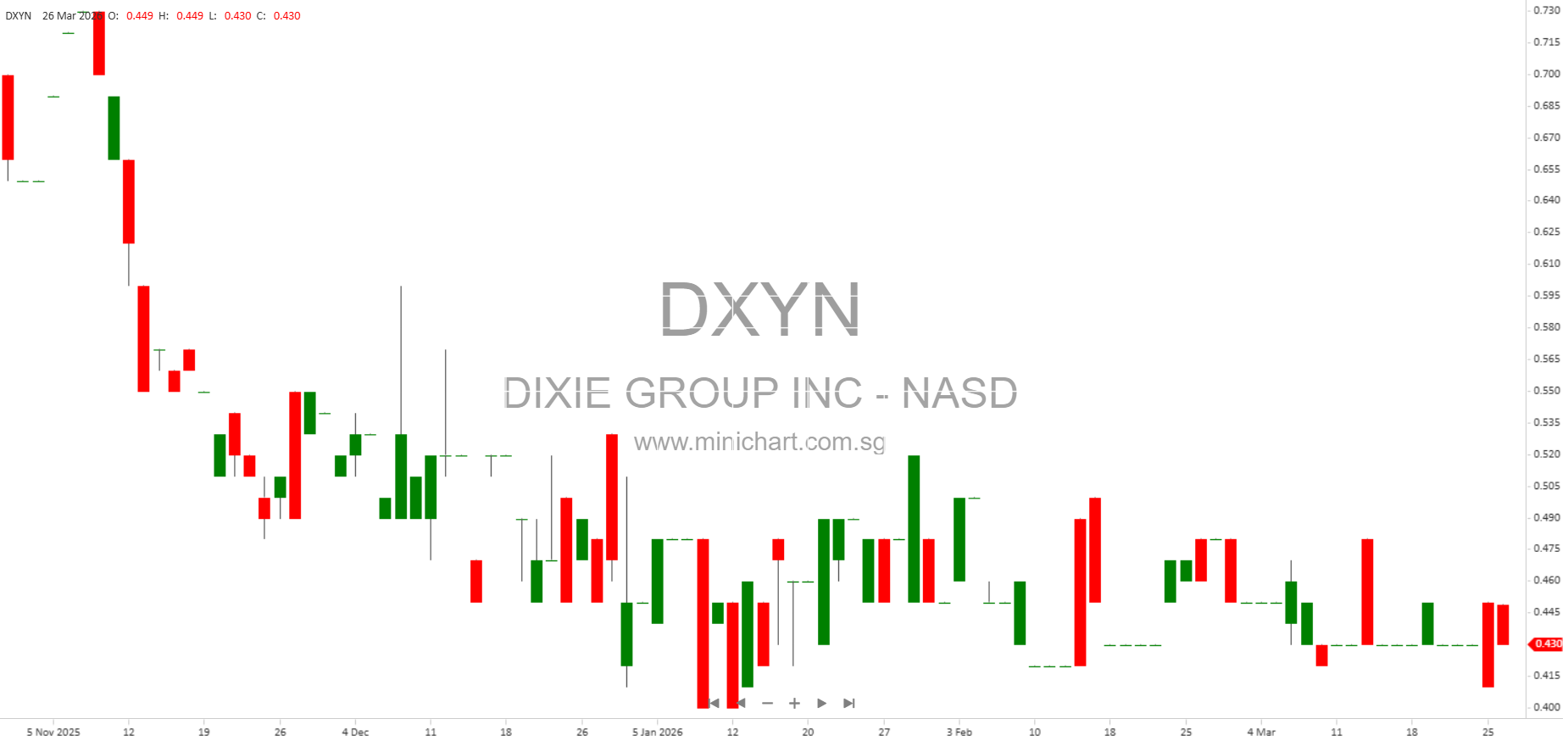
DALTON, GA, March 26, 2026 – The Dixie Group, Inc. (OTCQB: DXYN), a leading provider in the residential flooring sector, has published a comprehensive investor presentation dated March 2026. The report, filed under a Regulation FD Disclosure, supersedes the previous presentation from November 2025 and is available on the company’s investor relations website.
Key Highlights from the Investor Presentation
- Residential Sales Performance:
- The company’s net sales of residential products have shown volatility over the past decade, peaking at \$338 million in 2021, then declining to \$271 million in 2024 and \$260 million in 2025. This reflects ongoing challenges in the residential market, including lower home sales and remodeling activity.
- Business Drivers:
- Dixie’s core business is concentrated in the mid to high-end residential replacement segment, which is highly sensitive to consumer confidence, stock market health, and interest rates.
- Market Landscape and Positioning:
- The U.S. flooring market in 2024 was valued at \$24.3 billion. Major competitors include Shaw (Berkshire Hathaway), Mohawk, Engineered Floors, MSI, and Stanton, while imports and other players account for 44% of the market.
- Dixie focuses on the independent floor covering retailer channel, which excludes big box stores and new construction, aligning with its premium product strategy.
- The company’s market share relative to the total residential market was explicitly illustrated, emphasizing its niche position and focus on high-end consumer relationships and the design community.
- Strategic Initiatives and Product Portfolio:
- Dixie’s growth initiatives include the launch and expansion of TRUCOR® Prime WPC flooring, TRUCOR® Energy SPC flooring, TRUCOR® Tymbr high performance laminate, and the 1866 by Masland high-end wool and decorative carpet and rugs.
- The Fabrica brand celebrated its 50th anniversary in 2024 and introduced Fabrica Fine Wood Floors and Décor by Fabrica product lines.
- Business Challenges and Restructuring:
- The company experienced significant disruptions after Invista sold the Stainmaster brand to Lowe’s, leading to the loss of Dixie’s largest mass merchant customer and the sale of its commercial division to Mannington. This necessitated a major restructuring to adjust to lower sales volumes.
- In 2021 and 2022, Dixie’s primary raw material supplier exited the business abruptly, causing raw material price spikes, operational disruptions, and delayed product launches. The company also faced “exorbitant” freight costs for imports and persistent operational challenges from its restructuring.
- Industry-wide, higher mortgage rates and inflated home prices led to declines in flooring and existing home sales, delaying the expected market recovery.
- Cost Reduction and Financial Outlook:
- Dixie implemented cost reduction initiatives in Q4 2025 and prior, with the majority of forecasted savings for 2026 coming from these actions.
- Management anticipates a rebound in sales when interest rates decrease and the housing market recovers. The company expects gross margins to improve with increased extrusion and plant volumes, and selling and marketing expenses are projected to normalize after being elevated due to recent product launches and sample replenishments.
Material, Potentially Price-Sensitive Information for Shareholders
- Restructuring and Cost Reduction: The company has already implemented a major restructuring and cost-cutting program in response to declining sales volumes and operational disruptions. These efforts are expected to yield significant year-over-year cost reductions in 2026.
- Path to Recovery: The management’s outlook is cautiously optimistic, with expectations of strong pent-up demand driving sales and margin recovery once macroeconomic conditions, especially interest rates and housing turnover, improve.
- Vulnerability to Market Conditions: Dixie’s performance remains highly sensitive to interest rate movements, the pace of home sales, and consumer confidence. Any further deterioration or a slower-than-expected recovery in these areas could impact the company’s turnaround timeline.
- Product Portfolio Strength: The company continues to invest in its high-end, designer-focused brands, differentiating itself from manufacturing-driven competitors and positioning itself for recovery in the premium segment.
Conclusion
While The Dixie Group has faced a series of major headwinds—including supply chain shocks, loss of a major customer, and industry downturn—the company is actively restructuring, cutting costs, and betting on a rebound in high-end residential flooring demand. Investors should closely monitor the timing of a housing market recovery and interest rate changes, as these are expected to be pivotal for Dixie’s return to profitable growth. The company’s cost reduction measures and focus on premium, design-driven products may allow it to outperform peers in a recovery scenario, but risks remain if economic conditions worsen or delays persist.
Disclaimer: This article is for informational purposes only and does not constitute investment advice. Investors should conduct their own due diligence or consult with a financial advisor before making investment decisions. The author and publisher are not responsible for any actions taken based on the information provided herein. Past performance is not indicative of future results.