Fidelity Solana Fund 2025 Annual Report: Key Highlights and Investor Insights
Introduction
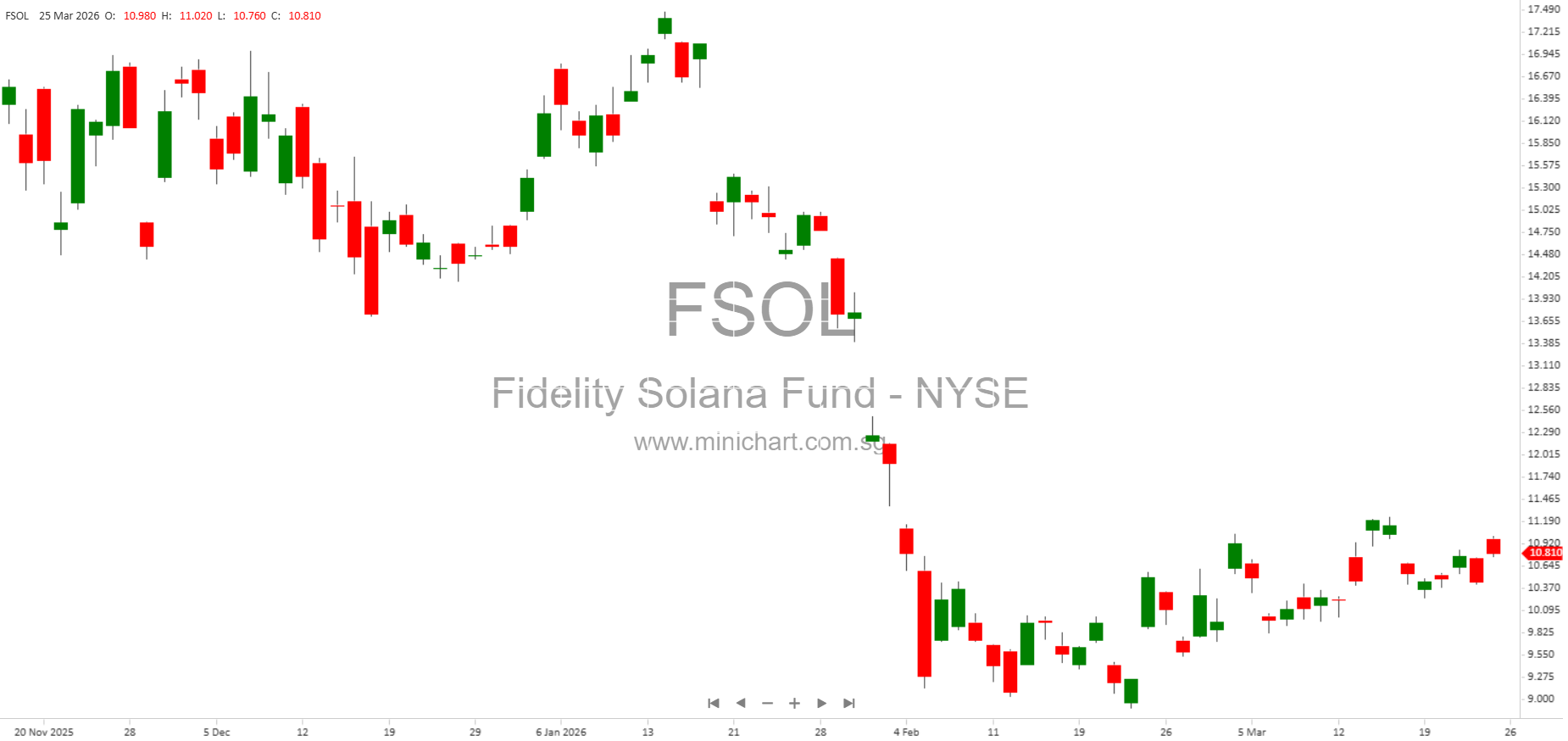
Fidelity Solana Fund (the “Trust”), trading under the ticker FSOL on NYSE Arca, Inc., has published its inaugural 10-K Annual Report for the fiscal year ended December 31, 2025. This marks a significant milestone as the Trust commenced operations only on November 17, 2025. The fund aims to provide investors with exposure to Solana (SOL), the native token of the Solana blockchain, by tracking the performance of the Fidelity Solana Reference Rate, adjusted for expenses, liabilities, and staking rewards.
Key Points & Investment Objectives
- Fund Objective: The Trust seeks to track the performance of Solana (SOL) as measured by the Fidelity Solana Reference Rate, adjusted for expenses and liabilities, plus an amount based on staking rewards. As a result, the Trust is expected to outperform the Index before Trust expenses due to staking rewards.
- Inception: Operations began on November 17, 2025. The Trust had no activity prior to this date except for organizational matters and registering shares.
- Shares Outstanding: As of March 20, 2026, there were 9,975,000 shares outstanding.
- Trading Information: Shares trade under the symbol FSOL on NYSE Arca, Inc. Retail investors can purchase and sell shares through traditional brokerage accounts, subject to customary commissions.
- Issuer Status: The Trust is classified as a non-accelerated filer, a smaller reporting company, and not an emerging growth company or shell company.
Key Features and Structure
- Staking Component: The Sponsor utilizes Custodians to stake SOL, allowing the Trust to earn additional staking rewards. This is a unique differentiator versus passive SOL price-tracking products and can have a material impact on returns.
- Calculation of Net Asset Value (NAV): NAV is calculated daily after 4:00 p.m. EST using the volume-weighted median price of SOL from multiple spot markets, as determined by the Fidelity Solana Reference Rate. This approach aims to mitigate price manipulation and protect investors from outlier trades.
- Valuation and Liquidity Committee: The Sponsor has established a Fair Value and Liquidity Risk Management Committee empowered to adjust NAV calculations if market anomalies or manipulation are detected, including switching pricing sources or methods if necessary.
- Share Splits: The Trust reserves the right to conduct stock splits or reverse splits to maintain convenient trading ranges. These would not affect overall net assets or shareholder value but would alter the number of shares outstanding and NAV per share.
- Creation and Redemption: Only registered broker-dealers (Authorized Participants) may create or redeem baskets of shares directly with the Trust. Should the Sponsor suspend creations/redemptions (e.g., due to market disruptions), secondary market prices may trade at a premium/discount to NAV.
Regulatory and Tax Matters
- SEC & Regulatory Environment: The report highlights that, following the SEC’s March 2026 guidance, there is greater clarity in the regulatory treatment of SOL and similar digital commodities. However, certain uncertainties remain, especially with regard to price settlement, cross-market anomalies, and potential future regulatory actions by the SEC, CFTC, or foreign jurisdictions. This could impact the Trust’s operations or valuation methodology.
- Taxation: The Trust is structured as a grantor trust for U.S. federal income tax purposes, meaning shareholders are treated as directly owning a pro-rata portion of the underlying SOL and staking rewards. The tax consequences can be complex, especially for IRAs, retirement accounts, or foreign investors, and may involve unrelated business taxable income (UBTI) if staking rewards are considered income.
- Reporting and Withholding: Shareholders must report transactions involving digital assets, including their interest in SOL held via the Trust, on their U.S. tax returns. Backup withholding, FATCA, and other reporting requirements may apply.
Risks and Potential Price-Sensitive Issues
- Forward-Looking Statements: The report makes clear that all forward-looking statements are subject to risks, including market volatility, regulatory uncertainties, technological changes, and operational risks specific to digital assets.
- NAV Calculation & Market Pricing: Because the Trust’s NAV relies on a volume-weighted median from multiple spot markets, any significant market manipulation or disruption could impact daily NAV and, consequently, the trading price. The Trust’s ability to switch pricing sources or halt creations/redemptions could lead to NAV deviations and impact share price performance.
- Staking Rewards: The inclusion of staking rewards as part of the fund’s return could make FSOL’s performance diverge positively from benchmark indexes tracking only spot SOL. However, this feature also introduces additional tax, operational, and regulatory risks.
- Redemption and Premium/Discount to NAV: If creation/redemption is suspended (e.g., due to market stress or pricing anomalies), shares could trade at significant premiums or discounts to NAV, directly impacting investor returns.
- Tax Law Uncertainty: The IRS has not issued definitive guidance on the tax treatment of digital asset staking rewards and certain digital asset transactions. Changes or clarifications in tax law could materially affect after-tax returns.
Additional Shareholder Information
- Reporting & Disclosures: The Trust’s filings, including 10-K, 10-Q, and 8-K, are available on the Fidelity website and the SEC’s EDGAR database.
- Employees: The Trust itself has no employees.
- Plan Investments: Retirement plan fiduciaries should carefully consider the suitability of FSOL in light of the plan’s objectives, funding needs, and applicable ERISA or similar requirements.
Conclusion
For Investors: The Fidelity Solana Fund’s structure as a physically-backed, staking-enabled SOL trust offers a unique value proposition compared to other SOL-tracking financial products. However, the complexity of NAV calculation, reliance on robust market infrastructure, regulatory uncertainties, and evolving tax implications mean that price-sensitive events (such as changes to the NAV methodology, regulatory actions, or significant deviations between NAV and market price) could materially impact share value. Investors should monitor ongoing disclosures and regulatory developments closely.
Disclaimer: This article is a summary and analysis of the Fidelity Solana Fund’s 2025 Annual Report for investor information purposes only. It does not constitute investment, tax, or legal advice. Investors should consult their own advisors regarding the suitability of any investment, as well as the impact of potential regulatory and tax changes. Forward-looking statements are inherently uncertain, and actual outcomes may differ materially.