THOR Industries Announces Regular Quarterly Dividend and Outlines Risks for Shareholders
Key Points from the Report
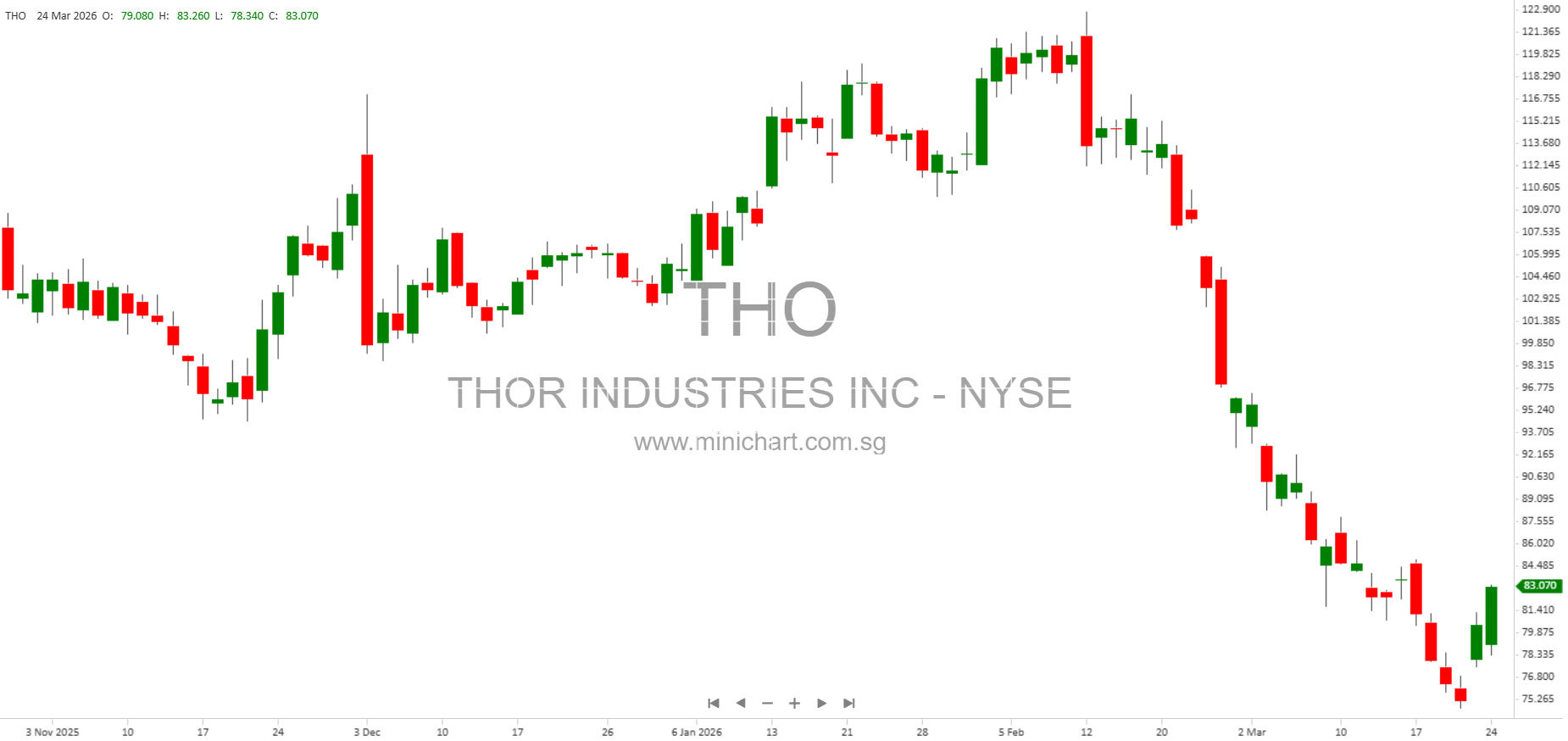
- Dividend Announcement: THOR Industries, Inc. (NYSE: THO) has declared a regular quarterly cash dividend of \$0.52 per share. The dividend is payable on April 20, 2026, to shareholders of record at the close of business on April 6, 2026.
- Board Approval: The dividend was approved by the Board of Directors at its meeting held on March 24, 2026.
- Company Profile: THOR Industries is recognized as the world’s largest manufacturer of recreational vehicles, owning operating companies that represent this sector.
Important Information for Shareholders
- Potential Price Sensitivity: The announcement of a regular dividend underscores the company’s confidence in its cash flow and financial stability, which may be viewed positively by investors seeking income and could support the share price.
- Forward-Looking Risks: The company has issued extensive forward-looking statements, highlighting numerous risks and uncertainties that could materially affect future performance and share values:
- Inflation and Consumer Demand: Inflation may impact both product costs and general consumer demand.
- Raw Material Fluctuations: Changes in commodity prices, tariffs, and supply constraints (including chassis supply) could affect production costs and profitability.
- Geopolitical Risks: War, military conflict, terrorism, and cyber-attacks may disrupt operations, supply chains, and customer demand.
- Energy and Fuel Costs: Sudden changes in energy/fuel availability and prices, driven by geopolitical events, could impact operational costs and supply prices.
- Supplier Dependence: Reliance on a small group of suppliers for essential components poses risks, especially if defects arise or suppliers experience financial distress.
- Interest Rate Volatility: Fluctuations in interest rates can affect the broader economy, independent dealers, consumers, and the company’s profitability.
- Production Ramp-Up Challenges: Rapid changes in demand may require quick production adjustments, impacting labor and capacity costs.
- Warranty and Recall Claims: High levels of warranty or recall claims could affect financial results.
- Dealer Health: The financial health of independent dealers is crucial, especially during economic downturns or restrictive lending environments.
- Regulatory and Legal Uncertainties: Legislative, trade, regulatory, tax, and compliance issues, as well as litigation or regulatory audits, could impact operations and costs.
- ESG and Public Perception: Costs and public perception related to environmental, social, and governance matters may influence brand reputation and compliance expenses.
- Acquisition Risks: Risks related to acquisitions include integration, unknown liabilities, loss of customers, and retention of key management personnel.
- Labor Shortages: Difficulty attracting and retaining production personnel during periods of high demand may increase labor costs.
- Supply Chain Disruptions: Disruptions in the delivery of units to dealers or raw materials to facilities (including chassis) could affect sales and production.
- IT and Cybersecurity Risks: Threats to information technology systems, including data breaches and cyber-attacks, pose operational and reputational risks.
- Market and Currency Risks: Strength of the U.S. dollar may impact international demand, and exchange rate fluctuations could affect profitability.
- Weather and Climate Change: Adverse weather events and changing emissions/climate regulations could impact production and sales.
- Strategic Changes: Adjustments to investment and capital allocation strategies, or other aspects of the strategic plan, could affect future performance.
- Liquidity and Credit Ratings: Changes in market liquidity conditions and credit ratings may impact access to funding and debt costs.
- Regulatory Reference: These risks are discussed in greater detail in the company’s Quarterly Report on Form 10-Q (ended January 31, 2026) and Annual Report on Form 10-K (ended July 31, 2025).
- No Obligation for Updates: THOR Industries disclaims any obligation to update forward-looking statements, except as required by law.
Management Contact
For investor or media inquiries, contact Todd Woelfer, COO ([email protected], 574-970-7460).
Conclusion
The declaration of a regular quarterly dividend demonstrates THOR Industries’ ongoing commitment to shareholder returns, which is a positive indicator for investors. However, the extensive list of risks and uncertainties highlighted by management should be carefully reviewed by shareholders, as these factors could materially impact future financial performance and share values. Investors should consider both the stability indicated by the dividend and the risk disclosures in evaluating their investment in THOR Industries.
Disclaimer: This article is for informational purposes only and does not constitute financial advice. Investors should review official filings and consult their own advisors before making investment decisions. The author assumes no responsibility for any actions taken based on the information provided herein.