Insmed Announces Positive Phase 3b ENCORE Study Results for ARIKAYCE in MAC Lung Disease
Key Highlights
- Positive Topline Results: Insmed Incorporated has announced statistically significant and clinically meaningful topline results from its Phase 3b ENCORE study evaluating ARIKAYCE® (amikacin liposome inhalation suspension) in patients with Mycobacterium avium complex (MAC) lung disease.
- Primary and Secondary Endpoints Met: The study achieved its primary endpoint (improvement in respiratory symptom score at Month 13) and all multiplicity-controlled secondary endpoints, including durable culture conversion rates.
- Regulatory Plans: Insmed intends to file a supplemental New Drug Application (sNDA) for ARIKAYCE with the FDA and submit the data to the PMDA in Japan, aiming for potential label expansion and full approval for the existing refractory indication.
- Investor Conference Call: Insmed will host a conference call for investors to discuss the results, signaling transparency and engagement with the financial community.
Detailed Study Results
The ENCORE study was a randomized, double-blind, placebo-controlled Phase 3b trial enrolling 425 patients with newly diagnosed MAC lung infection who had not received prior antibiotics. Patients were randomized to receive either ARIKAYCE (590 mg) plus azithromycin (250 mg) and ethambutol (15 mg/kg) or placebo plus the same multidrug therapy, once daily for 12 months. After treatment, patients were monitored for three additional months to assess the durability of culture conversion.
Primary Endpoint
- Change from Baseline in Respiratory Symptom Score at Month 13: ARIKAYCE arm showed a mean improvement of 17.77 points vs. 14.66 points in the placebo arm. Treatment difference: 3.11 points, p=0.0299 (statistically significant).
Multiplicity-Controlled Secondary Endpoints
- Culture Conversion by Month 6: 87.8% (ARIKAYCE) vs. 57.0% (placebo), difference 30.8%, p<0.0001
- Culture Conversion by Month 12: 84.7% vs. 61.3%, difference 23.3%, p<0.0001
- Culture Conversion by Month 13: 82.4% vs. 55.6%, difference 26.8%, p<0.0001
- Durable Culture Conversion at Month 15: 76.2% vs. 47.6%, difference 28.6%, p<0.0001
- Change from Baseline in PROMIS Fatigue T-score at Month 13: Not statistically significant (p=0.2900).
Safety Profile
The safety profile of ARIKAYCE was consistent with prior data, with no new safety signals observed. Most common treatment-emergent adverse events (TEAEs) included dysphonia (58.7% vs 8.5%), cough (32.9% vs 14.6%), fatigue, dyspnea, headache, and nausea. Bronchospasm (23.0% vs 11.8%) and hypersensitivity pneumonitis (2.3% vs 0%) were notably more frequent in the ARIKAYCE arm. Serious TEAEs and TEAEs leading to discontinuation were higher in the ARIKAYCE arm, but deaths related to treatment were not reported.
Completion and Discontinuation Rates
- Study Completion Rate: 90.6% (ARIKAYCE) vs 93.4% (placebo).
- Treatment Discontinuation Rate: 14.6% (ARIKAYCE) vs 8.5% (placebo).
Regulatory and Commercial Implications
- Post-Marketing Requirement Fulfilled: The ENCORE study was intended to fulfill the FDA’s post-marketing requirement for ARIKAYCE, strengthening its clinical foundation.
- sNDA and PMDA Filings: Insmed plans to file a supplemental NDA with the FDA in the second half of 2026 and submit data to the PMDA in Japan, aiming for label expansion and traditional approval. This could significantly broaden the commercial opportunity for ARIKAYCE.
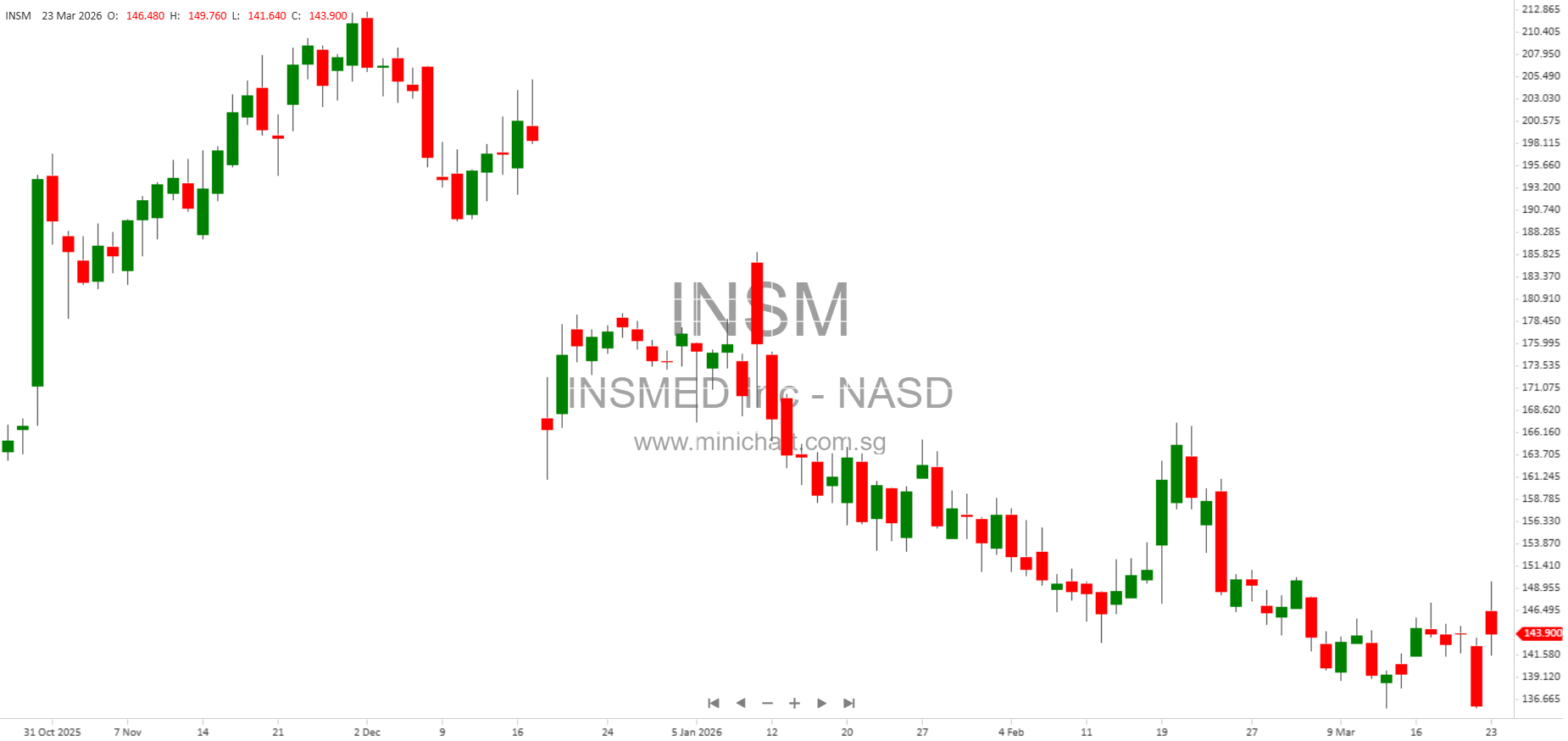
- Potential Share Price Impact: Achieving positive results and regulatory milestones may significantly affect the company’s valuation, with potential for label expansion to a larger patient population and increased revenue.
Market Opportunity
MAC lung disease is a rare, serious, and progressive infection with significant unmet medical need. Current international guidelines recommend ARIKAYCE for refractory cases; the ENCORE results could support earlier intervention and broader use.
Product Overview
ARIKAYCE is a novel, inhaled, once-daily liposomal amikacin formulation, delivered using the Lamira® Nebulizer System developed by PARI Pharma. This targeted delivery aims to maximize efficacy in the lungs while minimizing systemic toxicity.
Safety Information
ARIKAYCE carries a warning for increased respiratory adverse reactions. Notable risks include hypersensitivity pneumonitis, hemoptysis, bronchospasm, exacerbation of underlying pulmonary disease, anaphylaxis, ototoxicity, nephrotoxicity, and potential embryo-fetal toxicity. Contraindicated in patients with known aminoglycoside hypersensitivity.
Current U.S. Indication and Limitation
ARIKAYCE is currently indicated for adults with limited or no alternative treatment options for MAC lung disease who do not achieve negative sputum cultures after a minimum of 6 consecutive months of multidrug therapy. The current approval is under accelerated approval, with full approval contingent on confirmatory trials. Use is not recommended in non-refractory MAC lung disease.
Forward-Looking Statements and Risks
Investors should note that Insmed’s statements regarding future regulatory submissions, approvals, and commercial potential are forward-looking and subject to substantial risks and uncertainties. Factors include potential changes in trial data interpretation, regulatory outcomes, market acceptance, manufacturing capacity, reimbursement, and competitive landscape.
Conclusion
The ENCORE study’s positive results represent a meaningful milestone for Insmed. Potential label expansion and traditional approval could significantly enhance ARIKAYCE’s commercial profile, address a larger patient population, and drive revenue growth. Investors should monitor regulatory developments and future presentations of the ENCORE data.
Disclaimer
This article is for informational purposes only and does not constitute investment advice. Forward-looking statements are subject to risks and uncertainties. Investors should review Insmed’s official filings and consult financial advisors before making decisions. The author assumes no responsibility for the accuracy or completeness of the information provided.