Oculus Inc. 2025 Annual Report: Key Highlights and Investor Insights
Overview
Oculus Inc. (formerly Oculus VisionTech Inc.) has released its Annual Report for the fiscal year ended December 31, 2025. The company, which operates in the cybersecurity, data privacy, and data protection markets, continues to pursue growth through technology innovation, strategic initiatives, and equity funding. The report includes important updates on financial performance, operating risks, strategic direction, and corporate actions that may significantly impact shareholders and the company’s share price.
Key Financial and Operational Highlights
- Continued Losses: The company reported a net loss of \$319,139 for the year ended December 31, 2025, with an accumulated deficit of \$49,033,145 and a working capital deficiency of \$737,787. Management expects operating losses and negative cash flows to increase for the foreseeable future, and forecasts that current working capital is insufficient for the next 12 months.
- Equity Financing Plans: To fund operations, Oculus intends to continue raising capital primarily through the issuance of common stock and warrants to outside investors and management. This may result in significant dilution for existing shareholders, and new securities may carry rights or preferences senior to current common shares.
- Reverse Stock Split Authorization: At the Annual General Meeting on October 15, 2025, shareholders approved a proposal authorizing the Board to effect a reverse stock split at a ratio of 1-for-2 to 1-for-10. The Board has discretion over the ratio, timing, and implementation, and may abandon the split if deemed not in the company’s best interests. The primary goal is to increase the per-share market price to meet or maintain stock exchange listing requirements and improve marketability and liquidity. However, there is no guarantee this will be effective.
- AI Technology Integration: Oculus is actively evaluating and integrating artificial intelligence technologies within its software platforms. The aim is to automate compliance monitoring, alert management, and workflow automation, positioning the company for growth in the rapidly evolving data privacy software market.
- Market Focus: Oculus targets enterprise customers in the cybersecurity and data privacy sectors, an industry projected to reach \$66.71 billion by 2032 due to heightened regulatory enforcement and increasing awareness of data risks.
- Competitive Landscape: The company faces intense competition from established and emerging players in data privacy management, data governance, and digital watermarking. Rapid technological change and evolving customer needs may render Oculus’s products obsolete unless it can keep pace with innovation and industry standards.
- Limited Operating History and Customer Base: Oculus has a limited operating history in document protection and has not generated significant revenue, with sales reported as nil for both 2025 and 2024. The company expects that a small number of customers will account for the majority of revenue in the near term, increasing business risk.
- Heavy Reliance on Contractors: The company primarily uses independent contractors and external service providers for technical and operational functions. Loss of key personnel or contractors could materially impact operations, and Oculus does not maintain key-person life insurance.
- Internal Controls: Oculus acknowledges the critical importance of effective internal controls for financial reporting and fraud prevention. It has not yet undergone an independent audit of internal controls and may face challenges if required to comply with Sarbanes-Oxley Section 404 in the future.
Shareholder Actions and Capital Structure
- Reverse Stock Split Details: If implemented, the reverse stock split would reduce the number of outstanding shares, but each stockholder’s proportional ownership would remain unchanged, aside from minor adjustments for fractional shares. The move is designed to boost share price and enhance compliance with listing standards.
- Equity Compensation: As of the report date, the company had 9,142,257 stock options and 9,142,257 share units outstanding under equity compensation plans. No shares have been issued under equity compensation plans not approved by security holders.
- Dividend Policy: Oculus has not declared or paid dividends in the past two years and does not anticipate paying dividends in the foreseeable future. Any future determination will depend on the company’s financial condition and Board discretion.
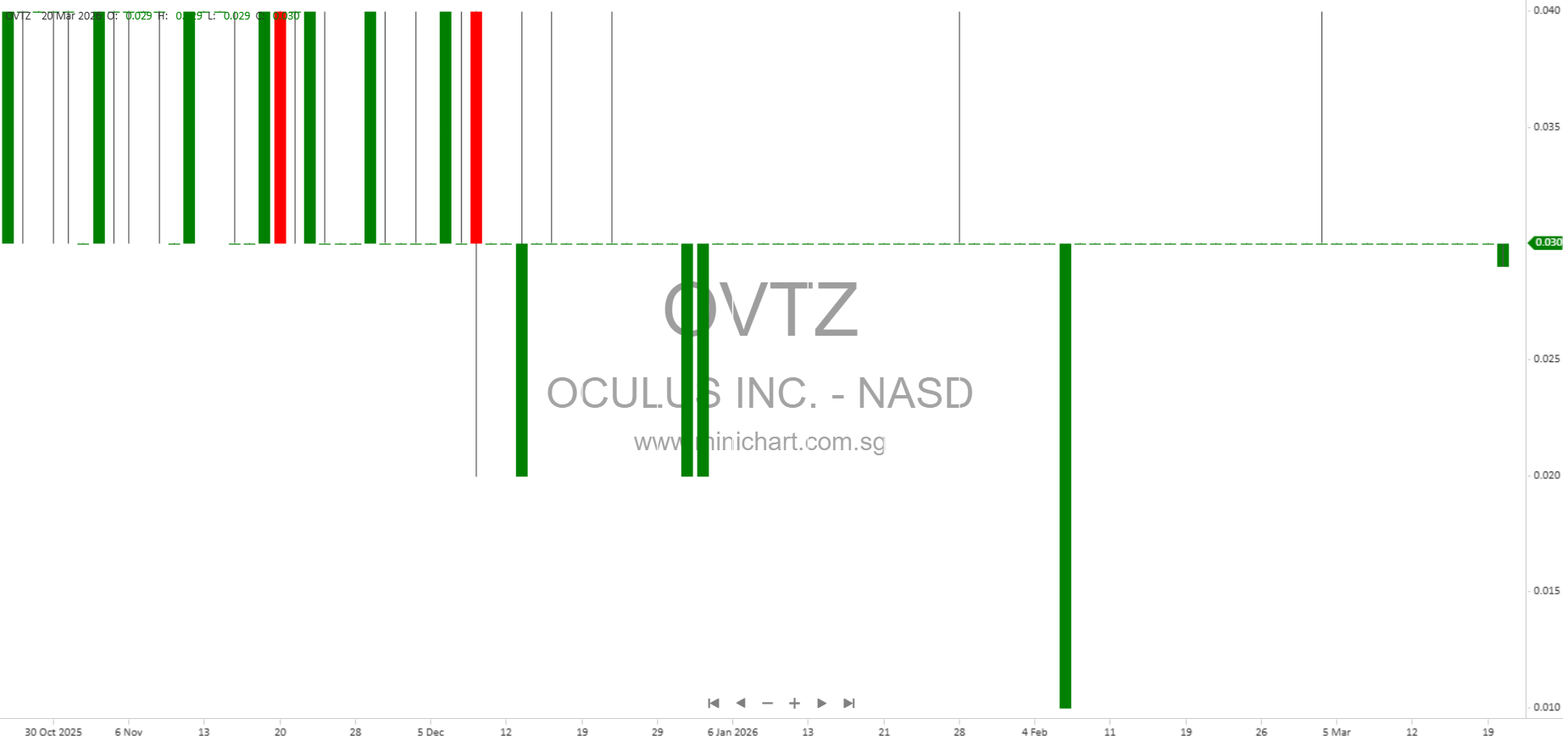
- Market Listings and Transfer Agent: Oculus shares trade on the TSX Venture Exchange (symbol: OVT) and OTCQB (symbol: OVTZ), with Computershare Trust Company of Canada as the transfer agent.
Risks and Forward-Looking Factors
- Going Concern Risk: Management has forecasted insufficient working capital for the next 12 months, raising substantial doubt about the company’s ability to continue as a going concern without additional funding.
- Dilution and Share Price Volatility: Ongoing and future equity issuances, options, and warrants are likely to dilute existing shareholders. The stock has historically been highly volatile, and further dilution, market events, or lack of analyst coverage could exert downward pressure on the share price.
- No Dividends Expected: The company does not expect to pay dividends, limiting shareholder return to potential share price appreciation.
- Regulatory and Compliance Risks: The company is subject to complex regulatory requirements, including U.S. and international data privacy laws. Failure to comply could result in penalties, litigation, or reputational harm.
- Penny Stock Rules: Oculus’s shares are considered “penny stocks” under SEC rules, which imposes additional restrictions on broker-dealers and may reduce liquidity and investor interest.
- Exposure to Foreign Exchange: The company has operational exposure to the Canadian dollar, which may impact U.S. dollar results due to currency fluctuations.
- Technology and IP Risks: Rapid industry change or failure to protect intellectual property could harm competitive position. Litigation to enforce IP rights could be costly.
- Dependence on Key Personnel: Absence of employment agreements and key-person insurance for management increases operational risk.
- Uncertain Success of AI Initiatives: While AI integration is a strategic focus, there is no guarantee it will provide a competitive advantage or result in significant revenue growth.
Potential Share Price Movers
- Reverse Stock Split Authorization: If executed, this could impact the stock price by improving eligibility for exchange listings and potentially attracting institutional investors. However, splits do not affect company fundamentals and may not prevent future declines.
- Need for Additional Capital: Ongoing equity issuance could result in further dilution, negatively affecting share value.
- Continued Losses and Working Capital Shortfall: Persistent operating losses and doubts about going concern status could pressure shares until the company secures sustainable financing or demonstrates revenue growth.
- Adoption of AI and Innovation: Positive developments or successful commercialization of AI-powered compliance solutions could improve investor sentiment; conversely, delays or failures could be negative.
- Market Risks: Share price may be sensitive to market volatility, regulatory changes, or competitive developments in the data privacy and cybersecurity sectors.
Conclusion
Oculus Inc. remains in a developmental stage, with ongoing efforts to innovate technologically and secure critical funding. While the company’s focus on AI and data privacy aligns with strong market trends, financial uncertainties and dilution risks remain high. Shareholders should closely monitor developments regarding the reverse stock split, equity financing, and the company’s ability to generate meaningful revenue and achieve profitability.
Disclaimer: This article is for informational purposes only and does not constitute investment advice or a recommendation to buy or sell any securities. Investors should conduct their own due diligence and consult with their financial advisors before making investment decisions. The information is based on the company’s 2025 Annual Report and may contain forward-looking statements subject to risks and uncertainties.