ENB Financial Corp 2025 Annual Report: Key Insights and Investor Implications
Executive Summary
ENB Financial Corp, a Pennsylvania-based national commercial bank, has released its 2025 annual report, providing a comprehensive breakdown of its financial position, capital adequacy, asset quality, and risk exposures. This report contains critical information for shareholders, with several areas of potential price sensitivity that could influence the company’s share value in the coming quarters.
Key Points from the 2025 Annual Report
-
Capital Adequacy and Regulatory Compliance:
- ENB Financial Corp maintains regulatory capital well above minimum requirements, including Tier One Leverage Capital and Risk-Based Capital ratios. The company also discloses required capital percentages to be “well capitalized” under regulatory definitions, reflecting prudent risk management and a strong balance sheet.
- Specific ratios and amounts for Tier One Leverage Capital and Risk-Based Capital are reported for both capital adequacy and “well capitalized” benchmarks, signaling a robust capital position that may reassure investors concerned about solvency and regulatory compliance.
-
Asset Quality and Loan Portfolio:
- Comprehensive disclosures on loans and leases, including fair value measurements, collateral types, and internal credit assessments (e.g., performing, nonperforming, pass, substandard, special mention). These details provide transparency into the bank’s credit risk and underlying asset quality.
- Loan portfolio breakdowns include residential real estate, commercial real estate, agriculture, home equity, and consumer lending segments. The company also reports on credit concentrations, risk exposures, and collateralization, which may impact future credit losses and investor sentiment.
- Allowance for credit losses write-offs is disclosed across multiple segments, offering insights into the bank’s provisioning practices and potential impacts on earnings.
-
Fair Value and Investment Securities:
- Extensive fair value disclosures across Level 1, Level 2, and Level 3 inputs, including investment securities (available-for-sale, held-for-sale, asset-backed securities, corporate bonds, mortgage-backed securities, government agency debt), derivatives and hedging activities.
- Accrued unrealized gains and losses, realized gains and losses, and amortized costs after allowance for credit losses are all reported, enabling investors to track mark-to-market impacts and potential volatility in earnings related to interest rate movements and credit spreads.
-
Deposit and Funding Structure:
- Detailed reporting of deposit composition, including noninterest bearing, interest bearing demand, savings, money market, and time deposits. The report also includes disclosures on short-term and long-term borrowings and subordinated debt.
- Changes in funding mix, deposit flows, and cost of funds may affect profitability, liquidity, and the bank’s attractiveness to investors.
-
Shareholder Equity and Corporate Actions:
- Disclosures regarding share issuance, treasury stock transactions, dividends paid on common stock, and adjustments to additional paid-in capital for share-based compensation.
- Any changes in dividend policy, stock buybacks, or equity issuance could materially impact share prices and investor returns.
-
Segment Reporting and Concentrations:
- The company reports operating in a single segment, with detailed breakdowns by asset class, customer concentration (e.g., agriculture, nonresidential real estate), and risk benchmarks. Investors should note any concentration risks that may affect future earnings and stability.
-
Tax and Lease Disclosures:
- Reporting includes useful lives of property, plant, and equipment, lease liabilities, operating lease assets, and tax jurisdiction details. These may influence future depreciation, expense recognition, and net income.
Potential Price-Sensitive Information
- Capital Ratios Above Regulatory Minimums: ENB’s continued compliance and capital excess may support share price stability and enhance confidence in the bank’s ability to withstand economic shocks.
- Loan Portfolio Quality and Credit Concentrations: Any notable increases in nonperforming loans, credit loss write-offs, or concentration risks could adversely affect earnings and share value. Investors should monitor these metrics closely.
- Fair Value Fluctuations in Investment Securities: Significant unrealized losses or gains, especially in available-for-sale securities, may impact reported earnings and book value, which can move share prices.
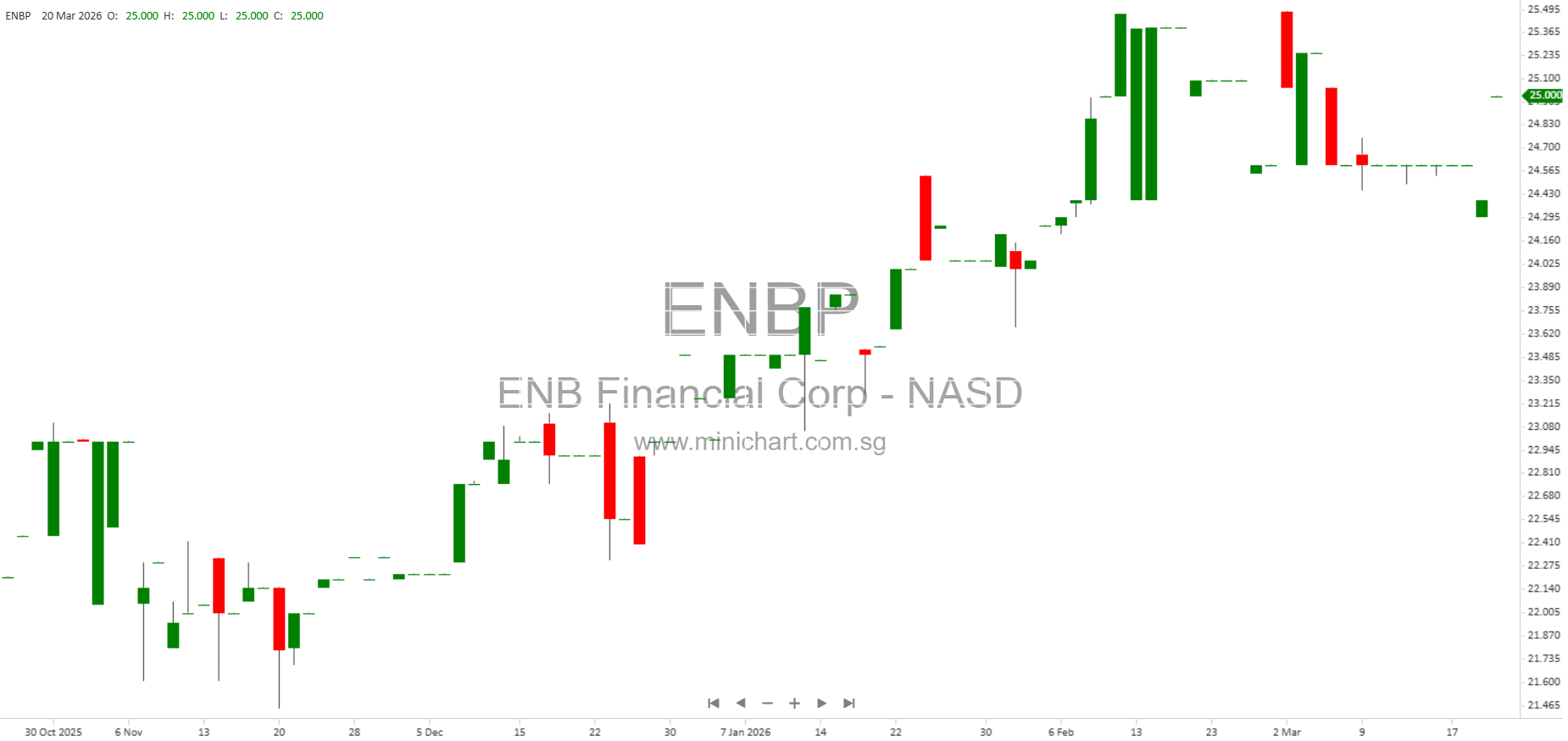
- Dividend Payments and Shareholder Actions: Consistent or increased dividend payments, stock repurchases, or changes in equity structure can influence investor perceptions and share price movements.
- Deposit and Funding Mix: Shifts in deposit composition or cost of funds may impact net interest margins and profitability, affecting valuation.
Important Considerations for Shareholders
- While ENB Financial Corp reports a strong capital position and prudent risk management, shareholders should be aware of ongoing risks related to credit concentrations, investment security volatility, and economic conditions impacting loan performance.
- Any material changes in dividend policy, capital actions, or unexpected credit losses could be price sensitive and warrant close monitoring.
- The bank’s disclosures provide transparency but also highlight areas where performance could deviate from expectations, including fair value adjustments and loan loss provisioning.
Conclusion
ENB Financial Corp’s 2025 annual report offers investors a detailed view of the company’s financial health, risk exposures, and capital adequacy. While the bank’s strong capital ratios and asset quality disclosures are reassuring, shareholders should closely watch for any changes in credit concentrations, loan performance, and fair value impacts on securities, as these could influence future earnings and share price. Continued regulatory compliance, prudent risk management, and stable dividend payments provide a positive outlook, but vigilance is warranted given the dynamic nature of banking risks.
Disclaimer: This article is based on ENB Financial Corp’s 2025 annual report and is intended for informational purposes only. It does not constitute investment advice or a recommendation to buy or sell any securities. Investors should conduct their own due diligence and consult with financial advisors before making any investment decisions.