Harvard Bioscience, Inc. 2025 Annual Report: Detailed Investor Analysis
Key Highlights
- Company Overview: Harvard Bioscience, Inc., headquartered in Holliston, MA, is a leading developer, manufacturer, and seller of technologies and products enabling advances in life sciences, including research, drug and therapy discovery, bioproduction, and preclinical testing. The company operates in the Laboratory Analytical Instruments sector.
- Fiscal Year End: December 31, 2025.
- Stock Information: Common stock trades under the ticker HBIO on the Nasdaq Capital Market.
- Market Capitalization: As of June 30, 2025, the market value of shares held by non-affiliates was approximately \$18.2 million.
- Shares Outstanding: As of March 5, 2026, there were 44,719,898 shares issued and outstanding.
- SEC Compliance: The company is a non-accelerated filer and a smaller reporting company, and has filed all required SEC reports in the prior 12 months.
Operational and Financial Developments
- Operational Excellence and Growth Strategy: The company is focusing on consistent profitability, leveraging its preclinical business as a cash-generating foundation to fund R&D and acquisitions. Operational efficiency is a priority, supported by a recent manufacturing consolidation and a debt refinancing completed on December 17, 2025.
- Restructuring Initiative – Project Viking: Harvard Bioscience announced a strategic consolidation of manufacturing operations, known as Project Viking. This initiative involves restructuring costs and a reduction in headcount, aiming to rationalize the product portfolio and improve the cost structure. There is a risk that expected benefits may not materialize.
- Debt Profile: The company had \$40 million in outstanding borrowings under its Credit Agreement as of December 31, 2025. The agreement imposes restrictions on incurring additional debt, making investments, selling assets, and paying dividends. Failure to comply with financial covenants could lead to immediate repayment requirements, impacting liquidity and financial health.
- Seasonality: Sales and earnings are typically lower in Q3 due to holidays/vacations (especially in Europe), while Q4 is often the strongest as customers spend remaining budget allocations.
Risks and Issues of Concern
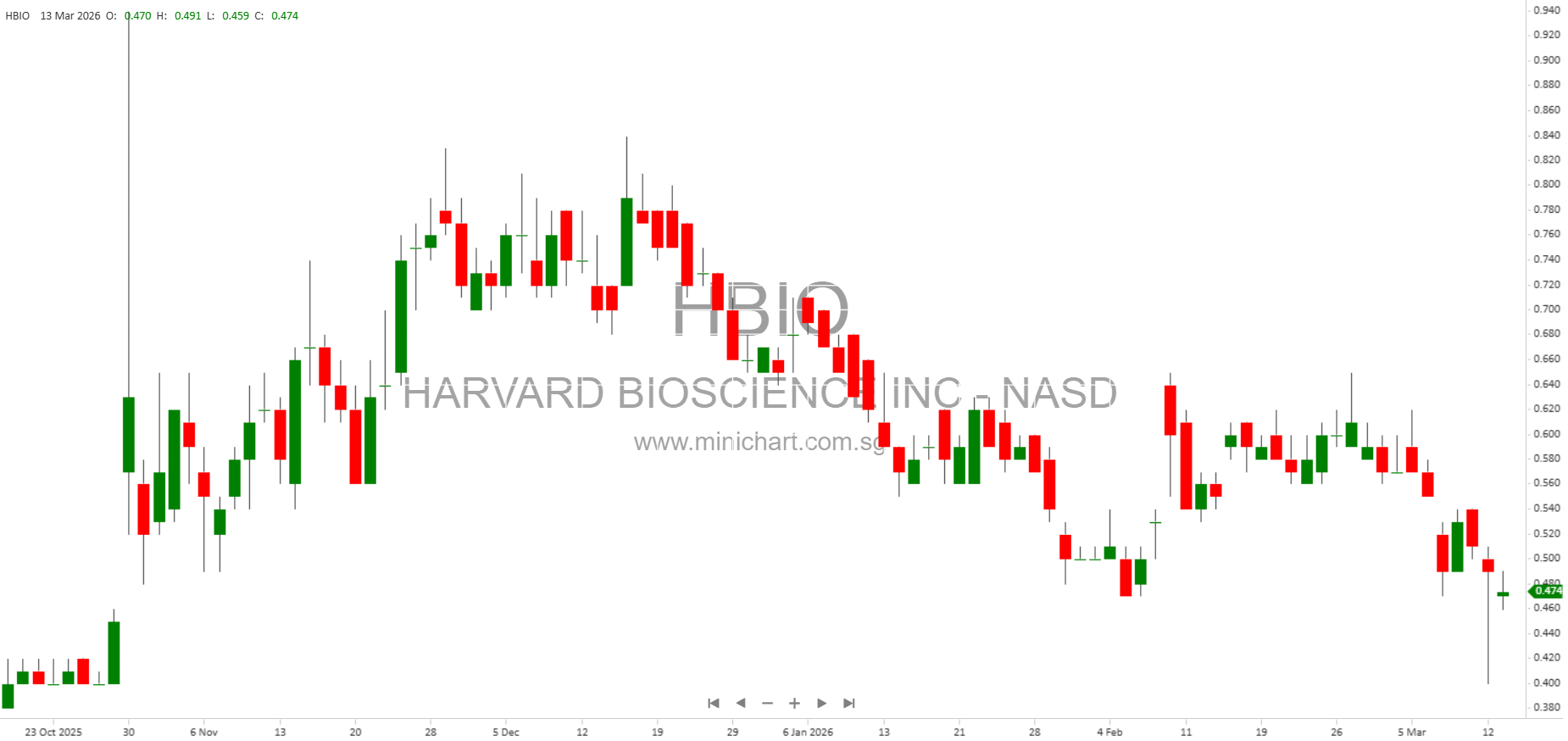
- Nasdaq Non-Compliance: The company received a written notice from Nasdaq in April 2025 for not meeting the minimum bid price requirement (\$1.00 per share) for 30 consecutive business days. Although the company was granted a compliance period, failure to regain compliance could result in delisting, affecting share liquidity, capital raising ability, and investor confidence.
- Stock Price Volatility: HBIO’s stock has experienced significant declines and volatility, which may continue due to business performance, market fluctuations, economic uncertainties, and technological innovations by competitors.
- Debt and Financial Obligations: The company may incur additional debt. Non-compliance with debt covenants could harm business operations and financial health. Compliance requirements may limit operational flexibility.
- Internal Controls: Material weaknesses in internal controls over financial reporting were identified as of December 31, 2024 (order-to-cash cycle and physical inventory counts), but management states these have been remediated. Any future failures could result in inaccurate financial reporting and restrict capital market access.
- Industry Risks: The life sciences industry is highly competitive and subject to rapid technological change. Many competitors have greater resources, and customer preferences are evolving toward environmentally friendly products.
- Regulatory Risks: Changes in government regulations may reduce demand, increase costs, or result in penalties. Non-compliance could lead to production shutdowns, recalls, or legal action.
- Economic/Geopolitical Uncertainty: The company notes risks from inflation, rising interest rates, global conflicts (Ukraine, Middle East), and trade tensions, which could impact demand, supply chains, operating costs, and access to credit.
- Pandemic/Epidemic Impact: Past and potential future public health crises may disrupt operations, demand, supply chains, and financial performance.
- Currency Fluctuations: Foreign currency risks could negatively impact reported earnings due to the company’s international operations.
- AI and Technology Risks: The use of AI in operations and products presents risks of reputational harm, regulatory action, or legal liability if not managed properly.
- IT and Cybersecurity Risks: Failure or inadequacy of IT infrastructure or software could disrupt operations and decision-making. Cybersecurity breaches may result in material costs and operational impacts.
- Lease and Real Estate Risks: The company’s facilities are leased, and inability to renew on favorable terms could increase costs or disrupt operations.
- Commodity Price Risks: Increases in raw material and precious metal prices may impact profitability if costs cannot be passed to customers.
- Legal Risks: The company may face lawsuits related to acquisitions/divestitures, which could incur significant costs and distract management.
Human Capital and Intellectual Property
- Employees: As of December 31, 2025, Harvard Bioscience employed 339 employees (316 full-time), including some with collective bargaining rights in Europe. Management believes employee relations are good.
- Intellectual Property: The company relies on patents, copyrights, trademarks, trade secrets, and confidentiality provisions to protect proprietary technologies and products.
Investor Considerations & Potential Price Sensitivity
- Nasdaq Listing Risk: Continued non-compliance with Nasdaq’s minimum bid price requirement is a material risk for investors. Delisting can significantly affect share price, liquidity, and the company’s ability to raise capital.
- Debt and Financial Health: The company’s substantial debt and restrictive covenants pose risks to liquidity and operational flexibility. Any default or inability to comply with covenants could trigger negative financial consequences.
- Internal Control Remediation: While material weaknesses have been corrected, any future deficiencies could undermine investor confidence and access to capital markets.
- Operational Restructuring: Project Viking’s success or failure in delivering cost savings and operational improvements will impact profitability and shareholder value.
- Geopolitical/Economic Risks: Ongoing global instability, inflation, and supply chain disruptions may materially affect financial results and share price.
- Potential Dilution: If the company raises funds through equity or convertible debt offerings, significant dilution could occur, impacting shareholder value.
Conclusion
Harvard Bioscience, Inc.’s 2025 Annual Report reveals several fundamental and potentially price-sensitive issues for shareholders and investors. The company faces challenges including Nasdaq compliance, operational restructuring, debt management, industry competition, and global economic headwinds. Investors should closely monitor developments regarding Nasdaq listing status, restructuring outcomes, debt compliance, and any new equity offerings, as these could significantly impact share value.
Disclaimer: This article is a review and analysis of Harvard Bioscience, Inc.’s 2025 Annual Report and is intended for informational purposes only. It does not constitute financial advice, investment recommendations, or an endorsement of the company or its securities. Investors should conduct their own due diligence and consult professional advisors before making investment decisions. The author assumes no responsibility for any actions taken based on this information.