Pou Sheng International (Holdings) Limited Announces 2025 Final Results: Net Profit Drops 57%, Dividend Slashed
Key Financial Highlights
- Revenue: RMB 17,132.1 million, down 7.2% year-on-year.
- Gross Profit: RMB 5,735.6 million, down 9.1% year-on-year.
- Operating Profit: RMB 361.6 million, a sharp 49.0% decline.
- Profit Attributable to Owners: RMB 210.8 million, a steep 57.1% drop.
- Gross Profit Margin: 33.5%, down 0.7 ppt.
- Operating Profit Margin: 2.1%, down 1.7 ppt.
- Basic EPS: RMB 4.06 cents, versus RMB 9.48 cents in 2024.
- Dividend Per Share: Final and special dividend cut by 80% each to HK\$0.002 per share. Total 2025 dividend HK\$0.027 per share, payout ratio unchanged at 60%.
- Cash Position: Cash and cash equivalents fell 54.9% to RMB 640.4 million.
- No bank borrowings at year-end (previous year: RMB 39.3 million).
- Directly operated stores: Reduced from 3,448 to 3,310 across Greater China.
Business Review and Market Environment
2025 proved challenging for Pou Sheng, as China’s retail sector saw intensified promotions, declining offline traffic, and more discerning consumer behavior. While online retail remained a growth engine—fueled by AI-driven live streaming and the rise of instant retail—footwear and apparel segments lagged broader consumption trends.
Despite China’s GDP rising 5.0% and retail sales up 3.7%, the Group faced subdued consumer confidence and high industry inventory levels, triggering aggressive discounting. Pou Sheng’s revenue and profitability suffered as a result, with operational deleverage and increased markdowns undermining margins and profits.
Operational Restructuring and Digital Transformation
- The Group streamlined operations by consolidating physical regional units into two core departments (online and offline management), boosting integrated operations and digital synergies.
- Online sales momentum was strong, with e-commerce livestreaming sales jumping over 70% year-on-year. Digital sales contributed over 30% of total revenue, partly offsetting weak in-store performance.
- In physical retail, a net reduction of 138 stores led to 3,310 directly operated outlets, reflecting continued rightsizing and cost control. The Group expanded its self-owned YYQUALITY multi-brand outlets to 10 stores, serving as inventory clearance and brand incubation platforms.
- Inventory management improved, with inventory aged over 12 months kept below 7% of total, and average inventory turnover period rising to 160 days (from 145 days).
- The Group further integrated its SAP system, enhancing business intelligence, real-time monitoring, and efficiency.
Segment and Channel Performance
- Brick-and-Mortar (B&M) Stores: Saw further slowdown, with same-store sales falling by a mid-teens percentage. Lower-tier cities, targeted for distribution expansion, also underperformed due to weak foot traffic.
- Online Channels: Digital operations proved resilient, especially via the Pan-WeChat Ecosphere and Douyin (TikTok China) livestreaming. The Group plans further consolidation and enhancement of online storefronts, including leveraging influencer-driven sales and content e-commerce strategies (e.g., Xiaohongshu).
- Strategic Partnerships: Deeper integration with brand partners, enhanced membership programs, and expanded product-sharing logistics helped optimize inventory and boost in-season sell-through.
Financial Position and Working Capital
- Inventory: RMB 5,020.1 million (+1.5% YOY).
- Trade Receivables: RMB 2,094.2 million (-1.4% YOY).
- Cash and Bank Deposits (incl. over 3 months): RMB 1,821.9 million (down from RMB 2,703.4 million).
- Working Capital: RMB 6,178.9 million.
- Gearing Ratio: Nil (no interest-bearing bank borrowings).
- Net Cash from Operating Activities: RMB 551.0 million.
- Capital Expenditure: RMB 243.4 million, down from RMB 371.4 million.
Dividend Policy and Shareholder Returns
Dividends were sharply cut: The proposed final and special dividends for 2025 are HK\$0.002 each (vs. HK\$0.01 each in 2024), reducing full-year payout to HK\$0.027 per share (from HK\$0.06). The payout ratio remains at 60%, but the lower profit base and reduced dividend per share may weigh on investor sentiment and the share price.
Share Buyback: The Company repurchased 4,947,000 shares for HK\$2.39 million in January 2026, but these shares had not yet been cancelled as of year-end.
Outlook and Prospects
- Market Trends: Rational consumption, price-quality balance, and growing demand for instant retail are reshaping the market. The instant retail market in China is projected to exceed RMB 1 trillion by 2026 and RMB 2 trillion by 2030.
- Strategic Initiatives: Pou Sheng will focus on operational excellence, digital transformation, and portfolio/channel diversification. The Group aims to strengthen its digital and omnichannel capabilities, accelerate growth in the outdoor segment (e.g., Dynafit, Pony 1972), and further integrate online/offline inventories and member services.
- Online Expansion: Plans to enhance Douyin livestreaming, consolidate WeChat stores, and leverage influencer/content-driven sales to boost profitability and reach.
- Industry Tailwinds: The Greater China sports industry is forecast to surpass RMB 7 trillion by 2030, with upcoming global sports events providing further consumption impetus.
Shareholder Considerations and Potential Price-sensitive Factors
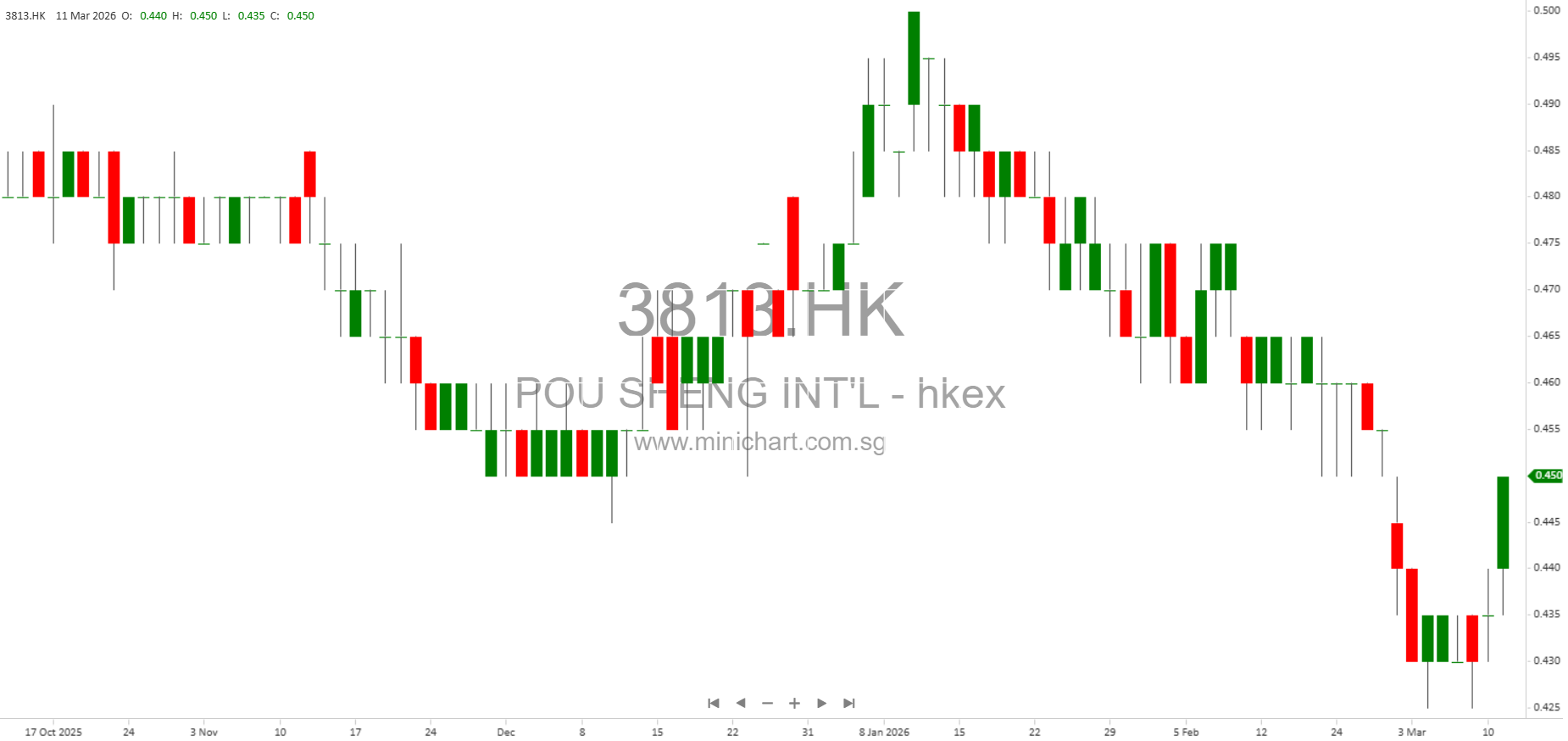
- Significant Earnings Decline: The 57% fall in profit attributable to owners, coupled with a sharp cut in dividends, is likely to be viewed negatively by shareholders and could exert downward pressure on the share price.
- Cash Position and Working Capital: While the Company remains in a net cash position, the significant decrease in cash and bank balances (down 54.9%) warrants close monitoring, especially given the challenging retail environment.
- Operational Restructuring: Store network rationalization and streamlined management may yield long-term benefits, but in the near term reflect underlying sales pressure and margin compression.
- Reduced Capital Expenditure: Indicates a more cautious investment approach amid market uncertainty.
- Dividend Policy: Maintenance of a 60% payout ratio shows commitment to shareholder returns, but the absolute dividend cut is significant.
- Ongoing Share Buyback: The Company has been active in repurchasing shares, which could provide some support to the share price.
Corporate Governance and Compliance
- The Company complied with all applicable corporate governance and listing code provisions during the year.
- No unresolved audit or compliance issues were reported.
Key Dates for Investors
- 2026 AGM: Scheduled for May 22, 2026. Register of members closes May 19-22, 2026.
- Dividend Record Date: June 2, 2026. Dividend payment on June 23, 2026.
Conclusion
Pou Sheng’s 2025 results reflect industry headwinds, consumer caution, and aggressive discounting in China’s retail market. Despite proactive restructuring and digital initiatives, the Group’s earnings and dividends have suffered, and management expects continued challenges but remains committed to operational and digital excellence. Shareholders should be aware of the significant earnings drop, dividend cut, and evolving retail landscape, all of which may impact share value in the near term.
Disclaimer: The above article is for informational purposes only and does not constitute investment advice. Investors should conduct their own research or consult professional advisors before making investment decisions. The writer and publisher accept no liability for any loss arising from reliance on the information provided.