Zura Bio Ltd. Corporate Update: Advancing Tibulizumab, a First-in-Class Bispecific Antibody, into Phase 2 Trials for Major Autoimmune Indications
Key Highlights for Investors
- Lead Asset Tibulizumab: Zura Bio’s lead program, tibulizumab, is the first and only in-class bispecific antibody targeting both the IL-17 and BAFF immune pathways. This innovative approach aims to address complex autoimmune diseases that have not responded optimally to single-pathway therapies.
- Clinical Pipeline Progress: Two Phase 2 clinical trials are ongoing:
- Hidradenitis Suppurativa (HS): Topline data expected Q4 2026
- Systemic Sclerosis (SSc): Topline data expected in the first half of 2027
- Financial Strength: Zura Bio is well-capitalized following a recent public offering in February 2026, with \$109M in cash as of December 31, 2025, plus \$144M in gross proceeds. The company expects this funding to support operations through at least the end of 2028.
- Share Structure: Following the February 2026 offering, Zura Bio has approximately 124 million shares outstanding (as-converted), not including potential dilution from employee options and RSUs.
- Executive Leadership: The company is led by an experienced board and executive team, including CEO & Co-Founder Dr. Sandeep Kulkarni, and Chairman Amit Munshi.
Details of Tibulizumab: Differentiated Approach for Complex Immune Disorders
- Mechanism: Tibulizumab fuses elements of tabalumab (a BAFF-binding antibody) with an IL-17–binding variable fragment derived from ixekizumab (Taltz®, with over \$3.6B in 2024 global sales).
- Dual Inhibition: The antibody blocks both the BAFF and IL-17 (including IL-17A and IL-17A/F heterodimers) pathways, aiming to modulate both B-cell and T-cell driven disease processes.
- Rationale: Dual inhibition is designed to overcome the “efficacy ceiling” seen with single-pathway agents, especially in diseases with complex, redundant, or compensatory immune signaling.
- Initial Indications:
- HS: Highly heterogeneous, relapsing inflammatory skin disease. Potential for best-in-class efficacy by targeting both validated pathways.
- SSc: Rare, severe, multisystem autoimmune disease; tibulizumab could be the first therapy to address both skin and lung manifestations.
- Phase 1 Data: Over 98% median trough target engagement for both IL-17 and BAFF was observed, with favorable pharmacokinetic/pharmacodynamic (PK/PD) and safety profiles. No new or unexpected safety signals emerged.
Market Opportunity: Multi-Billion Dollar Potential
- Hidradenitis Suppurativa (HS): Estimated total addressable market (TAM) of ~\$8B by the mid-2030s. The disease is underdiagnosed, causes substantial morbidity, and is not fully addressed by current biologics.
- Systemic Sclerosis (SSc): Estimated TAM of ~\$4B by the mid-2030s. There are no approved therapies that comprehensively address the multisystem pathology of SSc. SSc affects approximately 300,000 patients across major markets.
Key Clinical and Competitive Insights
- Limitations of Current Therapies: Most autoimmune diseases, including HS and SSc, are driven by multiple immune pathways. Existing single-pathway biologics often yield suboptimal response rates due to biological heterogeneity and pathway redundancy.
- Tibulizumab’s Advantage: As a single molecule targeting two pathways, tibulizumab offers dual-pathway modulation without the complexity of combination therapies.
- Clinical Precedent: Both IL-17 and BAFF inhibition have shown efficacy in placebo-controlled trials for SSc and HS. For example, brodalumab (IL-17 receptor antagonist) met the primary endpoint in SSc, while belimumab (BAFF antagonist) showed improvements in skin and quality of life measures in a pilot study.
- Competitive Landscape: The HS market features multiple approved and late-stage therapies (e.g., adalimumab, secukinumab, bimekizumab, remibrutinib), but no agent to date targets both BAFF and IL-17. Tibulizumab is positioned as the only dual-pathway agent in clinical development for these indications.
Phase 2 Study Designs: What to Watch
Hidradenitis Suppurativa (TibuSHIELD Study)
- Randomized, double-blind, placebo-controlled, three-arm study
- Up to 225 participants with moderate-to-severe HS (Hurley Stage II/III)
- Primary Endpoint: Percent change from baseline in abscess and inflammatory nodule count at Week 16
- Two dose arms (150 mg and 300 mg SC), with dose selection informed by Phase 1 PK/PD data
- 16-week primary efficacy period, followed by a 16-week open-label extension
- Topline data expected Q4 2026
Systemic Sclerosis (TibuSURE Study)
- Randomized, double-blind, placebo-controlled study in early diffuse cutaneous SSc, enriched for SSc-ILD
- Primary Endpoint: Change from baseline in modified Rodnan Skin Score (mRSS) at Week 24
- Key secondary endpoints: Quantitative high-resolution CT imaging, FVC, HAQ-DI, revised CRISS, patient- and clinician-reported outcomes
- 28-week open-label extension after 24-week primary period
- Topline data expected in 1H 2027
Other Potentially Price-Sensitive Details
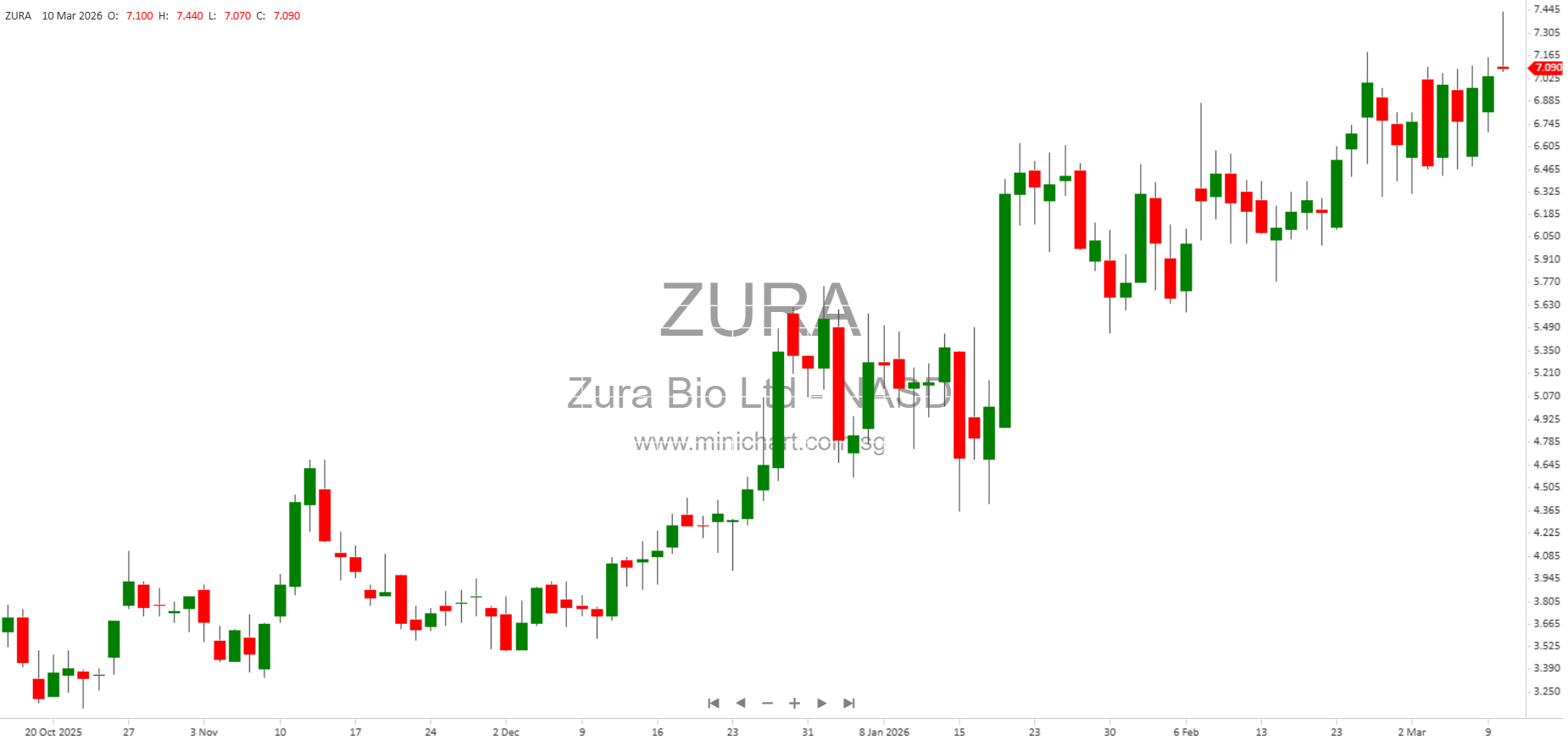
- Near-Term Catalysts: Investors should closely monitor topline readouts from Phase 2 studies in HS (Q4 2026) and SSc (1H 2027). Favorable results could significantly de-risk the program and drive share price appreciation.
- Balance Sheet Strength: The recent financing ensures Zura Bio is funded beyond these key inflection points, reducing financial risk and supporting continued R&D investment.
- Dilution Risk: The increased share count following the February 2026 offering (~124 million shares) may impact per-share metrics and should be considered by current and prospective shareholders.
- Platform Potential: If tibulizumab proves effective, the company may expand into additional autoimmune indications, representing a broader and longer-term growth opportunity.
Risks & Forward-Looking Considerations
- Zura Bio has no products approved for commercial sale and has not completed any pivotal clinical trials. Substantial additional capital may be required to advance products to approval and commercialization.
- The company is dependent on third-party manufacturers and research organizations for clinical development.
- Success is not assured—delays, regulatory setbacks, or negative trial results could materially impact share value.
- Forward-looking statements are based on current assumptions and are subject to significant risks and uncertainties.
Disclaimer: This article is for informational purposes only and does not constitute investment advice. Forward-looking statements are subject to risks and uncertainties. Investors should consult official SEC filings and conduct their own due diligence before making investment decisions.