American Coastal Insurance Corporation (ACIC) 2025 Annual Report: Key Highlights & Investor Analysis
Executive Summary
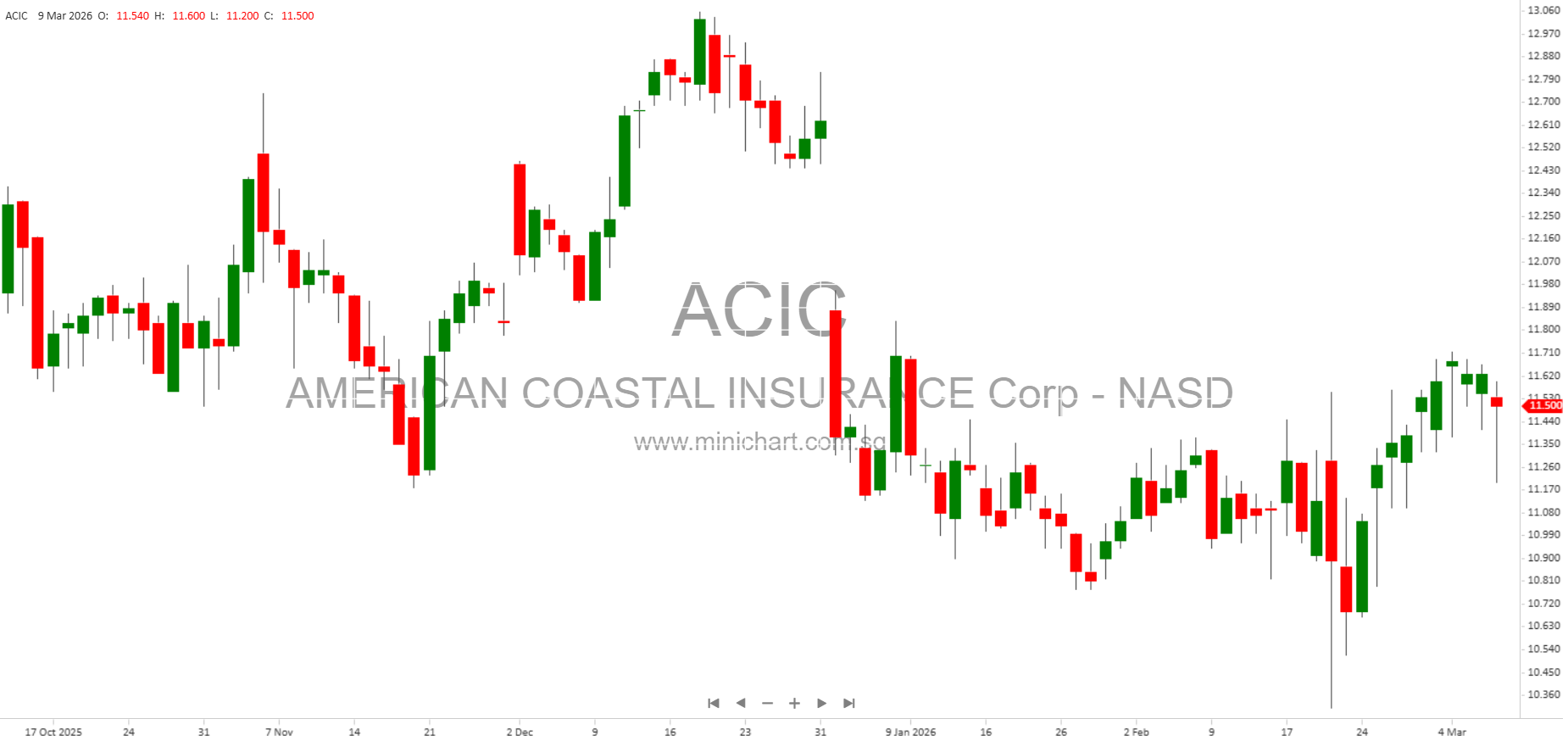
American Coastal Insurance Corporation (ACIC), formerly known as United Insurance Holdings Corp., has released its Annual Report for the fiscal year ended December 31, 2025. The company is headquartered in Saint Petersburg, Florida and trades on the Nasdaq under the symbol ACIC. As of March 2, 2026, ACIC had 48,656,205 shares of common stock outstanding.
Key Points from the Report
- Market Position & Strategy: ACIC positions itself as a top-quartile underwriter of catastrophe-exposed property insurance, focusing on achieving returns above its cost of capital across market cycles. The company employs rigorous underwriting, including re-inspections of properties every three years to ensure data quality and compliance with underwriting guidelines.
- Products & Distribution: ACIC offers a range of property and casualty insurance products. Notably, equipment breakdown, identity theft, and flood policies are “not-at-risk” offerings, meaning ACIC earns commission but cedes all risk to third parties, thus protecting its capital from claims volatility.
- Financial Strength: The financial stability of ACIC’s insurance subsidiary is rated BBB- by Demotech. The company acknowledges that any downgrade in this rating could negatively impact its market position and competitive ability. This is a critical issue for shareholders, as rating changes often affect policyholder confidence and can impact growth and retention.
- Shareholder Structure & Control: R. Daniel Peed and his affiliates hold substantial ownership of ACIC’s common stock, giving them significant control over corporate decisions. This concentration of ownership is subject to restrictive covenants, potentially limiting the company’s ability to pursue certain opportunities, and is a factor that could influence share price movements.
- Risk & Uncertainties: The company faces exposure to catastrophic events and severe weather, particularly given its focus on Florida, a state with heightened hurricane risk. The regulatory environment in Florida, cost and availability of reinsurance, and the accuracy of underwriting and claim processes are all highlighted as significant risks.
- Forward-Looking Statements: Management projects growth in revenues, gross written premium, earnings per share, and investment returns while warning investors of substantial risks, including catastrophic losses, regulatory changes, and the ability to maintain agent relationships. The company makes clear that these statements are subject to significant uncertainties.
- Internal Controls & Technology: ACIC emphasizes the importance of maintaining robust internal controls and IT/data security systems. Failure in these areas could materially impact the company’s financial reporting and operations.
- Liquidity & Dividend Capacity: The company’s ability to pay dividends in the future is constrained by its holding company structure, and further limited by the dividend-paying capacity of its subsidiaries.
- Emerging Issues: ACIC is not an “emerging growth company” or a “shell company,” and has filed all required reports, including management’s attestation of internal controls under Sarbanes-Oxley Section 404(b).
Price-Sensitive & Shareholder-Relevant Issues
- Demotech Rating: The insurance subsidiary’s BBB- rating is a potential trigger for share price volatility. Any downgrade could erode confidence and reduce market share.
- Ownership Concentration: The influence of R. Daniel Peed and affiliates may limit strategic flexibility and could result in share price movement, especially if significant transactions occur.
- Exposure to Catastrophic Events: Florida’s regulatory and weather risks are material. Major events or regulatory changes could lead to substantial claims, impacting earnings and capital.
- Reinsurance Dynamics: Changes in the cost, viability, and availability of reinsurance could materially affect ACIC’s risk profile and financial stability.
- Internal Controls: The company’s assertion of strong internal controls is positive, but any failure or breach could be price sensitive.
- Dividend Policy: Future dividend payments are not guaranteed and depend on subsidiary performance and regulatory constraints.
Potential Share Price Movers
- Rating Changes: Any revision to the BBB- rating, especially a downgrade, would likely negatively affect ACIC’s share price.
- Major Catastrophic Events: Significant weather events in Florida could result in outsized claims, affecting profitability and share value.
- Ownership Transactions: Large share transactions by R. Daniel Peed and affiliates could move the stock price, as could changes in control provisions.
- Regulatory Changes: Introduction or revision of insurance regulation in Florida or federally could alter ACIC’s competitive landscape and profitability.
- Reinsurance Market Shifts: Changes in reinsurance costs or availability could impact ACIC’s balance sheet and risk retention, with share price implications.
Additional Shareholder Information
- ACIC’s Annual Report incorporates by reference information from its Proxy Statement for the 2025 Annual Meeting of Stockholders, to be filed within 120 days after fiscal year-end.
- The company is classified as an accelerated filer, not a large accelerated filer, smaller reporting company, or emerging growth company.
- ACIC’s common stock trades on Nasdaq under the ticker ACIC.
Disclaimer
This article is for informational purposes only and does not constitute investment advice or a recommendation to buy or sell any securities. All forward-looking statements are subject to risks and uncertainties, and actual results may differ materially. Investors should conduct their own due diligence before making any investment decisions.