Cass Information Systems, Inc. 2025 Annual Report: Key Investor Insights
Overview
Cass Information Systems, Inc. (“Cass”) has released its Annual Report for the fiscal year ending December 31, 2025. The report, filed on Form 10-K with the SEC, provides a comprehensive overview of the company’s operations, financials, risk factors, and regulatory environment. The annual report is prepared by RSM US LLP, located in St. Louis, MO.
Key Financial and Corporate Highlights
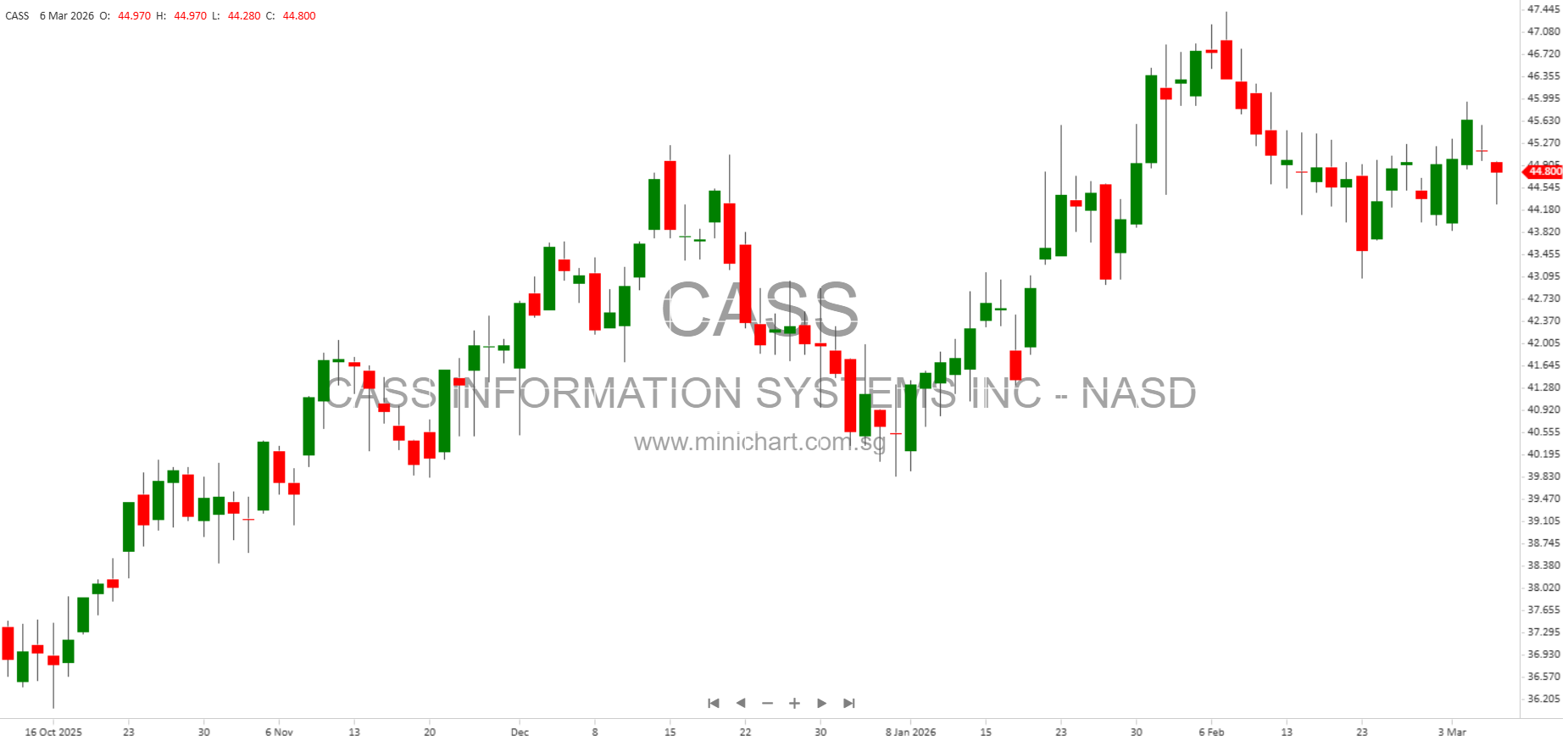
- Public Float and Share Count: The aggregate market value of Cass common stock held by non-affiliates was approximately \$555.5 million as of June 30, 2025, based on a closing price of \$43.45. As of February 27, 2026, there were 12,901,080 shares of common stock outstanding.
- Trading Information: Cass common stock (par value \$0.50 per share) trades under the symbol CASS on the Nasdaq Global Select Market.
- Reporting Status: Cass is an accelerated filer, is not a shell company, and has been subject to SEC filing requirements for the past 90 days.
- Internal Controls: The registered public accounting firm provided attestation to management’s assessment of internal controls over financial reporting, with no error corrections or restatements required.
Business Model and Competitive Advantages
- Unique Positioning: Cass is distinguished from competitors by its ownership of a commercial bank, enabling direct management of funds for customers and suppliers. This integration allows Cass to offer immediate, accurate, and secure funds transfer services, replacing old check processing mechanisms with electronic solutions.
- Business Intelligence: Cass’s proprietary internet information delivery system provides real-time reporting, digital imaging, data files, and retrieval capabilities, giving customers operational visibility and control.
- Product Suite: Cass operates branded platforms including Rate Exchange®, CassPort®, and Cass Freight Index®.
Regulatory Environment and Risk Factors
- Regulatory Oversight: Cass and its bank subsidiary are heavily regulated by the Missouri Division of Finance, the Federal Reserve Board (FRB), and the FDIC. As a financial holding company, Cass must maintain “well capitalized” and “well managed” status, subject to ongoing review.
-
Capital Requirements: Basel III rules require minimum capital ratios, including:
- Common equity Tier 1 capital to risk-weighted assets of at least 7.0% (including buffers)
- Tier 1 capital to risk-weighted assets of at least 8.5%
- Minimum leverage ratio of 4.0%
Institutions below these thresholds face regulatory restrictions on dividends, stock repurchases, and cash payments to executives.
- Stock Repurchase Tax: The Inflation Reduction Act imposes a 1% excise tax on stock repurchases by publicly traded U.S. corporations, net of stock issued during the year.
- Compliance and Cybersecurity: Cass faces ongoing risks from regulatory changes, cybersecurity threats, anti-money laundering requirements, and privacy regulations. Non-compliance can lead to sanctions, financial penalties, and reputational harm.
- Liquidity Risk: Cass warns that the bank failures in 2023 highlight risks from sudden deposit withdrawals and liquidity crunches. The company maintains liquidity through asset and liability management but notes that unexpected events could have material adverse outcomes.
Risks That May Affect Shareholder Value
- Economic & Market Conditions: Cass’s performance is sensitive to local, national, and global economic trends, including inflation, unemployment, monetary policy, geopolitical events, and natural disasters. These factors may adversely affect credit quality, loan repayment, and deposit stability.
- Credit and Interest Rate Risk: Rising interest rates have increased the company’s net interest margin but have also led to unrealized losses in the available-for-sale investment securities portfolio. If Cass needs to sell these securities to meet liquidity needs, it could realize losses and potentially need to raise capital under unfavorable terms.
- AI and Technology Risk: Cass uses AI in its operations, which introduces risks related to privacy, accuracy, and regulatory compliance. AI failures or misuse could result in financial losses, legal liability, and reputational damage.
- Competitive Pressure: Cass operates in a highly competitive environment, facing competition from large payment processors, banks, and smaller auditing firms. Pricing and product competition may affect business growth.
- Key Personnel and Management Risk: Cass’s business is reliant on its ability to attract and retain qualified employees. Loss of key personnel or inability to hire may materially affect business performance.
- Stock Price Volatility: Cass’s share price is subject to fluctuations due to quarterly results, new technologies, unexpected events, acquisitions, and changes in regulation or accounting standards.
- Legal and Regulatory Risks: Changes in banking laws, regulations, or enforcement actions can significantly impact Cass’s business, efficiency, and costs.
Other Notable Disclosures
- Website and SEC Filings: Cass posts its annual, quarterly, and current reports on www.cassinfo.com as soon as practicable after filing with the SEC. Information posted on the website is not incorporated by reference in the annual report.
- Documents Incorporated by Reference: Information for Part III is incorporated from Cass’s Proxy Statement for the 2026 Annual Meeting of Shareholders.
Conclusion: Potential Share Price Sensitivity
This report contains several elements that may be price-sensitive for shareholders:
- Risks related to liquidity and the value of investment securities, particularly in light of recent bank failures and volatile interest rate environments.
- Regulatory changes affecting capital requirements, dividend policies, and stock repurchases (including the new excise tax on repurchases).
- Cybersecurity and AI risks that could lead to financial or reputational harm.
- Competitive pressures and uncertainties regarding new product and market initiatives.
Investors should monitor ongoing developments in Cass’s risk environment, regulatory compliance, and liquidity management, as these factors are likely to impact future share value.
Disclaimer
This article is based on Cass Information Systems, Inc.’s 2025 Annual Report and is intended for informational purposes only. It does not constitute investment advice. Investors should conduct their own research and consult with financial advisors before making any investment decisions. Past performance is not indicative of future results. The information contained herein is believed to be accurate as of the date of publication, but no warranty is provided regarding its completeness or accuracy.