Granite Ridge Resources, Inc.: Annual Report 10-K Analysis – Key Investor Insights
Introduction
Granite Ridge Resources, Inc. (NYSE: GRNT) has released its Annual Report on Form 10-K for the fiscal year ended December 31, 2025. This comprehensive filing provides critical insights into the company’s performance, risk profile, operational strategy, and outlook. Investors and shareholders should pay close attention to the highlighted points below, as they may contain price-sensitive information and factors that could materially impact the company’s share value.
Key Highlights for Investors
- Company Profile: Granite Ridge is a scaled energy company offering exposure comparable to energy private equity through operated partnerships and traditional non-operated assets. The company owns assets in six prolific unconventional basins across the United States, aiming to deliver a diversified portfolio with best-in-class full cycle returns by investing with proven public and private operators.
-
Strategic Focus: Granite Ridge’s strategy centers on maximizing shareholder returns by:
- Managing its current portfolio to generate cash flow
- Participating in new well developments alongside experienced operators
- Sourcing and evaluating new opportunities for healthy risk-adjusted returns
- Public Float & Share Data: As of June 30, 2025, the aggregate market value of the voting common stock held by non-affiliates was approximately \$411,021,199, based on a closing price of \$6.37 per share. As of March 2, 2026, there were 131,464,915 shares outstanding, indicating a substantial market presence.
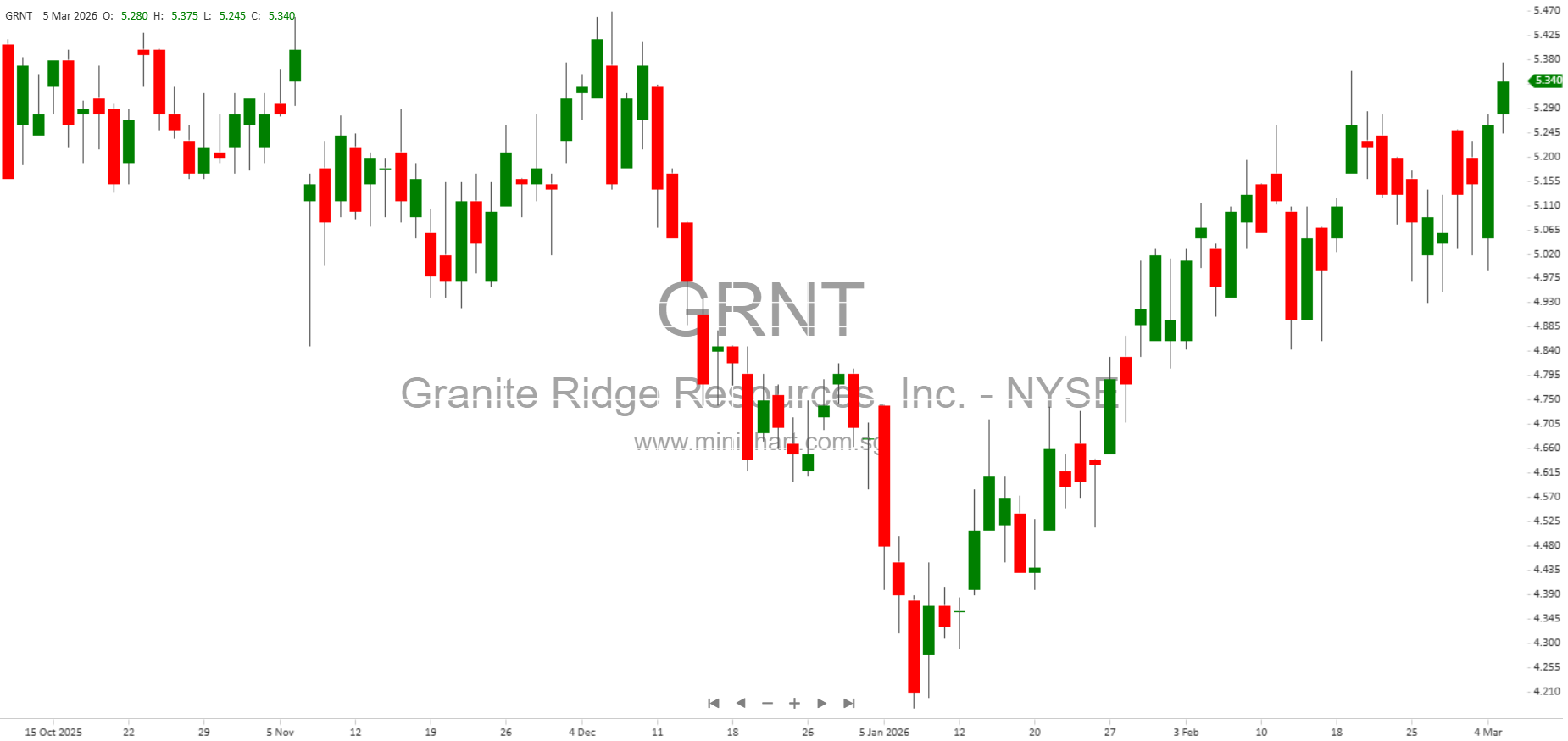
- Stock Exchange & Trading Symbol: Granite Ridge’s common stock is listed on the New York Stock Exchange under the ticker “GRNT”.
- Accelerated Filer Status: The company is classified as an accelerated filer, indicating it meets certain SEC thresholds for reporting and market capitalization.
- Internal Controls: Management has filed a report and attestation on the effectiveness of internal controls over financial reporting under Section 404(b) of the Sarbanes-Oxley Act, suggesting robust financial governance.
Potentially Price-Sensitive Risks and Issues
Risks and uncertainties disclosed in the report may have a material impact on Granite Ridge’s share price:
- Commodity Price Volatility: Extended declines in oil and natural gas prices have adversely affected, and may continue to adversely affect, Granite Ridge’s business and results. Investors should monitor global energy markets closely.
- Dependency on Third-Party Operators: As a non-operator, Granite Ridge’s operational success is heavily reliant on third-party operators. Any issues with these partners could significantly impact cash flows and operational results.
- Reserve Replacement Risk: The company’s future success depends on its ability to replace reserves produced by operators. Failure to do so could materially impact long-term value.
- Title Deficiencies: Deficiencies of title to leased interests could significantly affect financial condition and asset values.
- Regulatory and Environmental Risks: Laws and regulations governing oil and gas operations, including environmental, health, and safety matters, may become stricter, resulting in increased compliance costs or operational constraints.
- ESG & Market Perception: Increased attention to environmental, social, and governance (ESG) matters, as well as technological advances and conservation measures, could reduce demand for oil and gas and negatively impact the company’s reputation and access to capital.
- Credit Agreement Sensitivity: The borrowing base under the company’s Credit Agreement may be reduced in response to commodity price declines, potentially limiting financial flexibility.
- Internal Control Risks: Potential failure to maintain effective internal control over financial reporting could lead to inaccurate reporting or fraud.
- Manager Dependency: Granite Ridge relies on its Manager for key services under the Management Services Agreement (MSA), which could result in conflicts of interest or operational risks.
- Market Liquidity: Limited liquidity and trading in Granite Ridge’s securities may result in greater volatility and difficulty for shareholders wishing to buy or sell shares.
- Geopolitical and Supply Chain Risks: The report references ongoing global hostilities (Israel-Hamas, Russia-Ukraine, U.S.-Israel strikes on Iran, instability in the Middle East) and supply chain disruptions as factors that could impact commodity prices and financial markets.
- Tax Risks: Changes in tax laws, interpretations, or new taxes/fees could increase future liabilities and adversely affect cash flows.
- Dividend Policy: The payment of dividends is at the discretion of the Board of Directors, and there is no assurance of continued dividend payments.
- Anti-Takeover Provisions: Organizational documents contain anti-takeover provisions, which may affect shareholder rights.
- Cybersecurity: The company identifies cyber-related risks as a material concern, given increasing threats to operational continuity.
- Litigation & Regulatory Proceedings: Outcomes from known and unknown litigation or regulatory actions could materially impact financial results.
- Environmental, Social, and Governance (ESG): Increased regulatory and investor emphasis on ESG matters may require additional disclosures and compliance, potentially impacting operations and capital access.
- Potential Share Dilution: Sales by securityholders or issuances by the company, or the perception that such sales may occur, could cause the market price of Granite Ridge common stock to drop.
Forward-Looking Statements and Cautionary Notes
The report contains numerous forward-looking statements regarding financial position, operating performance, business strategy, capital expenditures, production, cash flows, and market conditions. These statements are subject to significant risks and uncertainties, many of which are beyond the company’s control, and actual results may differ materially from those projected.
Investors are urged not to place undue reliance on these statements and to review the “Risk Factors” section in detail.
Additional Shareholder Information
- Granite Ridge is not a well-known seasoned issuer, nor an emerging growth company.
- The company has filed all required reports and Interactive Data Files with the SEC, reflecting regulatory compliance.
- There are no corrections to previously issued financial statements, and the company is not classified as a shell company.
- Portions of the definitive proxy statement related to the 2026 Annual Meeting of Stockholders will be incorporated by reference into Part III of this report.
Conclusion: What Investors Should Watch
The Granite Ridge Resources, Inc. 10-K highlights multiple operational, financial, geopolitical, and regulatory risks that could materially impact share value. Investors should closely monitor commodity prices, regulatory developments, management performance, and market liquidity. The company’s dependency on third-party operators and its Manager, together with external market forces and potential ESG-related changes, present significant uncertainties for future performance.
Any major developments in these areas or significant changes in reserve estimates, financial results, or management strategy could move the share price. The detailed risk disclosures, dividend policy, and market float data are especially important for current and prospective shareholders.
Disclaimer: This article is intended for informational purposes only and does not constitute investment advice, a recommendation, or an offer to buy or sell any securities. Investors should conduct their own research and consult with a financial advisor before making any investment decisions. The information contained herein is based on the Granite Ridge Resources, Inc. 10-K filing and may be subject to change. The author assumes no responsibility for any actions taken based on this content.