GT Biopharma, Inc. 2025 Annual Report: Key Highlights and Investor Risks
Executive Summary
GT Biopharma, Inc. (“GTBP” or “the Company”) has released its Annual Report on Form 10-K for the fiscal year ended December 31, 2025. The report contains several critical updates and risk factors that current and prospective investors must consider. The following article provides a detailed breakdown of the most significant disclosures, company developments, financial status, and risks that could impact shareholder value.
1. Financial Condition and Going Concern Doubts
- Substantial Doubt About Going Concern: As of December 31, 2025, GTBP reported approximately \$6.9 million in cash, cash equivalents, and restricted cash, with a working capital of \$5.8 million. However, the company has incurred substantial operating losses and expects to continue generating heavy losses for the foreseeable future. The independent auditor’s report explicitly raises substantial doubt about the Company’s ability to continue as a going concern.
- Ongoing Capital Needs: The company will require additional capital to fund product development, research, and operations. The ability to secure additional financing remains uncertain, which could significantly impact ongoing activities and shareholder value.
2. Stock and Capital Markets Developments
- Reverse Stock-Split: On February 2, 2024, GTBP implemented a 1-for-30 reverse stock-split. All share and per-share information in the report has been adjusted to reflect this change. This action often aims to meet listing requirements or improve share price stability.
- Nasdaq Listing Risk: The Company disclosed risks related to its ongoing compliance with Nasdaq Capital Market’s continued listing requirements. Failure to regain or maintain compliance could result in delisting, which would significantly affect share liquidity and value.
- Committed Equity Facility: On May 14, 2025, GTBP entered into a Common Shares Purchase Agreement, allowing it to sell shares to Facility Investors at 93% of the volume weighted average price on the applicable purchase date. This facility offers a means to raise capital but also introduces potential dilution risk to existing shareholders.
3. Operational Structure and Human Resources
- Fully Remote Company: As of July 1, 2024, GTBP transitioned to a fully remote company and no longer maintains a principal executive office. The company currently has only one full-time employee, relying heavily on consultants and outsourced services for its operations. This structure may impact operational continuity and strategic execution.
4. Research and Development Commitments
- Major R&D Expenses: The Company recorded research and development expenses of approximately \$863,000 (2025) and \$1,000 (2024) related to its 2023 Sponsored Research Agreement, as well as \$750,000 (2025) and \$19,000 (2024) for the 2024 Clinical Trial Agreement with the University of Minnesota. These agreements are critical for pipeline progression but represent significant cash outflows.
- No Unbilled or Unaccrued R&D Commitments: As of December 31, 2025, there were no outstanding unbilled or unaccrued commitments to the University of Minnesota, reducing concerns about hidden liabilities.
5. Key Business Risks and Regulatory Exposures
- Early-Stage Development Risks: GTBP’s business remains in early development with uncertain prospects for commercializing therapeutic products.
- Regulatory and Legal Risks: Many business practices are subject to regulatory scrutiny, potential government investigations, and private lawsuits. Non-compliance could result in substantial penalties or adverse outcomes.
- Product Candidate Risks: The Company’s product candidates may experience side effects, regulatory delays, or may not reach commercialization. Limited resources may be directed to less promising candidates, missing more profitable opportunities.
- Novel Technology Risks: The Company’s technologies are novel, inherently expensive, and potentially not well understood or accepted in the market, creating additional commercialization risk.
- Manufacturing and Profitability Concerns: Products may be expensive to manufacture, and failure to achieve profitable scale could harm the business.
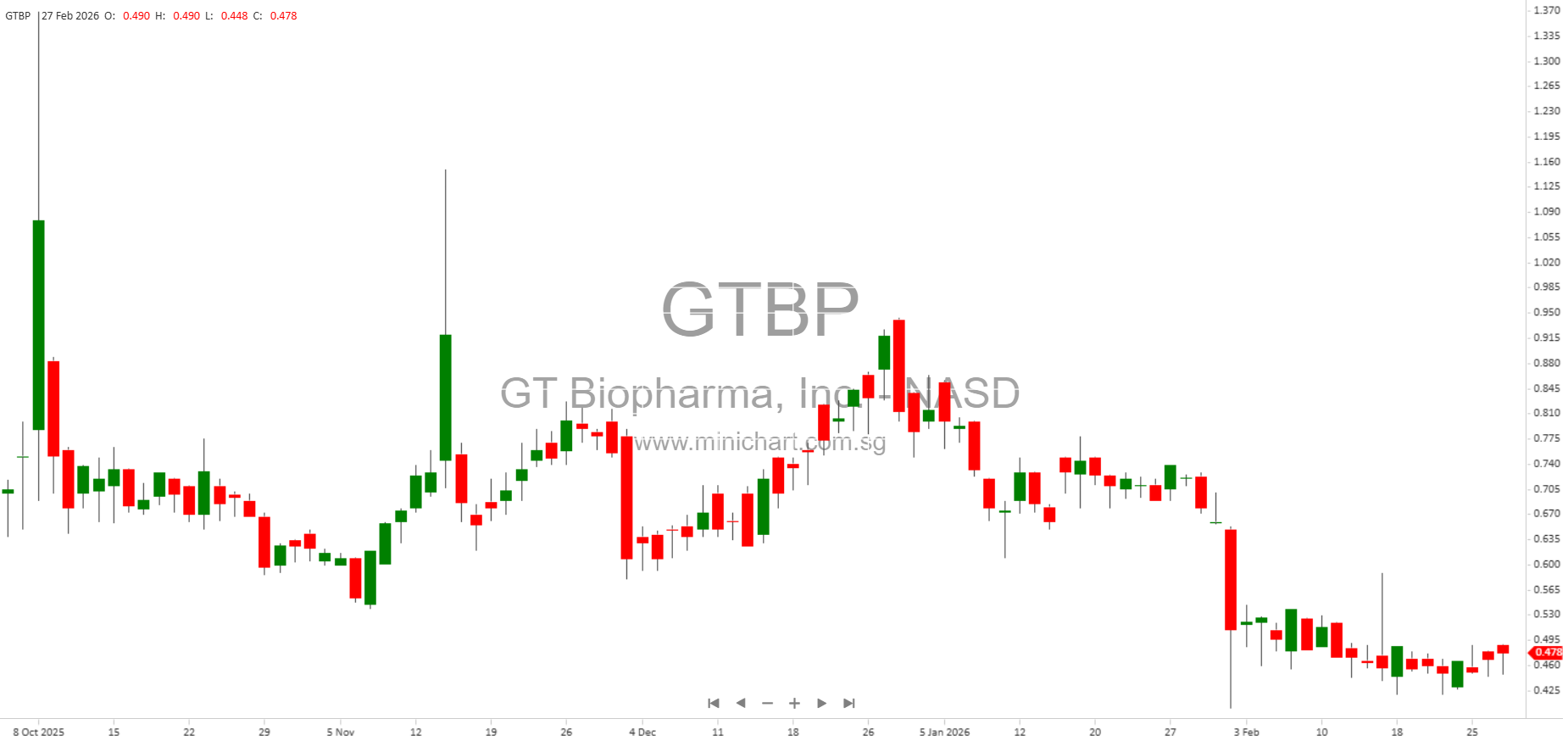
- Market Risks: There is a limited public market for GTBP’s common stock, and the share price may be highly volatile, especially if the stock is deemed a “penny stock,” which imposes marketability restrictions.
6. Legal, Compliance, and Disclosure Items
- Internal Controls: The Company has not filed a report on or attestation to management’s assessment of the effectiveness of its internal control over financial reporting under Section 404(b) of the Sarbanes-Oxley Act. This may be relevant for investor confidence.
- No Financial Restatements: The filing confirms that there were no corrections of errors or restatements requiring a recovery analysis of incentive-based compensation for executive officers.
7. Corporate Governance and Public Filings
- SEC Filings and Transparency: GTBP posts its filings on the SEC’s EDGAR system and its own investor website, striving for transparency. However, the company disclaims incorporation of any website content into the report.
8. Forward-Looking Statements
The report contains numerous forward-looking statements, which are subject to various risks and uncertainties, including those highlighted above. The Company does not undertake to update these statements, and actual results may differ materially from those projected.
Potential Price-Sensitive Issues for Shareholders
- Going Concern Doubt: The explicit disclosure of substantial doubt about the Company’s ability to continue as a going concern is highly price-sensitive and could impact investor sentiment and share value.
- Nasdaq Compliance: The risk of delisting from Nasdaq due to non-compliance is a major red flag that could drastically affect liquidity and price.
- Reverse Stock-Split and Equity Facility: Both actions may affect share value, with the equity facility introducing potential dilution.
- Heavy Reliance on Outsourcing and Consultants: Operational structure changes and minimal in-house staff could be perceived as a risk to robust business continuity.
Conclusion
GT Biopharma, Inc. faces a challenging financial and operational environment. The Company’s ability to continue as a going concern, its compliance with Nasdaq requirements, ongoing capital needs, and early-stage business risks are all significant concerns for shareholders. Investors should closely monitor developments related to capital-raising activities, Nasdaq listing status, and the progress of the Company’s R&D pipeline.
Disclaimer: This article is a summary and interpretation of information provided in GT Biopharma, Inc.’s 2025 Annual Report on Form 10-K. It is intended for informational purposes only and does not constitute investment advice. Investors should conduct their own due diligence and consult financial advisors before making investment decisions. The Company’s future performance is subject to a variety of risks and uncertainties as detailed above.