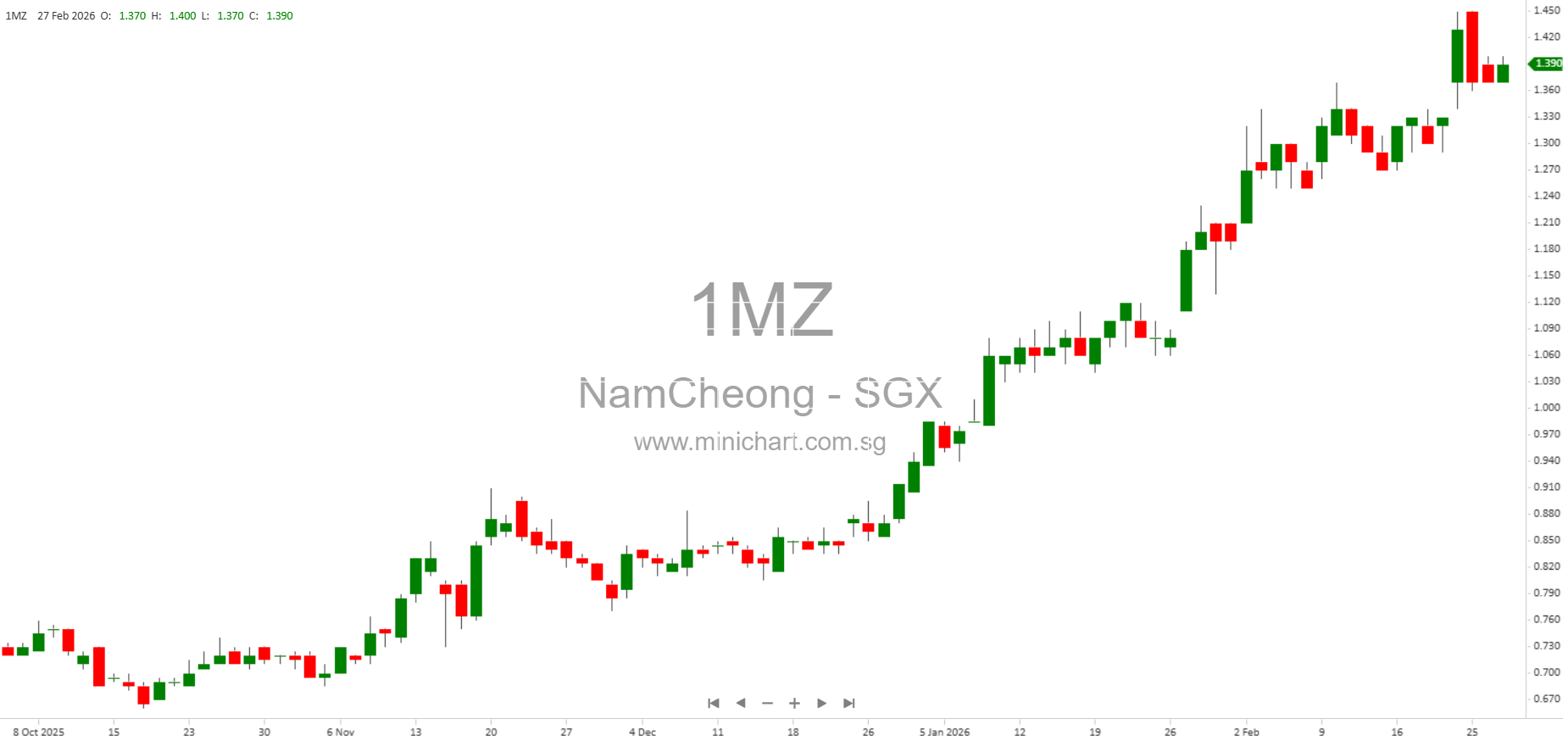
Nam Cheong Limited FY2025 Results: A Detailed Financial Analysis
Nam Cheong Limited, a major offshore support vessel (OSV) player listed on the Singapore Exchange, released its unaudited financial statements for the six months and full year ended 31 December 2025. This analysis dives into their key financial metrics, performance trends, exceptional items, capital actions, and outlook, providing investors with a comprehensive view on the company’s standing and prospects.
Key Financial Metrics and Performance Summary
| Metric | 2H2025 | 1H2025 | 2H2024 | YoY Change (2H) | QoQ Change | FY2025 | FY2024 | YoY Change (FY) |
|---|---|---|---|---|---|---|---|---|
| Revenue (RM’000) | 341,475 | 278,226 | 372,715 | -8% | +23% | 619,701 | 684,714 | -9% |
| Gross Profit (RM’000) | 160,039 | 141,348 | 217,238 | -26% | +13% | 301,387 | 363,285 | -17% |
| Profit After Tax (RM’000) | 185,537 | 89,872 | 167,183 | +11% | +106% | 275,409 | 800,198 | -66% |
| EPS (sen, diluted) | 46.63 | 19.58 | 40.29 | +16% | +138% | 66.21 | 232.44 | -71% |
| Dividend | None | None | None | — | — | None | None | — |
Historical Performance Trends and Exceptional Items
- Revenue and Profit: FY2025 revenue declined 9% YoY, reflecting lower vessel utilisation. Gross profit fell 17% YoY in tandem, with gross margin dropping to 49% from 53%.
- Net Profit: FY2025 net profit after tax dropped dramatically by 66% YoY, mainly due to the absence of a one-off RM398.6 million debt waiver income that boosted FY2024 results. Excluding such non-core items, core profit from chartering and vessel sales fell 22% YoY.
- Quarterly Swings: 2H2025 saw an 8% revenue decline and a 26% gross profit drop YoY, but net profit after tax actually rose 11% due to substantial other income (notably a RM69.2 million vessel disposal gain and RM22.4 million gain on derecognition of payables), offsetting higher operating expenses.
- Exceptional Items: FY2024’s results were boosted by a huge waiver of debts (RM398.6 million) and a RM74.5 million reversal of inventory write-down. FY2025 had exceptional income from asset disposals and derecognition of payables, but no debt waiver.
- Litigation and Restructuring Expenses: FY2025 included a RM10.6 million litigation settlement expense, but restructuring costs seen in FY2024 did not recur.
Balance Sheet and Capital Actions
- Assets: Total assets grew 11% YoY to RM1,419.7 million, driven by increases in property, plant & equipment (vessel completions and dry-docking) and inventories (vessels under construction).
- Liabilities: Total liabilities fell 17% YoY, largely thanks to a RM32.7 million reduction in borrowings (from repayments) and a 48% decrease in trade and other payables.
- Cash Position: Cash and cash equivalents surged 50% YoY to RM202.6 million, aided by vessel sale proceeds and collections from customers.
- Share Actions: No dividend was declared as the company continues to prioritize financial strength post-restructuring. No treasury or subsidiary share movements occurred in 2H2025. Share capital increased marginally due to the issuance of award shares under a management incentive plan.
- Debt Restructuring: In March 2024, the company completed a major debt restructuring, issuing shares to creditors, advisors, and a controlling shareholder, and extending debt maturities to 2031. This sharply reduced gearing risks.
Other Notable Events and Related-party Transactions
- There were no divestments, IPOs, or new fundraising activities in the reporting period.
- Related-party transactions included RM1.1 million in purchases and RM1.0 million in rental expenses with entities linked to management. These were at terms agreed between the parties.
- No asset revaluation or delays, nor any macroeconomic shocks or regulatory changes were noted.
- Litigation settlement of RM10.6 million was paid to a third-party supplier for vessel chartering in FY2025.
Industry Outlook and Chairman’s Statement
The company expects Malaysia’s OSV market to remain stable in 2026, underpinned by Petronas’ plans to maintain domestic hydrocarbon output and increase well development and exploration. However, fleet aging is a concern—up to 80% of Malaysian OSVs will be over 12 years old, with 40% of the Asia-Pacific OSV fleet potentially exiting the market in the next five years, tightening supply and supporting day rates.
As stated by the Board:
“As one of the major OSV players in Asia with both chartering operations and in-house shipbuilding capabilities, Nam Cheong is well positioned to capture opportunities across the OSV value chain. Its young and technologically capable chartering fleet is ready to benefit from sustained day rates, while its in-house newbuilds can either be deployed into its own fleet to replenish and expand the recurring income base, or for external sales to accelerate capital recycling. Supported by these dual growth engines, the Group remains cautiously optimistic about delivering long-term sustainable value to shareholders.”
The tone is cautiously optimistic, emphasizing operational strengths, market position, and a focus on sustainable value rather than promising a near-term earnings surge.
Dividends
- No dividends were proposed or paid for FY2025 or FY2024. The company cites its ongoing restructuring and the desire to strengthen its financial position as reasons for this stance.
Directors’ Pay / Remuneration
- No specific details on directors’ remuneration were disclosed in the report.
Conclusion and Investor Recommendations
Overall Assessment: Nam Cheong’s FY2025 results show a normalized operating performance following the exceptional gains of FY2024, which were skewed by one-off debt waivers. Core earnings declined on lower vessel utilization and higher costs, but the company’s balance sheet is stronger post-restructuring, and liquidity has improved. The OSV market outlook is stable with prospects for higher day rates as supply tightens, but the company’s growth trajectory will depend on fleet utilization and newbuild sales.
- If you currently hold Nam Cheong stock: The company is on improved financial footing post-restructuring but shows slowing operational profit growth and no dividends. Hold for now if you are comfortable with medium-term volatility and are seeking potential upside from sector recovery and improved charter rates. Watch closely for quarterly utilization rates, new contract wins, and progress on asset sales.
- If you do not hold Nam Cheong stock: Consider monitoring rather than buying immediately. Entry may be more attractive upon confirmation of improved utilization, external vessel sales, or a return to dividend payments. The company’s asset base and improved balance sheet provide downside protection, but growth will depend on sector fundamentals and execution.
Disclaimer: This article is for informational purposes only and does not constitute investment advice. Please conduct your own research and consider your risk tolerance before making investment decisions.