Willow Lane Acquisition Corp. II Releases Audited Balance Sheet as of February 17, 2026
Key Highlights and Price-Sensitive Information for Investors
Willow Lane Acquisition Corp. II (“the Company”), a Cayman Islands incorporated special purpose acquisition company (SPAC), has publicly released its audited balance sheet as of February 17, 2026. The financial statement, audited by WithumSmith+Brown, PC, provides clarity on the Company’s capital structure, liquidity position, and organizational status following its Initial Public Offering (IPO) and private placement.
1. Company Overview and Purpose
- Willow Lane Acquisition Corp. II was incorporated on August 1, 2025, as a SPAC, aiming to effect a merger, share exchange, asset acquisition, or similar business combination with one or more businesses (“Business Combination”).
- As of the reporting date, the Company has not identified a target for its initial business combination and has not engaged in any substantive discussions with any potential targets.
2. IPO and Private Placement Details
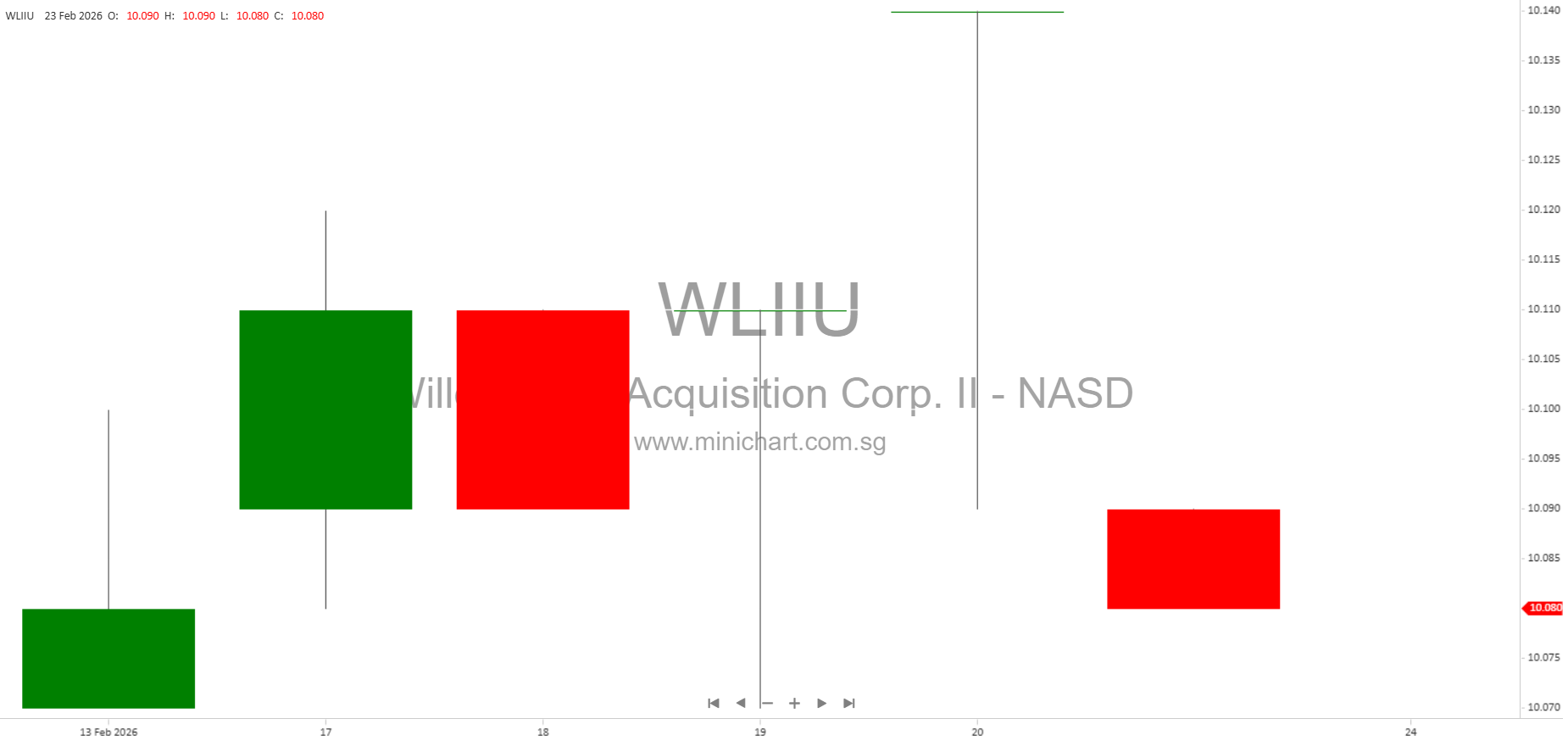
- On February 17, 2026, Willow Lane completed its IPO, selling 14,375,000 units (including the full exercise of the underwriters’ over-allotment option) at \$10.00 per unit, generating gross proceeds of \$143,750,000.
- Each public unit includes one Class A ordinary share and one-fourth of a redeemable warrant, exercisable at \$11.50 per share.
- Simultaneously, the Sponsor and BTIG, LLC (underwriters’ representative) purchased 514,055 private placement units at \$10.00 per unit, generating an additional \$5,140,550 in proceeds.
- Private placement units are similar to public units but have limited exceptions and resale restrictions.
3. Balance Sheet Snapshot
- Total assets: \$145,811,853, of which \$143,750,000 is held in a Trust Account intended solely for a future business combination.
- Cash: \$2,061,853 available for working capital prior to a business combination.
- Total liabilities: \$5,452,731, including \$5,031,250 in deferred underwriting fees and \$421,481 in current liabilities (accrued expenses and offering costs).
- Class A ordinary shares subject to possible redemption: \$143,750,000, reflecting the redemption value of \$10.00 per share.
- Shareholders’ deficit: -\$3,390,878, primarily due to accumulated deficit and offering cost allocations.
4. Key Shareholder Provisions and Redemption Rights
- Redemption Rights: Holders of public shares may redeem their shares for a pro rata portion of the Trust Account in connection with a business combination or if the Company fails to complete a combination within 24 months from the IPO date.
- If no business combination is completed in the prescribed window, the Trust Account will be liquidated and public shareholders will receive approximately \$10.00 per share plus interest, less taxes and permitted dissolution costs.
- Class B Ordinary Shares (Founder Shares): The Sponsor holds 5,259,857 Class B shares, which automatically convert to Class A shares on a one-for-one basis at business combination closing. These shares represent a substantial potential dilution to public shareholders.
- Insider Lock-ups and Voting: The Sponsor, officers, and directors have agreed to significant lock-ups and to vote in favor of any proposed business combination, aligning their interests with public shareholders but also centralizing control.
5. Warrant Structure and Potential Dilution
- Public Warrants: 3,593,750 outstanding, each exercisable for one Class A share at \$11.50 per share, subject to certain registration and listing requirements.
- Private Placement Warrants: 128,514 outstanding, similar in terms to public warrants but with limitations on transfer until after a business combination.
- Warrants are subject to early redemption by the Company if the share price exceeds \$18.00 for 20 out of 30 trading days post-business combination, at a nominal redemption price of \$0.01 per warrant.
- If the Company fails to register the shares underlying the warrants, warrant holders may only exercise on a cashless basis, which may affect the value and liquidity of the warrants.
6. Related Party Transactions and Compensation
- The Sponsor provided initial funding via a \$300,000 unsecured, non-interest-bearing promissory note, fully repaid at IPO closing.
- The Sponsor also transferred 399,000 founder shares to directors and officers as compensation, with significant portions vesting over time and upon successful business combination.
- The Company entered into an administrative services agreement with an affiliate of the Sponsor for \$25,000 per month for office space and support, commencing February 13, 2026.
7. Commitments, Risks, and Contingencies
- The Company faces typical SPAC risks, including the potential inability to complete a business combination within the required timeframe, which would trigger the return of funds to public shareholders.
- The Sponsor has agreed to indemnify the Trust Account against certain claims, but there is no guarantee that the Sponsor has sufficient assets to fulfill this obligation.
- The Company’s ability to consummate a business combination may be affected by macroeconomic and geopolitical factors, including regulatory changes, inflation, market downturns, and regional conflicts.
- Registration rights granted to insiders and underwriters could result in additional share sales post-business combination, potentially impacting share price.
8. Accounting Policies and Segment Reporting
- The Company’s financials are prepared under U.S. GAAP. As an emerging growth company, it utilizes extended phase-in periods for new accounting standards, which may affect comparability with other public companies.
- The Company reports as a single operating segment, with the Chief Financial Officer acting as the chief operating decision maker.
9. Subsequent Events
- The Company has evaluated subsequent events through February 23, 2026. No material subsequent events were reported.
Potential Impact on Share Value
- The successful completion of the IPO and the full exercise of the over-allotment option, resulting in a robust Trust Account, underscore strong demand for Willow Lane Acquisition Corp. II shares and may support share value in the near term.
- However, significant insider holdings and the structure of founder shares and warrants introduce potential future dilution, which investors should monitor closely.
- The Company’s ability to identify and complete a value-creating business combination within the 24-month window remains the critical driver of future share performance.
- Regulatory, market, or geopolitical disruptions could materially alter the Company’s prospects and, correspondingly, the value of its shares.
Conclusion
The audited balance sheet demonstrates that Willow Lane Acquisition Corp. II is well-capitalized and compliant with SPAC structures and governance. Investors should closely monitor developments around business combination prospects, warrant exercises, and insider share conversions, as each has the potential to impact share value significantly.
Disclaimer: This article is for informational purposes only and does not constitute investment advice or a solicitation to buy or sell any securities. Investors should conduct their own due diligence and consult with financial advisors before making investment decisions. The information is based on audited financial statements as of February 17, 2026, and subsequent events through February 23, 2026. Market conditions and company developments may change, affecting the accuracy of this report.