SouthState Bank Corp (SSB) Q2 2026 Financial Report: Key Investor Takeaways
1. Company Overview
SouthState Bank Corp, headquartered in Winter Haven, FL, is a state commercial bank listed under SIC code 6022. The company has undergone several name changes, previously known as SouthState Corp, SOUTH STATE Corp, and First Financial Holdings, Inc. Its fiscal year ends December 31.
2. Key Points from the Q2 2026 Report
- Reporting Period: The report covers the quarter ended June 30, 2026, with comparative context from previous quarters and years.
- Financial Instruments & Fair Value: Extensive disclosures on fair value measurements for financial instruments, including loans, impaired loans, other real estate, and investment securities. The report utilizes Level 3 inputs for some assets, indicating reliance on management estimates and less observable market data, which may increase valuation risk.
-
Loan Portfolios & Credit Quality:
- Detailed segmentation of loans by type (commercial, consumer, construction, owner-occupied, non-owner occupied, home equity, etc.) and by internal credit assessment (pass, special mention, substandard, doubtful).
- The report breaks down loans by past due status (not past due, 30–59 days, 60–89 days, ≥90 days past due), which is critical for evaluating asset quality and potential credit losses.
- Modifications and restructurings are disclosed, including contractual interest rate reductions, term extensions, and payment delays. The frequency and type of restructurings may signal stress in certain portfolios.
-
Allowance for Credit Losses:
- Allowances are calculated across various asset classes, with specific mention of impaired loan members and other real estate, using discounted cash flow and market approaches.
- Servicing assets and changes in fair value are tied to revenue recognition, which may impact net income and shareholder returns.
-
Equity Components:
- Detailed breakdown of equity, including retained earnings, additional paid-in capital, accumulated other comprehensive income (AOCI), unrealized investment gains/losses, and defined benefit plan adjustments.
- Stock repurchase programs and arrangements with directors or officers are disclosed, which may influence share supply and price.
-
Investment Securities:
- Categories include majority-owned subsidiaries (unconsolidated), Federal Home Loan Bank stock, Federal Reserve Bank advances, and other nonmarketable securities.
- Changes in these positions may affect liquidity and capital ratios.
-
Derivative Instruments:
- Disclosure of interest rate swaps and other derivative assets/liabilities, which can significantly impact risk management and net interest margin.
-
Revenue Segments:
- Segmentation by product/service line: mortgage banking, deposit accounts, Small Business Administration (SBA) income, correspondent banking and capital markets, fiduciary/trust services, and other financial products.
- Performance in these segments is critical for understanding earnings drivers and future growth opportunities.
3. Potential Price-Sensitive Information
-
Loan Modifications and Credit Quality:
Increased loan restructuring activity (rate reductions, term extensions, payment delays) may signal growing credit risk, which is price-sensitive for investors watching asset quality trends. -
Fair Value Hierarchy and Level 3 Assets:
Significant reliance on Level 3 inputs for valuing impaired loans and other real estate means that asset values are subject to management estimates. Any changes or volatility in these estimates can materially impact reported earnings and equity. -
Equity Changes and Repurchase Programs:
Active stock repurchase arrangements, particularly involving directors/officers, could reduce share float and potentially support share price, but may also reflect management’s views on intrinsic value or capital needs. -
Segment Performance:
Variations in mortgage banking, SBA income, and correspondent banking segments can be significant share price drivers, especially if one segment outperforms or underperforms relative to expectations. -
Derivative Activities:
Exposure to interest rate swaps and other derivatives can introduce volatility to earnings based on changes in rates, which shareholders should monitor closely.
4. Additional Information for Shareholders
-
Historical Context:
The company has a history of mergers and acquisitions, as seen in the business acquisition disclosures, which may affect comparability of results and strategic direction. -
Regulatory and Accounting Complexity:
The extensive use of fair value disclosures and internal credit assessments reflects a high degree of regulatory and accounting complexity. Investors should be aware of potential changes in accounting estimates or regulatory guidance that could impact reported results. -
Segment Reporting:
Detailed segment reporting provides transparency, but also means that investors need to monitor multiple business lines for risks and opportunities.
5. Summary for Investors
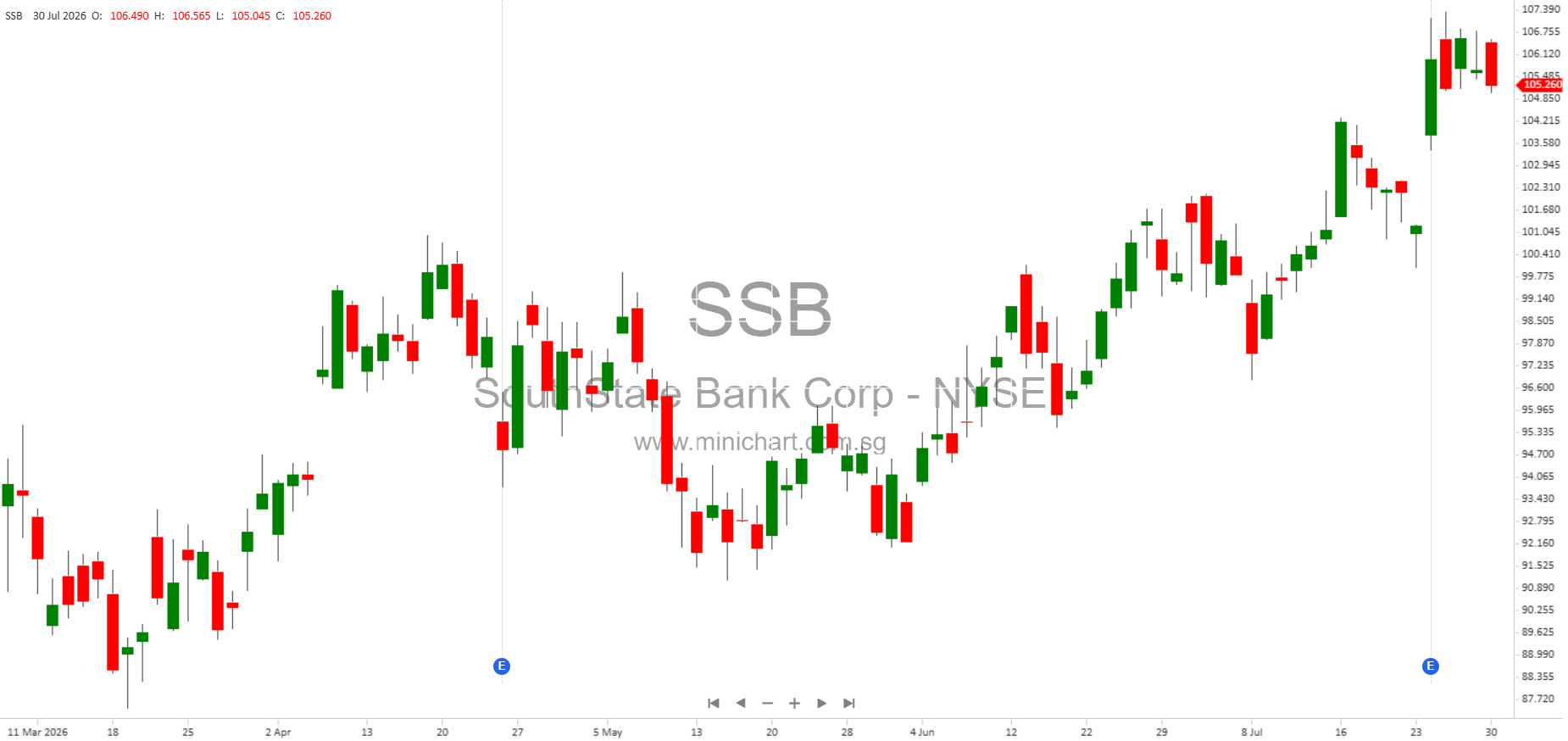
The Q2 2026 report for SouthState Bank Corp reveals an institution deeply engaged in managing credit risk, restructuring loans, and maintaining robust segment reporting. While the bank continues to operate across a wide range of financial products and services, investors should pay close attention to the trends in loan modifications, fair value disclosures (especially Level 3 assets), and equity management activities such as stock repurchases. These areas are potentially price-sensitive and could drive share price performance in the near to medium term.
No major negative surprises or catastrophic events are disclosed, but increased restructuring and reliance on management estimates for asset values may be interpreted as signals of rising credit risk, which could be a share price mover. Segment performances, especially in mortgage banking and SBA, will also be closely watched by the market.
Disclaimer: This article is for informational purposes only and does not constitute investment advice. Investors should review the full SEC filings and consult their own advisors before making any investment decisions. All information is based on publicly available filings as of Q2 2026 and may be subject to change.