Rivian Automotive Q2 2026 Financial Results: Key Highlights and Investor Insights
Rivian Automotive, Inc. (Nasdaq: RIVN) has released its financial results for the second quarter ended June 30, 2026. This comprehensive analysis dives into the major points from the company’s Form 10-Q, highlighting critical items for investors and shareholders.
Key Financial Highlights
- Net Losses Remain Substantial: For Q2 2026, Rivian reported a net loss attributable to common stockholders of \$1.12 billion (\$0.97 per share, basic and diluted). For the six months ended June 30, 2026, net loss was \$2.08 billion (\$1.81 per share).
- Revenue and Cash Position: The company continues to generate cash from its operations and maintains a significant cash and short-term investments position. As of June 30, 2026, cash and cash equivalents were \$3.59 billion, with short-term investments of \$1.72 billion, totaling \$5.31 billion in liquidity.
- Operating Expenses: Operating expenses remained high, with \$2.02 billion for the six months ended June 30, 2026, reflecting continued investment in growth, R&D, and administrative functions.
- Stockholders’ Equity: Stockholders’ equity improved slightly to \$5.13 billion as of June 30, 2026, up from \$4.59 billion at the end of 2025.
- Selling, General, and Administrative (SG&A) Expenses: SG&A expenses for Q2 2026 totaled \$505 million, reflecting ongoing investments in infrastructure and workforce.
- Weighted-Average Shares: Weighted-average common shares outstanding, basic and diluted, were 1.16 billion for the quarter, reflecting a relatively stable share count.
Key Risks and Forward-Looking Statements
- Additional Capital Required: Rivian explicitly states it will require further financing to support its business. The company acknowledges that future capital may not be available on favorable terms, or at all. Any challenges in raising capital could significantly impact operations and valuations.
- Profitability Dependent on Demand: Achieving profitability is contingent on Rivian’s ability to attract and retain customers and maintain strong demand for its vehicles and services. Any downturn in demand could materially affect the company’s financial outlook.
- Highly Competitive Market: The automotive and software/services markets in which Rivian operates are described as highly competitive. The company recognizes the risk of not being able to compete effectively, which could adversely affect future performance.
- Ongoing Losses: The continuation of significant net losses may be a concern for shareholders, particularly if future quarters do not show a path toward profitability.
- Emerging Growth Company Status: Rivian does not currently qualify as an emerging growth company or a smaller reporting company, which means it is subject to full SEC reporting requirements.
Balance Sheet and Liquidity Position
- Total Assets: As of June 30, 2026, Rivian reported total assets of \$15.14 billion.
- Liabilities: Total liabilities were approximately \$10.01 billion, including accounts payable and accrued expenses, indicating a robust but leveraged capital structure.
- Equity Position: As noted, stockholders’ equity was \$5.13 billion, giving Rivian a significant cushion for ongoing operations and future investments.
Shareholder-Sensitive and Potentially Price-Moving Highlights
- Ongoing Capital Needs and Potential Dilution: The explicit statement that new capital will be needed is significant. If Rivian raises funds through equity, this could dilute existing shareholders. If done through debt, it could increase leverage and risk.
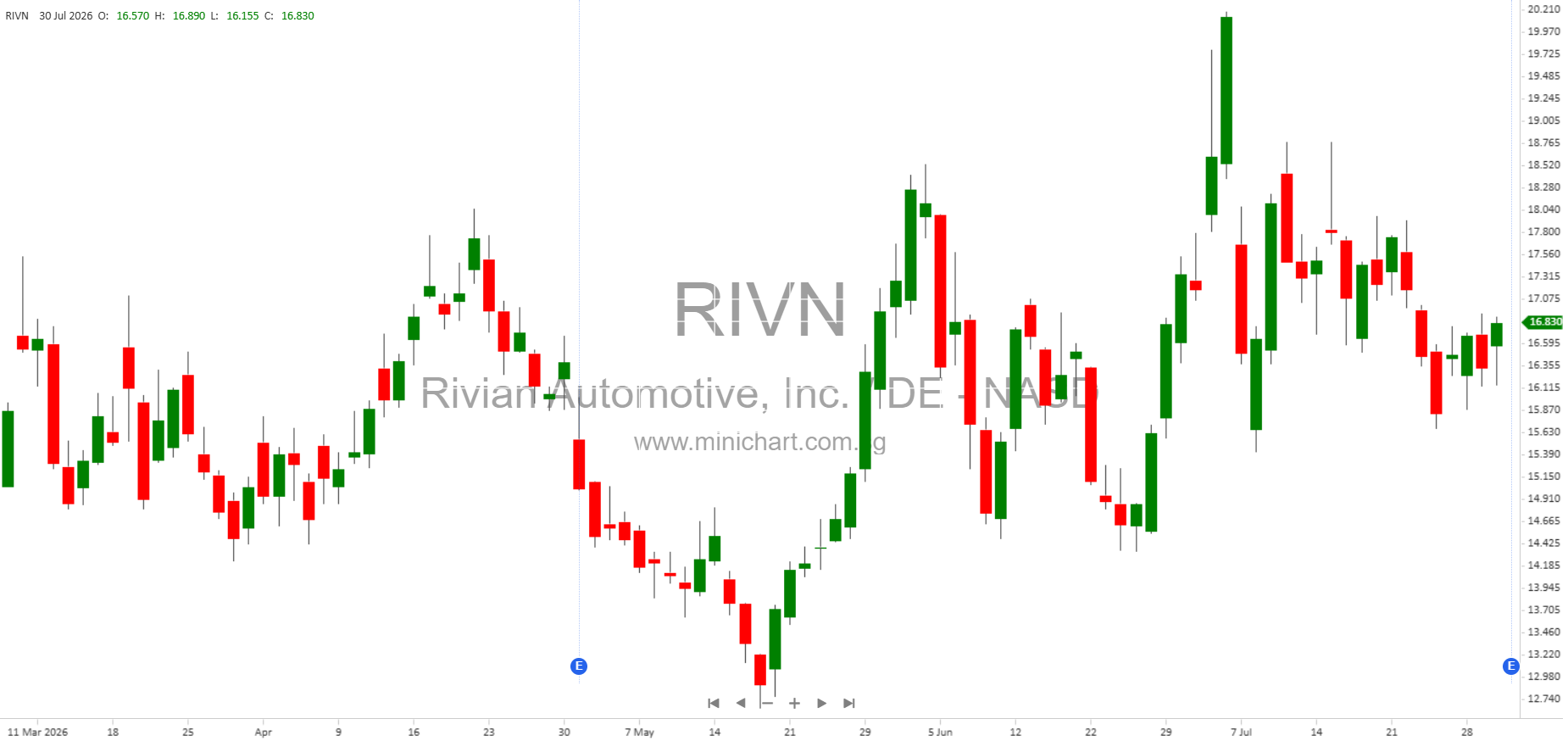
- Large Ongoing Losses: The continuation of large quarterly and YTD losses may pressure the stock if investors lose confidence in the company’s path to profitability.
- Liquidity Is Strong, But Burn Rate Is High: Although Rivian’s liquidity is robust, the high rate of cash burn relative to revenues means that the need for additional capital could come sooner than anticipated if the company does not materially improve profitability or slow spending.
- Competitive Pressures: The company’s acknowledgment of a highly competitive environment heightens the risk of margin compression or market share loss.
Summary for Investors
Rivian’s Q2 2026 results reinforce its position as a well-funded but still loss-making electric vehicle manufacturer. While the company has a sizable cash buffer and continues to invest for growth, persistent high operating losses and the need for additional capital are key risks. Shareholders should monitor announcements about capital raises, as these could have direct impacts on share dilution or leverage. The market will also focus on any signs of demand growth, cost control, or progress toward profitability in the coming quarters.
Disclaimer
The information provided in this article is for informational purposes only and does not constitute investment advice. Investors should conduct their own research and consult with a qualified financial advisor before making investment decisions. The author and publisher are not responsible for any losses incurred as a result of reliance on this information.