Perella Weinberg Partners Q2 2026 Financial Results: Key Insights for Investors
Summary of Results
Perella Weinberg Partners (“PWP” or “the Company”) has released its unaudited financial results for the second quarter ended June 30, 2026. The report contains several crucial developments that will be of interest to shareholders, including the Company’s performance, changes in equity, and disclosures that may impact the firm’s valuation.
Key Financial Highlights
- Total Assets: As of June 30, 2026, PWP’s total assets were reported at \$644.97 million, a significant decrease from \$797.64 million at December 31, 2025. This reduction in assets should be noted by investors as it signals changes in the Company’s financial structure and liquidity.
- Redeemable Noncontrolling Interests: These stood at \$388.10 million at the end of Q2 2026, up from the previous period, indicating a shift in the Company’s capital mix.
- Total Equity: Total equity dropped to \$(45.79) million from the prior \$8 million, driven by a combination of declining retained earnings (accumulated deficit of \$(136.64) million) and significant treasury stock purchases (treasury stock value of \$(134.66) million as of June 30, 2026).
- Profitability: Net income for Q2 2026 was \$6.33 million, down from \$25.64 million in the same period of 2025. Diluted earnings per share for the quarter were \$0.06, also down from \$0.29 in Q2 2025. This drop in profitability is a material development for shareholders.
- Dividends: A dividend of \$0.07 per share was declared on Class A common stock for the quarter.
- Equity-based Awards: The Company recognized \$30.97 million in equity-based compensation for the period, a notable increase that affects both operating expenses and shareholder dilution.
- Share Count: As of June 30, 2026, there were 87,839,777 shares of Class A common stock issued and outstanding, with a substantial number held in treasury (14,569,154 shares).
Other Important Developments
-
Market Risks & Forward-Looking Statements:
The Company highlighted ongoing market volatility, regulatory risks, and its dependence on fee-paying clients. Fluctuations in advisory fee revenues, which are substantially event-driven and non-recurring, remain a key risk factor. Shareholders should pay close attention to the Company’s ability to manage costs and retain top talent in a highly competitive advisory market. -
Litigation & Regulatory Risks:
PWP acknowledged substantial litigation risks inherent in the financial services sector, as well as cybersecurity and operational risks. The Company also pointed to the impact of evolving U.S. and foreign regulatory environments, which could affect its operations, profitability, and reputation. -
Shareholder Equity and Capital Structure:
The Company’s negative equity as of June 30, 2026, is a critical issue. The decline from positive to negative equity, driven by treasury share repurchases and growing accumulated deficits, is a major red flag and could impact the Company’s market valuation and creditworthiness. -
Website Disclosure:
All filings are available on the SEC’s website and on PWP’s investor relations page, but the website content is not incorporated into the report.
Potential Share Price Impacts and Shareholder Considerations
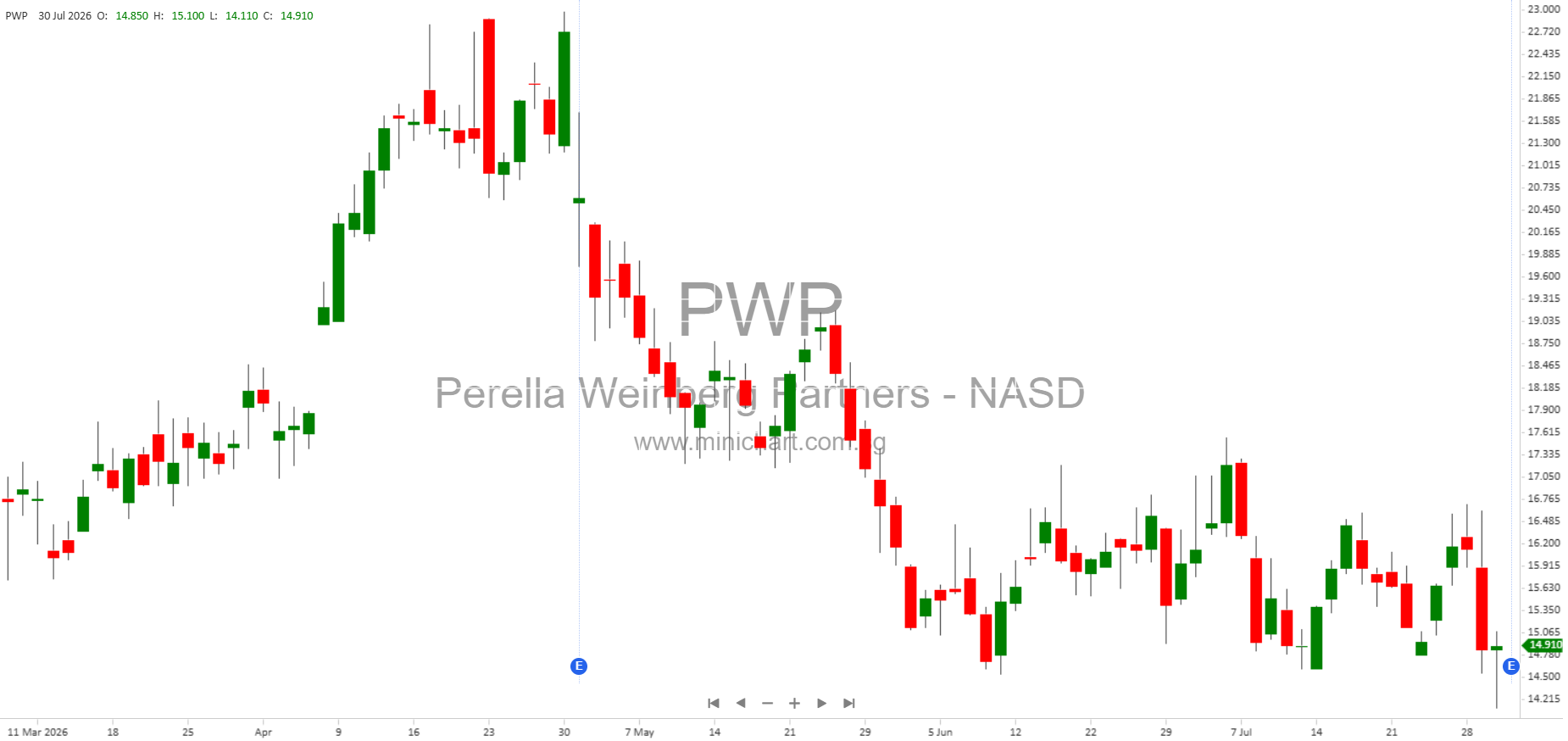
- The significant drop in net income and earnings per share compared to Q2 2025 may pressure the share price downward, especially in light of negative equity and the decrease in total assets.
- Continued treasury share repurchases, while potentially supportive for the share price in the short term, have contributed to negative equity and may limit future financial flexibility.
- The increase in equity-based compensation may lead to further dilution for existing shareholders.
- Persistent market risks and litigation/regulatory exposures could weigh on investor sentiment.
- The \$0.07 per share dividend signals a commitment to shareholder returns but must be balanced against declining profitability and negative equity.
Conclusion
The Q2 2026 financial report for Perella Weinberg Partners reveals several material developments. Investors should carefully consider the Company’s declining profitability, negative equity, and ongoing capital management strategies. While PWP continues to return capital to shareholders through dividends and share repurchases, these actions have led to a weakened balance sheet. The Company’s exposure to market volatility, event-driven revenue, and regulatory/litigation risks further heighten uncertainty. These factors are highly price sensitive and may lead to increased volatility in the Company’s share price.
Disclaimer: This article is for informational purposes only and does not constitute investment advice. Investors should review all SEC filings and consult with their financial advisors before making any investment decisions. The information provided is based on the most recent quarterly report and may be subject to change.