Starbucks Corporation Q3 2026 Financial Report: Detailed Investor Analysis
Key Points from the Report
- Reporting Period: Q3 Fiscal 2026, ending June 28, 2026.
- Business Segments: Starbucks continues to operate through three main segments: North America, International, and Channel Development.
- Equity Components: The report presents detailed tracking of common stock, additional paid-in capital, retained earnings, accumulated other comprehensive income (AOCI), parent and noncontrolling interests.
- Financial Instruments: Extensive disclosures on the valuation of short-term and long-term investments, including corporate debt securities, asset-backed securities, and U.S. Treasury and government securities. Starbucks utilizes all three levels of fair value hierarchy (Levels 1, 2, and 3), demonstrating a robust approach to asset valuation.
- Geographical Focus: Significant focus on China, Japan, Canada, the UK, and U.S. segments, with explicit tracking of sales revenue and concentration risk by product type and geography.
- Derivative and Hedge Accounting: Starbucks actively manages risk through fixed price contracts and net investment hedge strategies, with detailed AOCI disclosures reflecting gains and losses attributable to both parent and noncontrolling interests.
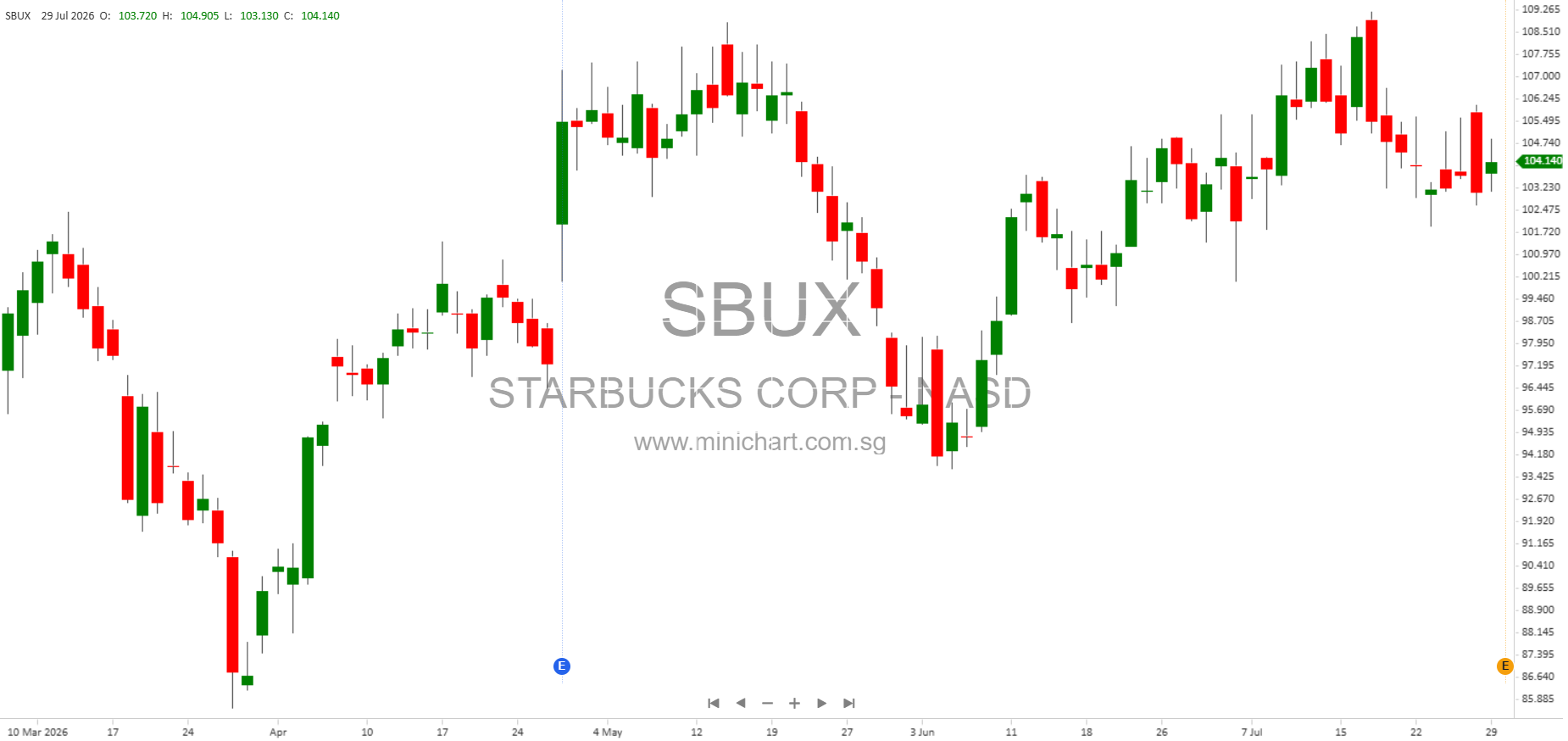
- Share Repurchase Programs: The document notes ongoing open market share repurchase activity, which may impact share supply and potentially the share price.
Important Shareholder Information & Price Sensitive Highlights
- Segment Performance: North America remains the dominant segment, but International (esp. China) is increasingly contributing to consolidated revenues. Investors should note that revenue concentration in China and other international markets is rising, which could impact future growth prospects and risk exposure.
- Fair Value Hierarchy & Investment Risks: Starbucks’ use of Level 2 and Level 3 inputs for asset-backed and corporate debt securities suggests some exposure to less liquid or more complex assets. Any significant changes in these values could affect reported earnings and net asset values.
- Accumulated Other Comprehensive Income (AOCI): Starbucks records gains and losses from cash flow hedges, translation adjustments, and net investment hedges. These items can materially impact equity and are sensitive to market conditions (e.g., interest rates, currency movements).
- Share Repurchase: Ongoing share repurchase activity is noteworthy, as it typically signals management confidence and can positively affect earnings per share and share price. Investors should monitor the scale and timing of such buybacks.
- Debt Instruments: The company has multiple senior notes outstanding (including a 4.8% five-year and a 2.55% ten-year series), with valuations tracked at Level 2. Changes in interest rates or credit risk could impact the fair values of these liabilities.
- Concentration Risks: Starbucks has highlighted revenue concentration risks by product type (notably beverages), and by geography (notably China and the US). Any disruption in these markets or product categories could have outsized effects on the company’s financials.
- Noncontrolling Interests: Noncontrolling interests are tracked in AOCI and other equity components, reflecting joint ventures and minority stakes, particularly in China. This could affect the portion of earnings attributable to common shareholders.
- Potential Price Sensitivity: The increased exposure to China and international markets, ongoing share repurchases, and the company’s asset mix and hedging activities are all potentially price sensitive. Any material changes in these areas (such as geopolitical developments, currency volatility, or buyback acceleration) could move Starbucks’ share price.
Additional Details for Investors
- Starbucks’ reporting places heavy emphasis on tracking the impact of financial instruments by fair value hierarchy and location on the balance sheet. This transparency allows investors to better assess liquidity risk, investment risk, and the potential volatility of reported earnings.
- The company’s segment reporting, including North America, International, and Channel Development, enables investors to analyze the diversification and risk profile of the business.
- Detailed tracking of AOCI components (including cash flow hedges, translation adjustments, and net investment hedges) underscores Starbucks’ active risk management approach and potential exposure to market volatility.
- The explicit mention of risks by product type and geography (i.e., beverages, China, Japan, Canada, UK, US) signals the importance of monitoring consumer trends and regional economic conditions.
- Starbucks’ ongoing share repurchase program is a positive signal, but investors should remain alert to any changes in capital allocation strategy or the scale of repurchases, as these could affect share liquidity and valuation.
- Debt instruments with substantial fair value changes may impact Starbucks’ balance sheet and reported net income, especially in times of changing interest rates or widening credit spreads.
- Noncontrolling interests and joint ventures, especially in China, are increasingly important for Starbucks’ growth strategy but can also introduce earnings volatility and governance complexity.
Conclusion
Starbucks’ Q3 2026 financial disclosures highlight a company that is actively managing risk, expanding internationally (especially in China), and engaging in shareholder-friendly actions such as share repurchases. However, increased exposure to international markets, complex financial instrument holdings, and ongoing hedging activities introduce new risks and potential volatility. Investors should pay close attention to these developments, as they are potentially price sensitive and could materially affect Starbucks’ share value.
Disclaimer: This article is for informational purposes only and does not constitute investment advice. Investors should consult their financial advisors and review the full official filings before making any investment decisions. The information herein is based on the Q3 2026 financial report and may be subject to change.