PennyMac Financial Services, Inc. Reports Q2 2026 Results: Earnings Miss, Strategic Restructuring, and Tech Advances
Key Financial Highlights
- Net income: \$22 million, or \$0.41 diluted EPS, down 84% year-over-year
- Adjusted net income: \$74 million, or \$1.39 adjusted diluted EPS
- Total net revenues: \$497 million (up 12% YoY, down 9% QoQ)
- Adjusted net revenues: \$566 million
- Dividend: \$0.30 per share, unchanged, payable August 27, 2026
- Book value per share: \$83.49, up 7% YoY
- Annualized ROE: 2% (down sharply from 14% YoY)
- Annualized adjusted ROE: 7% (down from 13% YoY)
CEO Commentary and Strategic Actions
Chairman and CEO David Spector highlighted that PennyMac’s operational execution remained solid, but profitability fell short of expectations due to higher interest rates. The company is actively taking steps to realign its cost structure to enhance profitability, suggesting possible expense reductions, workforce changes, or process streamlining. Spector emphasized ongoing investments in technology, especially AI-driven process automation, which he believes will provide structural leverage, lower costs, and preserve customer experience. Notably, recapture rates—an important profitability lever—improved significantly during the quarter. The company also expects meaningful operating leverage and fee-based revenue growth from the pending acquisition of Cenlar’s subservicing portfolio, anticipated to close in Q4 2026.
Key Operating Metrics and Segment Performance
Production Segment
- Total loan acquisitions and originations: \$34.9 billion (down 8% YoY)
- Consumer direct originations: \$5.6 billion (up 103% YoY)
- Production revenue margins: 77 basis points (up from 55 bps YoY)
- Pretax income: \$38 million (down from \$58 million YoY)
The new consumer direct loan origination system, powered by proprietary AI agents (including a Natural Language Virtual Agent), is credited with facilitating process automation and driving higher efficiency. The company has also achieved notable improvements in refinance recapture rates: conventional first-lien recapture rose to 29% (up 7pp QoQ), and government first-lien recapture increased to 59% (up 9pp QoQ).
Volume trends showed a mixed picture: consumer direct and broker direct channels saw YoY growth, but the correspondent channel was down 33% YoY due to competitive pressures. The production segment’s pretax income decreased 33% YoY, primarily due to lower volumes and a \$36 million negative shift in post-lock impacts from market price changes.
Servicing Segment
- Owned servicing portfolio: \$488 billion (UPB), up 5% YoY
- Total servicing portfolio: \$731 billion (UPB), up 4% YoY
- Pretax income: \$22 million (down from \$54 million YoY)
- Pretax income excluding valuation-related items: \$99 million (down from \$146 million YoY)
Servicing revenues (excluding valuation-related items) were \$369 million, down 6% YoY, mainly due to higher runoff and realization of MSR cash flows, partially offset by higher loan servicing fees. Servicing expenses increased 10% YoY, attributed to higher interest expense, payoff-related expense, and credit loss provisions.
The company is poised for a step-change in scale and profitability once the Cenlar subservicing acquisition is completed, which is expected to add fee-based revenues and operational leverage.
Corporate & Other
- Pretax loss: \$29 million (improved from \$35 million YoY)
- Revenues: \$23 million (up from \$12 million YoY, aided by a non-recurring gain from a minority equity interest in Vesta)
- Expenses: \$52 million (up from \$47 million YoY due to higher marketing, advertising, and legal expenses)
Balance Sheet, Capital & Liquidity
- Total assets: \$29.9 billion (up 23% YoY)
- Total liabilities: \$25.5 billion (up 26% YoY)
- Stockholders’ equity: \$4.34 billion (up 8% YoY)
- Total liquidity: \$4.01 billion (down 4% YoY)
- Non-funding debt / tangible equity: 1.8x (up from 1.7x YoY)
- Total debt / tangible equity: 3.7x (steady YoY)
Liquidity as a percentage of MSR fair value declined to 38% from 44% YoY. The company continues to carry a substantial debt load, primarily from unsecured senior notes and MSR term notes.
Business and Technology Updates
- Rapid deployment of process-automating AI agents within the new consumer direct origination platform
- Expanded partnership with Amazon Web Services to further digital transformation and AI leadership
- Continued improvements in recapture rates, positioning the company for upside as origination markets expand
- Cenlar subservicing business acquisition on track to close in Q4 2026; expected to be a significant strategic and financial catalyst
Guidance and Outlook
- The company expects adjusted ROEs to remain in the high single digits through 2026, given the headwinds from higher interest rates and a smaller projected origination market.
- Management signaled ongoing cost reduction efforts to align expenses with the current market environment, which could involve restructuring or layoffs.
Management will host a conference call and webcast for investors to discuss further details and answer questions.
Potentially Price-Sensitive or Shareholder-Relevant Issues
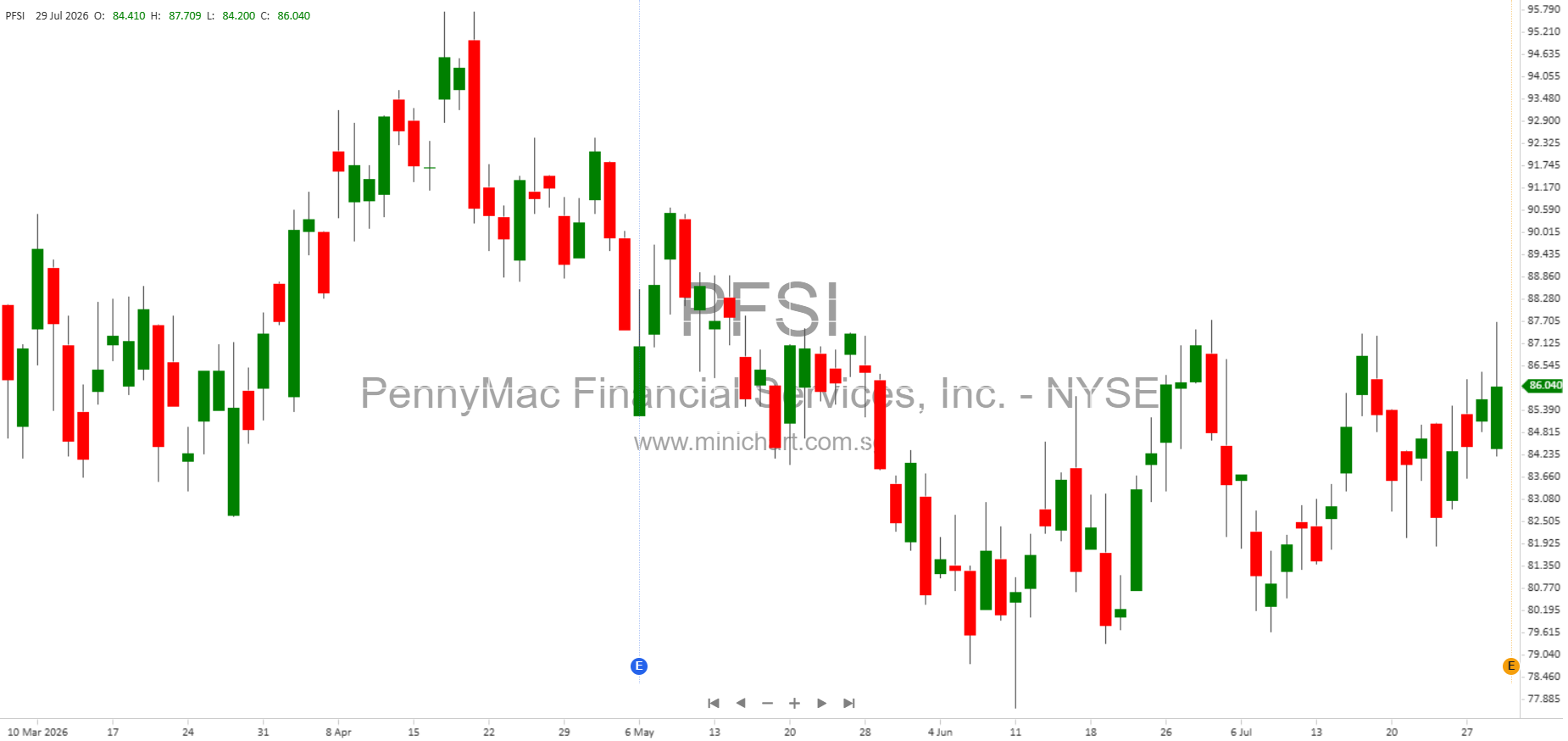
- Significant shortfall in net income and ROE vs. prior year and expectations, largely attributed to higher interest rates. This may pressure the share price downward.
- Active cost-reduction initiatives indicate possible restructuring, layoffs, or other material changes that could affect future profitability and investor sentiment.
- Completion and integration of the Cenlar subservicing acquisition is a major strategic event, with the potential to drive future fee-based revenues and scale-related efficiencies.
- Ongoing technology investments and AI-driven initiatives are expected to bolster efficiency and competitiveness, potentially supporting long-term margins.
- Dividend remains unchanged at \$0.30/share, which may be reassuring to income-oriented investors despite earnings pressure.
- Liquidity and leverage metrics are stable but bear watching given rising debt balances and a more challenging operating environment.
Summary for Investors
PennyMac Financial Services faced a challenging Q2 2026, with earnings and returns falling sharply from prior year levels due to higher interest rates and competitive pressures. The company is responding with cost-cutting initiatives and a strong push into technology and AI-driven process automation, while also banking on the forthcoming integration of Cenlar’s subservicing portfolio to deliver scale and fee-based growth. The unchanged dividend and improved recapture rates are positives, but investors should closely monitor the company’s ability to deliver on its restructuring and integration promises, as well as its capacity to navigate a smaller origination market and a heavy debt load.
Disclaimer: This article is for informational purposes only and does not constitute investment advice. Investors should review all relevant company filings and consult with their financial advisors before making investment decisions. Forward-looking statements in this article are subject to risks and uncertainties that may cause actual results to differ materially.