TPG RE Finance Trust, Inc. (NYSE: TRTX) Reports Q2 2026 Results: Key Insights for Investors
Executive Summary
TPG RE Finance Trust, Inc. (“TRTX”) has released its unaudited financial results for the second quarter ended June 30, 2026. The report presents a comprehensive look at the company’s financial position, key risks, and forward-looking considerations for shareholders.
Key Financial Highlights
- Total Assets: As of June 30, 2026, TRTX reported total assets of \$4.41 billion, down from \$4.60 billion at year-end 2025. This represents a decrease, suggesting some contraction in the balance sheet.
- Cash and Cash Equivalents: The company held \$87.6 million in cash and cash equivalents as of June 30, 2026.
- Loans Held for Investment: Loans held for investment (net of allowances) stood at \$4.03 billion, down from \$4.32 billion at year-end 2025.
- Real Estate Owned: Net real estate owned was \$224.8 million as of June 30, 2026.
- Secured Financing Agreements: The company had \$1.12 billion in secured financing agreements on the books, compared to \$618.5 million at year-end, indicating increased utilization of secured debt.
- Asset-Specific Financings: Asset-specific financings were reported at \$59.8 million, unchanged from prior periods.
- Dividends Payable: Dividends payable as of June 30, 2026 were \$19.4 million.
- Common Shares Outstanding: As of July 24, 2026, there were 76,769,000 shares of common stock outstanding.
- Share Listings: The company’s common stock (TRTX) and its 6.25% Series C Cumulative Redeemable Preferred Stock (TRTX PRC) are both listed on the New York Stock Exchange.
Key Risks and Forward-Looking Statements
TRTX specifically highlights a number of risks and uncertainties that may materially impact future results and, by extension, the share price. Shareholders should pay special attention to these factors, as they are likely to be price-sensitive:
- Interest Rate and Credit Spread Fluctuations: The company notes that recent and potential future fluctuations in interest rates and credit spreads have and could continue to reduce income generated on loans and investments. This may negatively impact results of operations, cash flows, and the market value of investments, as well as impair the company’s ability to pay distributions.
- Adverse Real Estate and Capital Market Conditions: TRTX warns of the risk of adverse changes in real estate and capital markets, which could affect asset values and performance.
- Financing and Liquidity Risks: The report draws attention to difficulties in obtaining financing or raising capital, as well as the possibility of being unable to borrow incremental amounts or being required to repay debt under existing financing arrangements. Rising financing costs and reductions in investment yields are also mentioned as significant risks.
- Credit Losses: Events that could lead to increases in the company’s expected credit loss reserves are highlighted as a risk.
- Regulatory and Legislative Risks: Potential adverse legislative or regulatory developments, including tax, securities, and lending laws, could materially impact the business.
- Macroeconomic and Geopolitical Risks: The company lists a host of macroeconomic risks, including recession, inflation, changing fiscal and monetary policies, geopolitical tensions, trade disputes, and supply chain challenges.
- Banking Sector Exposure: The failure of any banks with which TRTX or its borrowers have relationships could impair the ability of borrowers to access deposits or obtain financing on favorable terms.
- Structural Shifts in Office Demand: The report specifically mentions reduced demand for office space as a result of remote and hybrid work, which could affect the performance of real estate assets securing the company’s investments.
- Competition: Increased competition from entities involved in mortgage lending and investing could affect TRTX’s ability to source attractive deals.
- Defaults and Asset Performance: Deterioration in the performance of properties securing investments, as well as defaults by borrowers, could lead to principal losses and strained liquidity.
- Management and Operational Risks: The company notes the importance of managing growth, integrating new assets, and controlling operating costs. Conflicts with TPG, the external manager, and related parties are also cited.
- Regulatory Exemptions: The ability to maintain exemption or exclusion from registration under the Investment Company Act of 1940 is identified as a key risk.
- Changes in Accounting Standards: Authoritative changes in U.S. GAAP or other regulatory standards could impact reported results.
Shareholder and Investor Considerations
- Reporting Status: TRTX confirms it is in compliance with all SEC filing requirements and is categorized as an “Accelerated Filer.” The company is not a shell company, smaller reporting company, nor an emerging growth company.
- Dividends and Preferred Shares: Continued payment of dividends, including on preferred shares, is a key feature for income-focused investors. However, there are explicit warnings that adverse market or credit events could impair the company’s ability to maintain distributions.
- Forward-Looking Caution: Management underscores that forward-looking statements are subject to numerous uncertainties and actual results may differ materially. Investors are advised to consider the risk disclosures in this and prior SEC filings when evaluating the company.
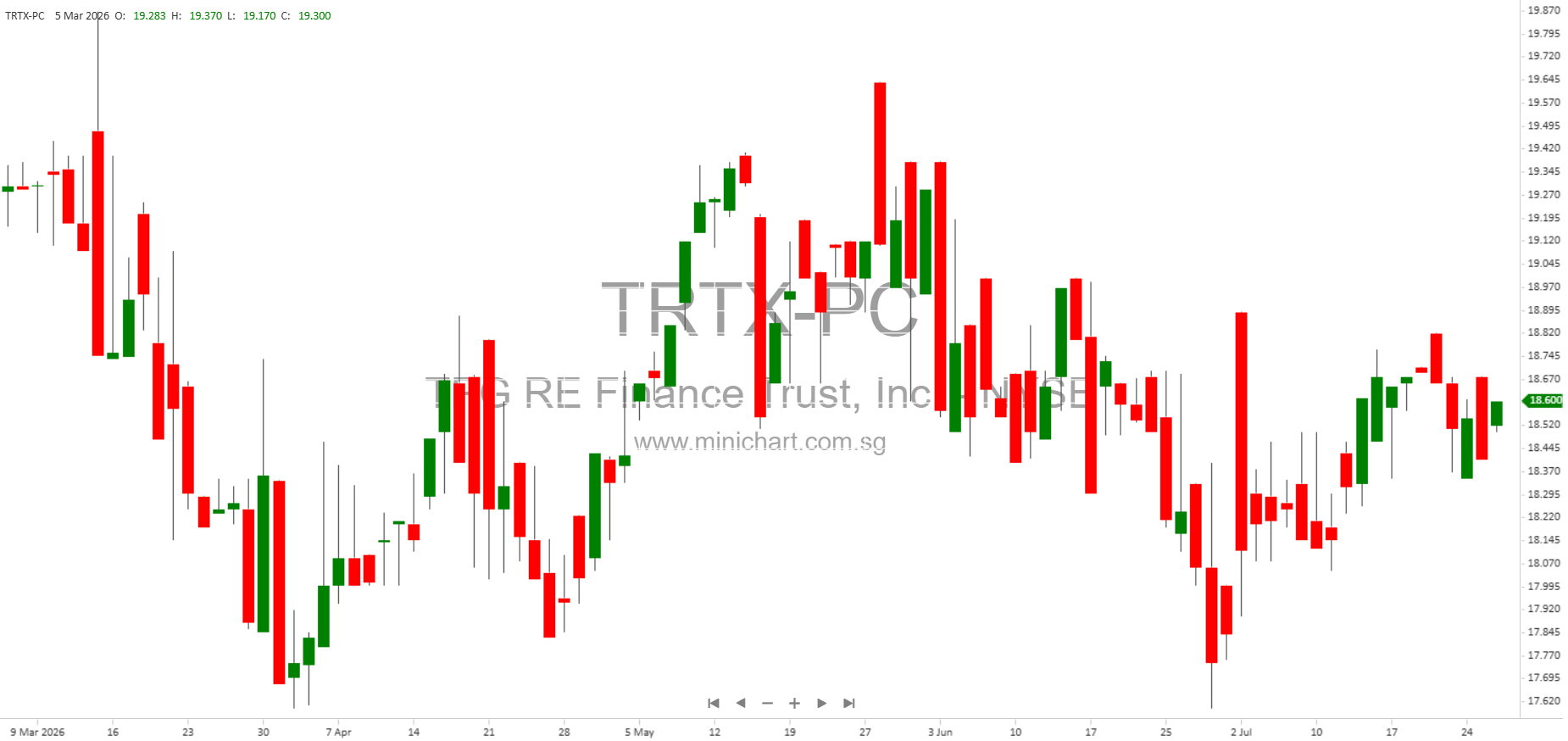
- Potential Price-Sensitive Triggers: The combination of contraction in assets, heightened risk disclosures (particularly around credit losses and office demand), and increased reliance on secured financings could be interpreted as signals of a more challenging operating environment, which may affect the share price.
Conclusion
The Q2 2026 report from TPG RE Finance Trust, Inc. paints a cautious outlook, with several potential downside risks for investors. The company’s financial position remains sizable but shows some contraction in assets and elevated concerns around financing, credit, and real estate market conditions. Shareholders should closely monitor management’s ability to navigate these challenges, especially given the heightened risk disclosures and potential impact on future distributions and asset valuations.
Disclaimer: This article is based on the unaudited financial statements and disclosures provided by TPG RE Finance Trust, Inc. for Q2 2026. Information is for general informational purposes only and does not constitute investment advice. Investors should consult the company’s full SEC filings and their financial advisor before making investment decisions. Past performance is not indicative of future results. The company’s forward-looking statements are subject to risks and uncertainties that may cause actual results to differ materially.