ProMIS Neurosciences Reports Positive Six-Month Interim Results for PMN310 in PRECISE-AD Phase 1b Alzheimer’s Disease Trial
Key Points
- No ARIA-E detected across all genotypes, including high-risk APOE4 homozygotes.
- Favorable safety profile with only mild, asymptomatic ARIA-H in a small minority of patients.
- Early biomarker movement consistent with target engagement: reductions observed in plasma pTau217 and CSF MTBR-tau243.
- PMN310 employs a differentiated, oligomer-selective mechanism, designed to minimize ARIA risk while targeting toxic amyloid-beta oligomers.
- 12-month unblinded topline data, including efficacy results, expected in Q1 2027.
- PMN310 granted Fast Track Designation by the FDA in July 2025.
Detailed Analysis
ProMIS Neurosciences Inc. (Nasdaq: PMN), a clinical-stage biopharmaceutical company focused on neurodegenerative diseases, announced highly encouraging six-month interim safety and biomarker results from its ongoing PRECISE-AD Phase 1b trial of PMN310 in patients with mild cognitive impairment or mild Alzheimer’s disease.
Safety Profile and ARIA Incidence
The blinded analysis, conducted on 136 Alzheimer’s disease patients, shows a favorable safety profile across all genotypes. Crucially, there were no cases of amyloid-related imaging abnormalities-edema (ARIA-E) reported as of the data cutoff date. Only 4.4% of participants experienced ARIA-H (microhemorrhages), all of which were mild and asymptomatic. Importantly, there were no treatment-related serious adverse events and no drug-related discontinuations at this stage.
This safety profile is particularly notable in the context of APOE4 carriers, a group at heightened risk for ARIA with current approved amyloid therapies. In this trial, 61% of participants were APOE4 carriers, with 11% being homozygotes—patients who have limited treatment options due to safety concerns with other drugs. No ARIA-E was observed even in these high-risk patients.
Biomarker Evidence of Target Engagement
On a blinded basis, a majority of patients demonstrated reductions in biomarkers known to track Alzheimer’s progression:
- 68.5% of patients had a decline from baseline in plasma pTau217.
- 62.5% had a decline in CSF MTBR-tau243.
These reductions contrast with the expected increases in these biomarkers based on natural history, suggesting a potential beneficial effect of PMN310. However, as the study remains blinded, these trends are not definitive proof of efficacy, and the actual treatment allocation is not yet known. Early biomarker trends, while promising, may not always translate to clinical benefit.
Differentiated Mechanism and Potential Competitive Advantage
PMN310 is engineered to selectively bind toxic amyloid-beta oligomers while avoiding amyloid plaque and vascular deposits, which are the usual culprits behind ARIA in other antibody-based therapies. This mechanism is intended to decouple the efficacy of amyloid-directed therapy from ARIA risk—potentially providing a significant advantage over currently approved drugs.
Trial Design and Next Steps
The PRECISE-AD Phase 1b study is a multi-center, randomized, double-blind, placebo-controlled trial evaluating multiple ascending doses (5, 10, 20 mg/kg) of intravenous PMN310. The study has completed enrollment of 144 participants, all receiving 12 months of treatment. The primary focus is on safety, tolerability, pharmacokinetics, and biomarker effects, but the 12-month readout will include efficacy data.
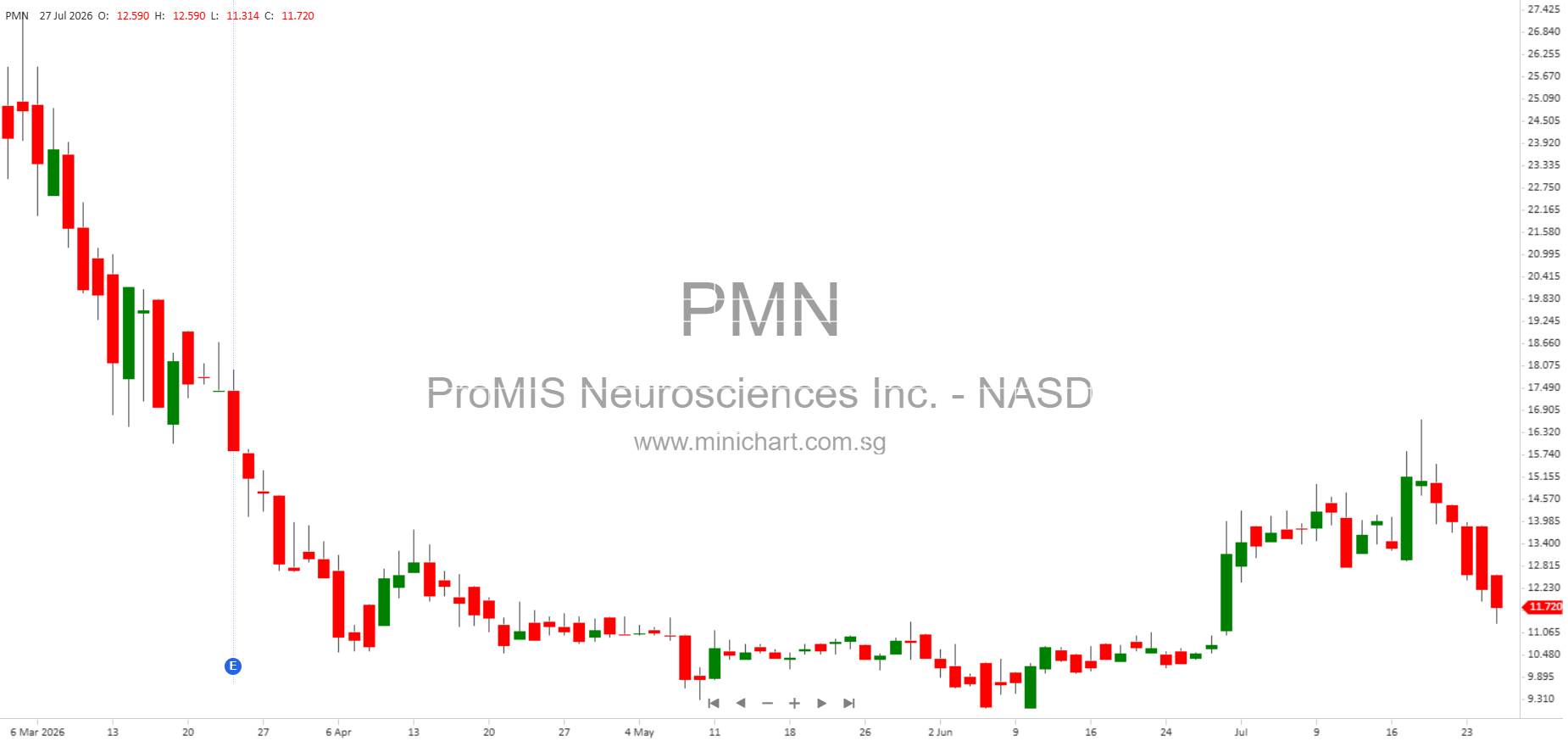
Unblinded 12-month topline results are expected in Q1 2027. This readout will be a critical event for investors, as it will provide the first efficacy data and could significantly impact the company’s valuation and share price.
Expert Commentary
Dr. Will Mantyh, a behavioral neurologist at the University of Minnesota, commented: “In real-world practice, ARIA risk is the central prescribing barrier: clinicians, patients, and health systems must contend with the issues of safety monitoring, identification, and sometimes emergent neurological treatment of ARIA. A profile with low incidence of total ARIA, including no ARIA-E, would be a game-changer. Just as importantly, plasma pTau217 and CSF MTBR-tau243 are among the most informative fluid biomarkers we have for tracking Alzheimer’s biology; seeing early, coherent movement in both is highly encouraging before a definitive readout.”
Regulatory and Developmental Progress
PMN310 was granted Fast Track Designation by the U.S. Food and Drug Administration (FDA) in July 2025, reflecting its potential to address an unmet medical need in Alzheimer’s disease.
ProMIS Neurosciences leverages its proprietary EpiSelect™ platform to develop therapeutics targeting toxic oligomers implicated in neurodegenerative diseases, potentially expanding its reach beyond Alzheimer’s to conditions like ALS, FTD, MSA, and Parkinson’s disease.
Shareholder Considerations and Price-Sensitive Developments
- The absence of ARIA-E and a favorable overall safety profile in a high-risk patient population could differentiate PMN310 from competing therapies, potentially expanding its addressable market.
- Early biomarker improvements, if mirrored in clinical efficacy at the 12-month topline data, could significantly boost investor confidence and drive share price appreciation.
- Upcoming catalysts: The release of unblinded 12-month topline efficacy and safety data in Q1 2027 is a major inflection point that may materially affect share price.
- Regulatory designation and ongoing trial progress reduce risk and enhance the company’s profile as a late-stage clinical player in Alzheimer’s disease.
Upcoming Events
ProMIS will host a live webinar to discuss the interim results:
Date: July 28, 2026
Time: 8:00–9:00 a.m. ET
Registration: Webinar Registration
Speakers include CEO Neil Warma, CMO Dr. Larry Altstiel, and key opinion leaders Dr. Will Mantyh and Dr. Michael Weiner.
Contact Information
- Media Contact: Maggie Whitney, LifeSci Communications, [email protected]
- Investor Relations: Carie Pierce, VP Investor Relations & External Affairs, [email protected]
Disclaimer: This article is for informational purposes only and does not constitute investment advice or an offer to buy or sell any securities. Forward-looking statements are subject to risks and uncertainties; actual results may differ materially. Investors should consult official company filings and their financial advisors before making investment decisions.