Blue Ridge Bankshares, Inc. Reports Second Quarter 2026 Results: Loan Growth Returns, Expense Reduction Continues
Key Highlights for Investors
- Net Loss Reported: Q2 2026 net loss of \$0.2 million (\$0.00 per diluted share) versus net income of \$0.8 million in Q1 2026 and \$1.3 million in Q2 2025.
- Loan Growth Resumed: 4% annualized loan growth, the first in over three years, marking a shift in balance sheet strategy.
- Notable Credit Loss Provision: After-tax provision for credit losses of \$2.1 million, driven by a single large out-of-market loan placed on nonaccrual.
- Deposit Mix Improving: Cost of deposits down to 2.25%, with an increase in noninterest-bearing deposits to 21.3% of total deposits.
- Operating Expense Reductions: Noninterest expense fell by \$2.8 million quarter-over-quarter, including \$2 million reduction in salaries/benefits.
- Special Dividend Payout: \$0.60 per share special cash dividend (\$54.1 million total) paid in April 2026.
- Capital Ratios Remain Strong: Tangible common equity to tangible assets at 11.8%, up from 11.4%.
- Nonperforming Loans Increased: Nonperforming loans rose to \$31.2 million (1.34% of assets) due to the aforementioned nonaccrual loan.
- Headcount Reduction: Significant staff reduction to 266 from 281 in Q1 2026 and 333 a year ago.
- Redemption of Subordinated Notes: All outstanding 2029 subordinated notes redeemed after the quarter-end, eliminating this debt class.
In-Depth Analysis
Profitability and Core Operations
Blue Ridge Bankshares, Inc. reported a net loss in Q2 2026, primarily due to a \$2.1 million after-tax provision for credit losses. This is a reversal from the prior two quarters’ credit loss recoveries. Excluding severance, pre-tax, pre-provision income improved notably to \$2.9 million, a 30% increase over Q1 2026. The improvement is attributed to better loan growth, a favorable deposit mix, and strict cost controls.
Net interest income declined slightly to \$16.5 million from \$16.9 million in the previous quarter, reflecting lower average loan balances and reduced balances in interest-earning deposits, but was partially offset by improved loan yields (up 4 bps to 5.54%) and a reduction in interest expense (driven by lower brokered deposits).
Loan Portfolio and Credit Quality
The most significant negative development is the increase in nonperforming loans, which jumped to \$31.2 million due to a single out-of-market relationship originated prior to 2024. This loan, placed on nonaccrual, necessitated a \$1.5 million reserve. The allowance for credit losses as a percentage of loans rose to 1.11% from 1.05%. Net loan charge-offs were \$0.6 million for the quarter, up from net recoveries in Q1.
Despite these issues, the company achieved its first quarterly loan growth in over three years, with loans held for investment up \$19.6 million (4% annualized). This signals a shift from balance sheet de-risking to growth, which, if sustained, could be a positive catalyst for future profitability.
Deposits and Liquidity
The company continues to improve its deposit mix, with the cost of deposits declining to 2.25%. Noninterest-bearing deposits made up a higher share of total deposits, now at 21.3%. Brokered deposits were reduced by \$23 million, with \$21.4 million paid off in the quarter. This strategy should help reduce funding costs and interest rate sensitivity.
Total assets decreased to \$2.33 billion, a result of the special dividend payout and deliberate reduction in brokered deposits.
Capital and Dividend Actions
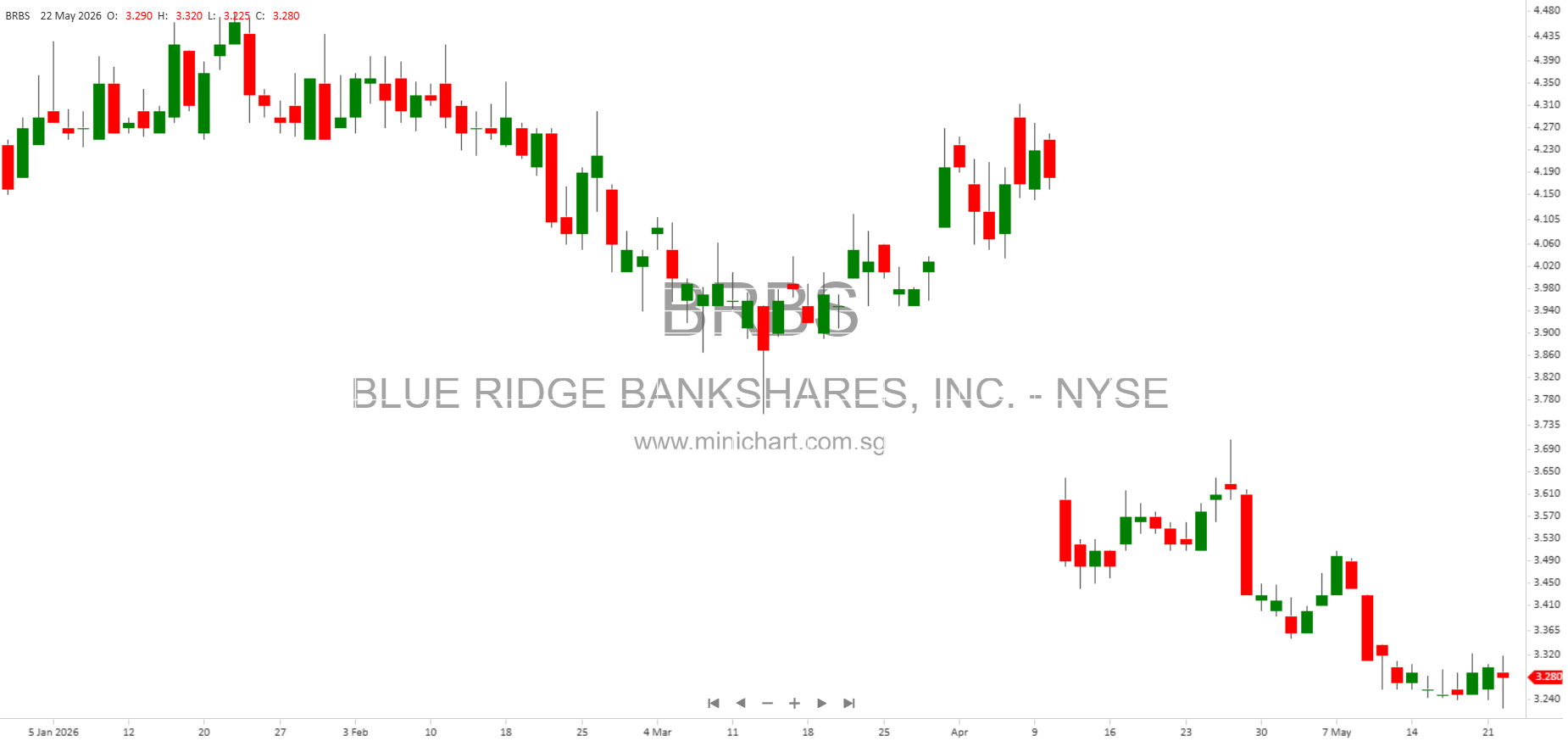
Blue Ridge paid a significant special cash dividend of \$0.60 per share (totaling \$54.1 million) in April, which is a major capital event and highly relevant for shareholders. Despite this, capital ratios remain strong: tangible common equity to tangible assets improved to 11.8%. Tangible book value per share was essentially flat at \$3.10.
Post-quarter, the company fully redeemed its remaining subordinated notes, removing all outstanding subordinated debt from the balance sheet. This may reduce future interest expense and risk, but also reduces sources of non-deposit funding.
Expense Management and Headcount
The company has aggressively reduced expenses, with noninterest expense down \$2.8 million from the prior quarter. Salaries and benefits fell by \$2 million, including a \$1.2 million reduction in severance costs and \$0.4 million from lower incentive payouts. Headcount was cut by 67 positions year-over-year. The impact of recent expense cuts will be fully realized in the second half of 2026.
Noninterest Income and Other Items
Noninterest income declined to \$1.8 million from \$2.3 million, partly due to a \$0.6 million loss on the liquidation of an equity method investment. However, the investment generated \$1.9 million in cumulative pre-tax income over its holding period.
Forward-Looking Statements and Risks
The company notes several risk factors in its forward-looking statements, including macroeconomic trends, credit quality, deposit retention, regulatory environment, and the impact of digital assets on traditional banking. Investors should be mindful that the outlook includes uncertainties that could materially affect future performance.
Shareholder-Relevant and Potentially Price-Sensitive Developments
- Special Dividend: The \$0.60 per share special dividend is material and may affect share price, especially in relation to capital strength and future dividend capacity.
- Resumption of Loan Growth: After 13 quarters of contraction, loan growth may signal an inflection point and potential for future earnings growth if sustained.
- Increase in Nonperforming Loans: The spike in nonperforming loans and associated reserve is a key risk factor that could weigh on valuation if credit quality deteriorates further.
- Headcount and Expense Reductions: Aggressive cost-cutting and right-sizing could improve operating leverage, but also signals past challenges.
- Redemption of Subordinated Debt: The elimination of subordinated notes post-quarter removes a class of debt, potentially strengthening the balance sheet and reducing future interest costs.
Conclusion
Blue Ridge Bankshares, Inc. is at a pivotal point: returning to loan growth, improving its deposit base, and executing major cost reductions, all while successfully paying a significant special dividend. However, the increase in nonperforming loans and a quarterly net loss highlight ongoing credit and earnings challenges. Investors should closely monitor credit quality trends, the sustainability of loan growth, and the impact of expense reductions in the coming quarters.
Disclaimer: This article is for informational purposes only and does not constitute investment advice. Forward-looking statements are subject to risks and uncertainties that may cause actual results to differ materially. Readers should review the company’s official filings and consult with a qualified financial advisor before making investment decisions.