Lamb Weston Holdings, Inc. 2026 Annual Report: What Investors Need to Know
Overview: Lamb Weston Holdings, Inc. (“LW”), a leading supplier of frozen potato products, has released its Annual Report for the fiscal year ended May 31, 2026. The report contains comprehensive financial, operational, and strategic information that is critical for shareholders and potential investors.
Key Financial Highlights
- Fiscal Year End: May 31, 2026
- Common Stock: \$1.00 par value, trading under the symbol LW on the New York Stock Exchange
- Market Value: As of November 21, 2025, the aggregate market value of voting common stock held by non-affiliates was approximately \$137,481,011 shares outstanding.
- Reporting Status: Large Accelerated Filer; all required reports filed on time
- ICFR Auditor Attestation: Management’s assessment of internal control over financial reporting was attested by the company’s auditor
Major Customers & Revenue Concentration
- Top 10 Customers: Accounted for ~50% of net sales in 2026
- McDonald’s Corporation: Largest customer, representing 15% of consolidated net sales in 2026, 2025, and 14% in 2024
- No Other Customer: Exceeds 10% of net sales
Potential Price Sensitivity: LW’s reliance on a limited number of large customers, especially McDonald’s, exposes the company to concentration risk. Any changes in these relationships may significantly impact revenues and share value.
Cost Structure & Inflation Risks
- Input Costs: Commodities such as raw potatoes, edible oil, grains, starches, energy, fuel, and packaging materials are subject to price volatility.
- Mitigation: LW uses long-term relationships, contracting, hedging, and productivity initiatives to manage these risks.
- Warning: The company may not be able to fully offset cost increases, which could negatively affect margins and profitability.
Shareholder Impact: Persistent inflation or supply chain disruptions could pressure earnings and affect dividend payments.
Forward-Looking Statements & Strategic Initiatives
- Cost Savings Program: LW is pursuing cost-savings and efficiency initiatives; however, realization of anticipated savings and benefits is uncertain and may be delayed or less than expected.
- Capital Projects & M&A: The company is investing in production capabilities through capital expansion and acquisitions. Risks include project delays, integration difficulties, higher-than-expected costs, and inability to realize projected benefits.
- Long-Term Strategy: Focus to Win strategy and value creation initiatives are ongoing, but execution risks remain.
Potential Price Sensitivity: Failure to deliver expected cost savings or integrate acquisitions could materially impact financial results and share price.
Industry & Operational Risks
- Potato Crop Quality: LW’s business is affected by annual potato crop harvest quality and performance.
- Commodity Supply & Price Volatility: Drought, floods, and other natural disasters may impact supply, causing cost increases.
- Global Risks: Exposure to changes in trade agreements, tariffs, sanctions, currency fluctuations, and geopolitical instability (Ukraine, Middle East conflicts, Argentina inflation).
Shareholder Impact: These risks could disrupt supply chains, increase costs, or reduce demand, affecting profitability and share value.
Reputation & ESG Concerns
- Product Quality & Safety: LW’s reputation depends on maintaining high standards for product quality, safety, and integrity.
- Social Media & AI Applications: Negative publicity, misinformation, or inaccurate product evaluations could quickly damage brand reputation and affect sales.
- Sustainability & Stakeholder Trust: Failure to manage evolving sustainability expectations could erode stakeholder trust and impact business performance.
Potential Price Sensitivity: Reputation damage could lead to lower demand, disrupt operations, and require additional resources to rebuild trust, all of which may negatively influence share price.
Research & Development
- Innovation: LW invests in R&D to create new products, improve quality, participate in joint menu planning, and drive sustainability (reducing waste and water use, improving food safety).
- Intellectual Property: Trademarks, patents, and licenses are material to the business; infringement or loss of IP protection could harm competitive position.
Regulatory & Compliance
- Environmental & Safety Regulations: Compliance requires ongoing capital and operational expenditures; failure to comply may result in substantial fines or operational restrictions.
- SEC Reporting & Website Disclosure: LW makes all reports available on its website, using it as a distribution channel for important investor information.
Risk Factor Summary
LW’s business is subject to a range of risks, including but not limited to:
- Commodity cost volatility
- Customer concentration
- Operational execution (cost savings, M&A, capital projects)
- Reputation and ESG risks
- Natural disasters and geopolitical events
- Regulatory and compliance burdens
Any of these risks could materially and adversely affect LW’s business, financial condition, and results of operations.
Shareholder Actions & Price Sensitivity
- Dividend Policy: LW’s ability to pay quarterly cash dividends or return capital depends on business performance and risk factors.
- Stock Repurchases: The timing and amount may be affected by operational results and risk events.
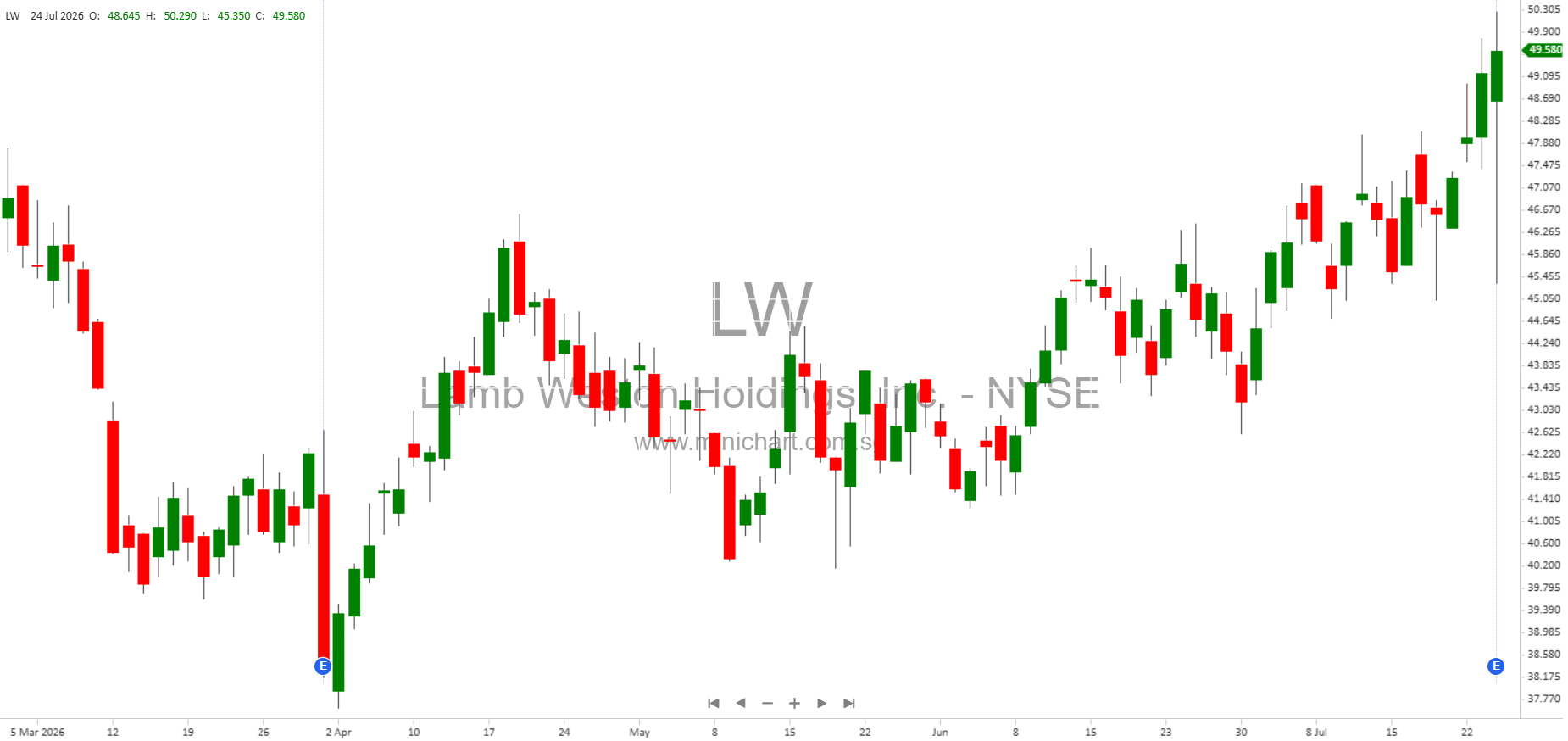
- Potential Price Movers: Changes in customer relationships (especially with McDonald’s), inability to offset inflation, failure to achieve cost savings, or negative ESG/reputation events are all potential catalysts for share price movement.
Conclusion
Lamb Weston Holdings, Inc. faces a range of operational, strategic, and industry risks as outlined in its 2026 Annual Report. Investors should closely monitor developments in customer relationships, cost structure, execution of strategic initiatives, and reputation management, as these factors are likely to influence the company’s financial performance and share value.
Disclaimer: This article is based on Lamb Weston Holdings, Inc.’s 2026 Annual Report and is intended for informational purposes only. It does not constitute investment advice. Investors should conduct their own due diligence and consult professional advisors before making investment decisions. The company’s performance is subject to numerous risks and uncertainties, as detailed in its SEC filings.