Intel Corporation Q2 2026 Financial Results: Key Highlights and Investor Insights
Summary of the Report
Intel Corporation has released its Form 10-Q for the quarter ended June 27, 2026, offering a comprehensive look at the company’s financial performance, strategic direction, and operational updates. The report covers Intel’s quarterly financials, forward-looking statements, business risks, and other important disclosures that investors should consider.
Key Financial Highlights
- Net Loss: Intel reported a net loss attributable to the company of (\$2.918 billion) for the quarter ended June 27, 2026, and (\$3.739 billion) for the same quarter in 2025. The company also reported a six-month net loss of (\$15.129 billion) for 2026, compared to a net loss of (\$2.963 billion) for the same period in 2025.
- Loss Per Share: Basic and diluted loss per share for Q2 2026 was (\$0.67), compared to (\$0.86) for Q2 2025. For the six months ended June 27, 2026, basic and diluted loss per share stood at (\$2.89), compared to (\$0.86) in the prior year period.
- Revenue and Gross Profit: Intel generated a gross profit of \$11.856 billion for Q2 2026, compared to \$8.214 billion for the same quarter last year. Gross profit for the six months ended June 27, 2026, was \$13.196 billion.
- Operating Expenses: Operating expenses for the quarter were \$6.718 billion for Q2 2026, and \$13.196 billion for the six months.
- Research & Development (R&D): R&D expense was \$3.368 billion for Q2 2026, compared to \$3.684 billion in Q2 2025.
Cash and Liquidity Position
- Cash & Equivalents: As of the end of Q2 2026, Intel reported cash and cash equivalents of \$14.27 billion and short-term investments of \$16.85 billion.
- Total Assets: Total assets stood at \$202.44 billion as of June 27, 2026.
Key Strategic and Operational Updates
- Forward-Looking Initiatives: The company discussed ongoing investments in R&D and manufacturing, future product and technology launches, manufacturing expansion plans, and expectations for growth in both internal and foundry business segments.
- Manufacturing and Supply Chain: Intel highlighted plans for capacity expansion in manufacturing and foundry services, as well as expectations around supply chain constraints, pricing, and industry shortages.
- Acquisitions, Divestitures, and Restructuring: Intel addressed the expected timing and impact of ongoing and future acquisitions, divestitures, and restructuring efforts aimed at improving efficiency and cost structure.
- Macroeconomic Conditions and Market Trends: The company noted the impact of macroeconomic conditions, technology trends (including AI), and government incentives on their business outlook.
Risks and Uncertainties
- Competitive Landscape: The report underscores the high level of competition and rapid technological change in the semiconductor industry, as well as the inherent risks in large-scale R&D and capital investments.
- Operational Risks: Intel highlighted risks related to manufacturing process complexities, supply chain disruptions, evolving global regulations, and currency fluctuations.
- Other Risks: The company is exposed to risks from strategic transactions, sales concentration, environmental regulations, talent retention, and catastrophic events.
Shareholder and Price-Sensitive Information
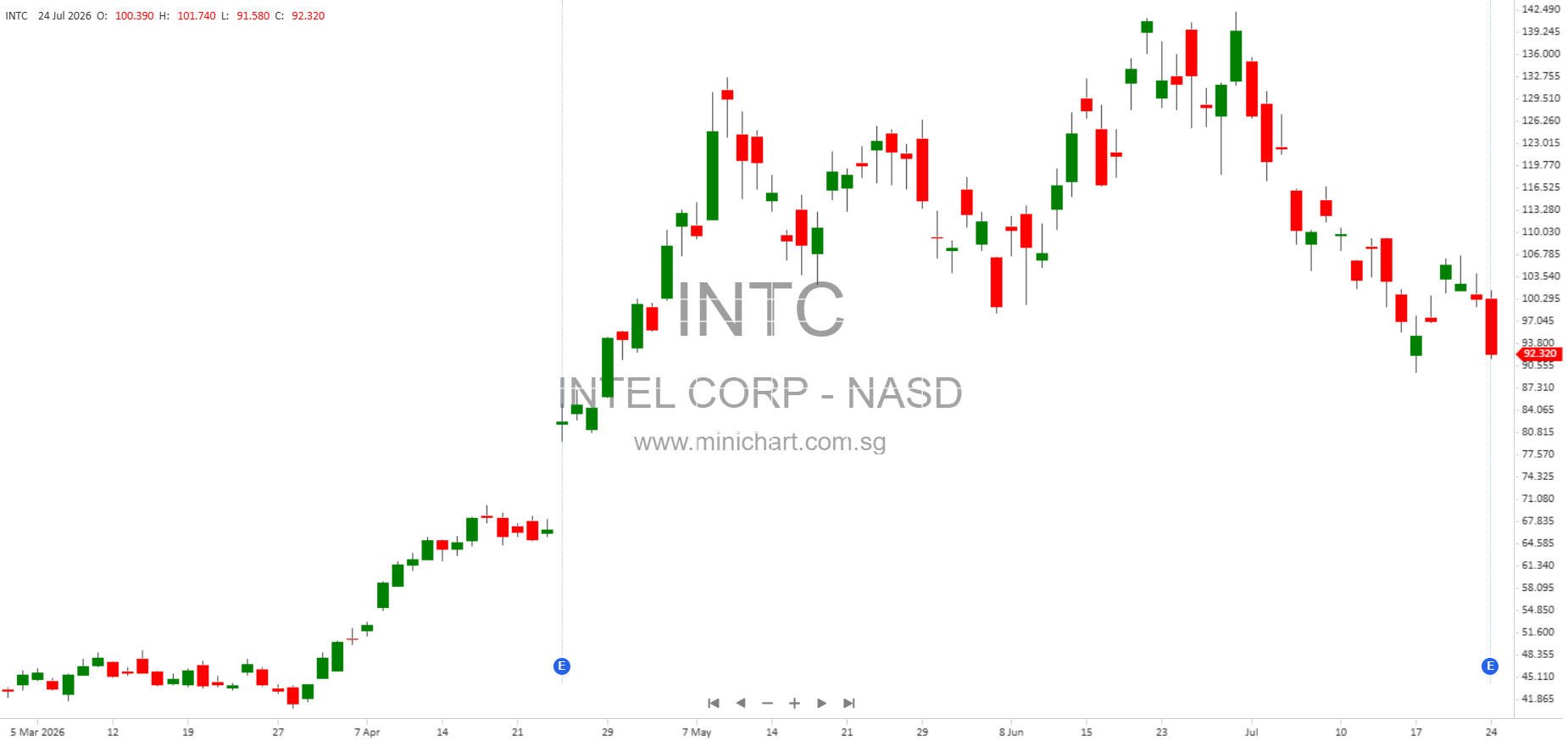
- Significant Losses: The magnitude of the net loss for the second quarter and the first half of 2026 is substantial and likely to be price sensitive. Investors should be aware of the ongoing challenges and losses that could pressure the stock price.
- Strategic Pivot and Restructuring: The company’s significant investments in new manufacturing capacity, restructuring, and foundry services signal a strategic pivot that could have long-term implications for future growth, but also pose execution risks in the near term.
- Forward-Looking Statements: Management has provided forward-looking guidance on product launches, manufacturing expansion, and market trends, but these are subject to risks and uncertainties that may materially impact future results.
Conclusion
Intel’s Q2 2026 results reveal a company in transition, grappling with significant losses but also making bold investments in future technology and manufacturing. While management is optimistic about the long-term trajectory, the near-term financial results and ongoing restructuring efforts introduce volatility and risk that shareholders must weigh carefully. Any missteps in execution of these strategic initiatives, or further deterioration in macroeconomic or industry conditions, could have a material impact on Intel’s share price.
Disclaimer
This article is for informational purposes only and does not constitute investment advice. Investors should review the full Form 10-Q and consult with their financial advisors before making any investment decisions. Past performance is not indicative of future results.